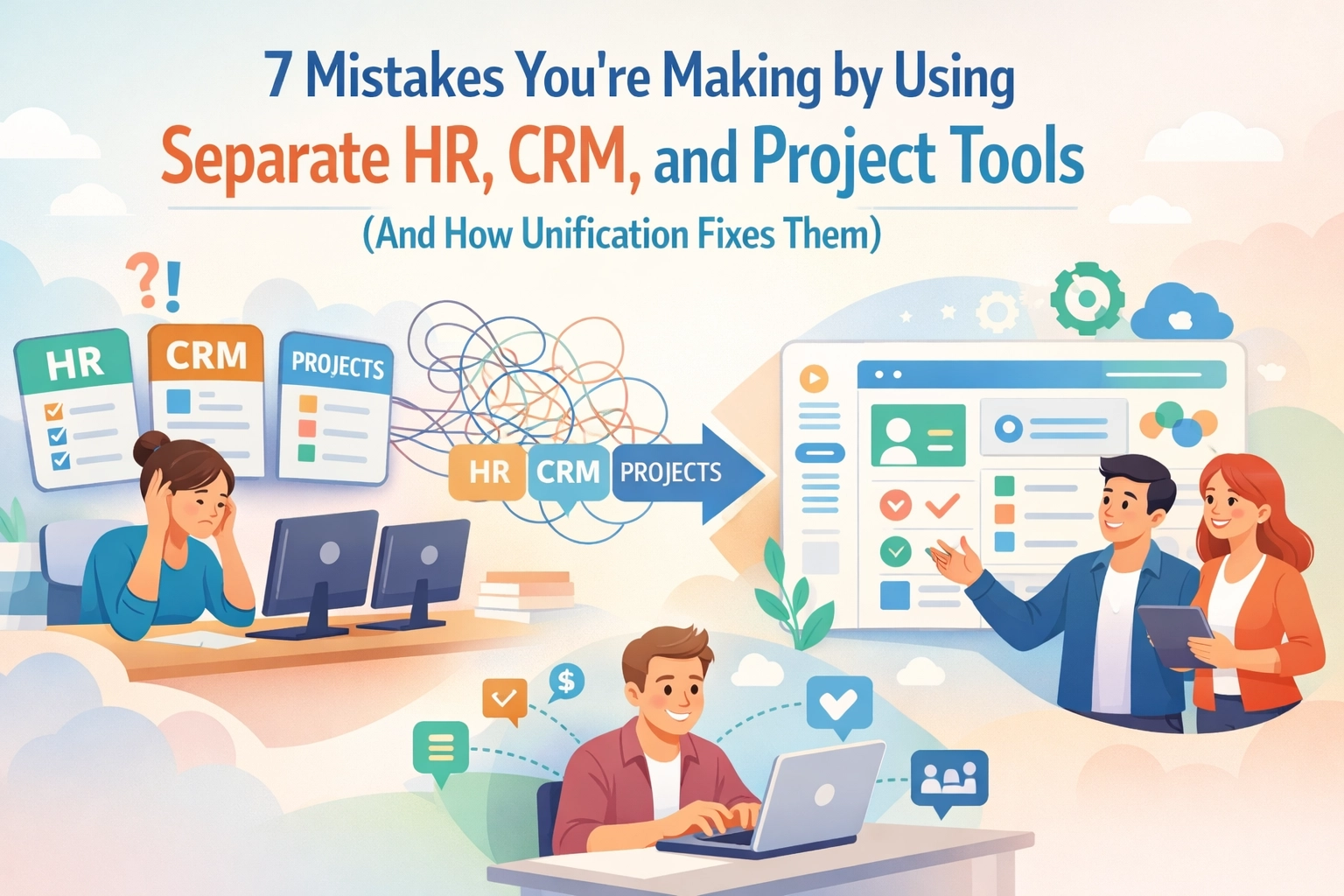
You're juggling three different platforms. Maybe five. Your HR data lives in one place. Customer details in another. Project updates scattered across a third tool.
Sound familiar?
You're not alone. Most SMB owners think this is just how business works. But here's the truth: you're bleeding time, money, and opportunities every single day.
Let's break down the seven biggest mistakes you're making: and how unifying your systems changes everything.
Mistake #1: Creating Information Black Holes
Your sales team closes a deal. They update the CRM. But your project team? They have no clue.
Meanwhile, your HR department tracks employee skills in a completely separate system. So when you need someone for that new client project, you're guessing who's available.
The problem: Everyone's working with incomplete information. Your left hand doesn't know what your right hand is doing.
How unification fixes it: One platform means one source of truth. Update something once, and everyone sees it. Your sales, delivery, and HR teams finally speak the same language.

Mistake #2: Wasting Hours on Manual Data Entry
Let's talk about redundancy.
You enter client information into your CRM. Then re-enter it into your project tool. Then again into invoicing. Then your HR system needs it for resource planning.
That's the same data. Four different times.
The problem: Your team spends 30% of their week just copying information between systems. That's not productivity: that's digital busy work.
How unification fixes it: Enter data once. Done. The unified system automatically populates every module that needs it. Your team gets back hours every week to focus on actual work.
Mistake #3: Missing Critical Scope Changes
Here's a nightmare scenario: Your sales rep promises a client extra features. They update the CRM notes. But the project manager never sees it.
Your team delivers the original scope. The client explodes. Your reputation takes a hit.
The problem: Disconnected tools mean disconnected communication. Critical updates fall through the cracks because there's no automatic flow between systems.
How unification fixes it: When sales updates client requirements, project managers get instant notifications. Everyone works from the same playbook. No surprises. No angry clients.

Mistake #4: Turning Invoicing Into a Monthly Nightmare
It's billing time. You're pulling quotes from the CRM, time logs from the project tool, and resource costs from HR.
Nothing matches up. You spend three days reconciling everything. Meanwhile, your cash flow suffers because invoices go out late.
The problem: Separate systems create billing chaos. You're manually connecting dots that should connect automatically.
How unification fixes it: Quotes, project hours, resources, and billing live in one system. Generate accurate invoices in minutes, not days. Get paid faster. Sleep better at night.
Mistake #5: Playing Resource Allocation Roulette
You land a new project. You need someone with specific skills.
So you message HR: "Who knows Python?" You check your project tool: "Who's available?" You ask around: "Anyone free next week?"
By the time you figure it out, you've wasted two days.
The problem: Your HR system doesn't talk to your project system. You can't see who has the right skills AND availability in one view.
How unification fixes it: See all employee skills, current assignments, and availability on one screen. Assign the right person to the right project in seconds. Your resource planning becomes strategic instead of reactive.
Mistake #6: Delivering Mediocre Customer Experiences
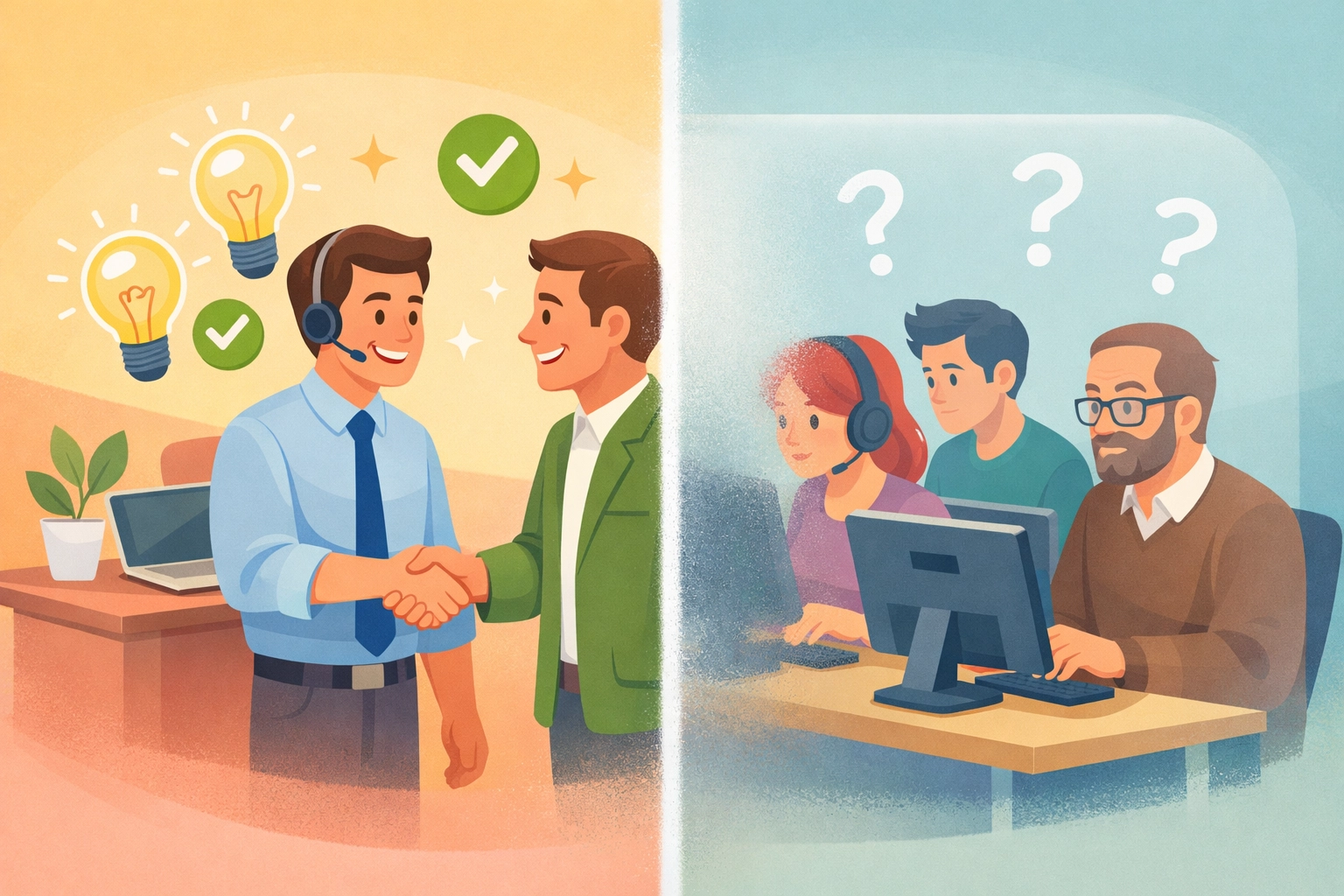
A client calls with a question. Your support person checks the CRM. It shows they purchased Product A.
But the project tool shows they're actually unhappy with implementation. And HR notes show their account manager just went on leave.
Your support person has no idea about any of this context.
The problem: Fragmented customer data means fragmented customer service. Your team can't deliver personalized experiences when everyone's looking at different puzzle pieces.
How unification fixes it: Every team member sees the complete customer journey. Past purchases, current projects, support tickets, assigned team members: everything. You deliver consistently excellent experiences because you actually understand your customers.
Mistake #7: Fighting Employee Resistance Every Time
You need better tools. So you introduce a new CRM. Then a new project platform. Then updated HR software.
Your team groans. They've got six different logins to remember. Six different interfaces to learn. They spend more time figuring out which tool to use than actually working.
The problem: Tool fatigue is real. Every new disconnected system increases complexity and decreases adoption. Your expensive software sits unused because it's too much hassle.
How unification fixes it: One platform. One login. One interface your team learns once. Adoption skyrockets because you're simplifying their lives, not complicating them.

The Unified Advantage: Why SMBs Are Making the Switch
Large enterprises can afford teams to manage tool chaos. You can't.
You need lean operations. Efficient processes. Systems that work for you, not against you.
That's the unified advantage.
When your HR, CRM, and project management work as one system, something magical happens:
Your team collaborates naturally. Information flows automatically. Everyone stays aligned without endless meetings and status updates.
Your operations scale smoothly. Adding new clients doesn't mean adding complexity. Your unified system handles growth without breaking.
Your decision-making improves. Real-time dashboards show you everything from resource utilization to customer satisfaction. You spot problems before they become crises.
Your bottom line grows. Less time on administrative tasks means more time on revenue-generating activities. Better resource allocation means higher profitability per project.
Stop Juggling. Start Growing.
You started your business to build something great. Not to become an expert in managing disconnected software.
Every day you stick with separate tools is a day you're working harder than you need to.
The seven mistakes we've covered aren't just annoying: they're actively holding back your growth. They're limiting what your team can achieve. They're costing you money, time, and opportunities.
Unification isn't just about convenience. It's about competitive advantage.
While your competitors drown in tool chaos, you're moving fast. Making smart decisions. Delivering exceptional experiences. Growing sustainably.
The choice is simple: keep juggling, or get unified.
Ready to see what the unified advantage looks like for your business? Check out TeamsMaster and discover how one platform can replace the chaos.
Your future self will thank you.