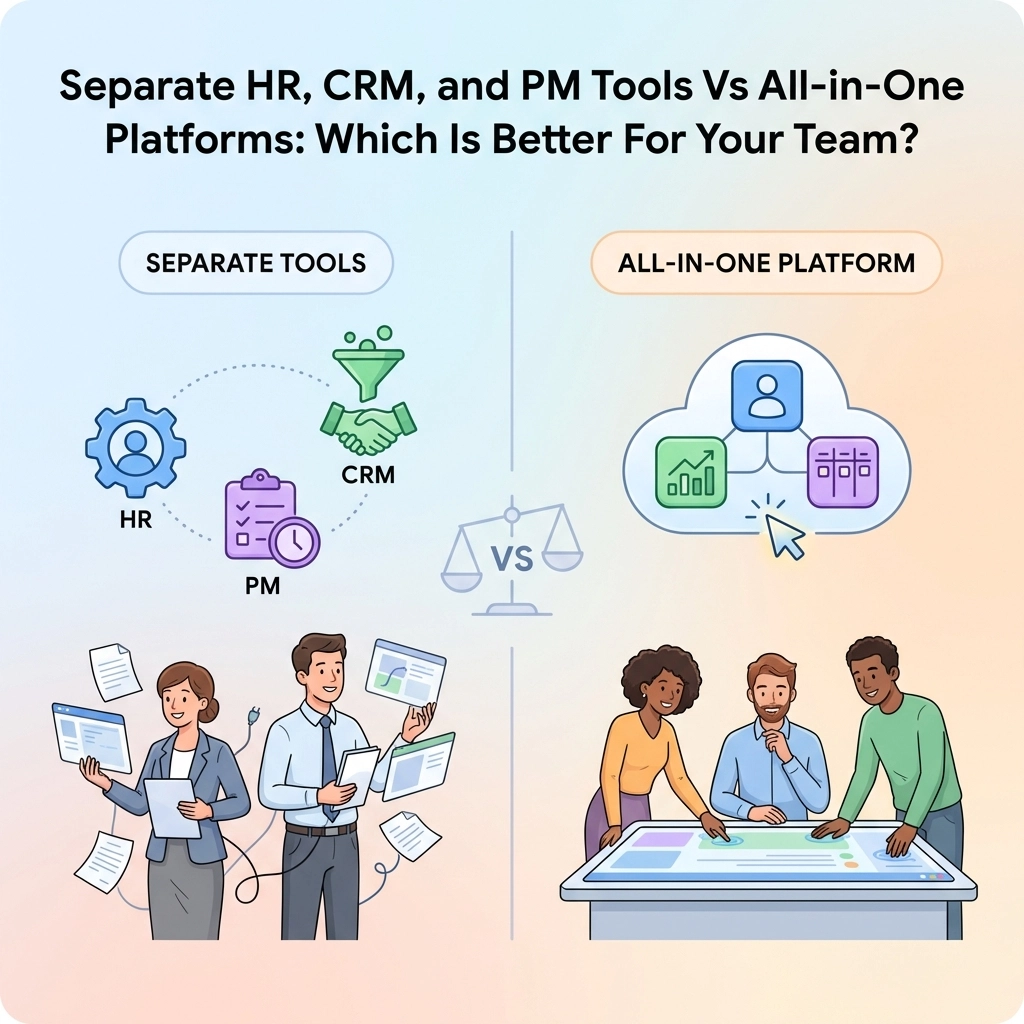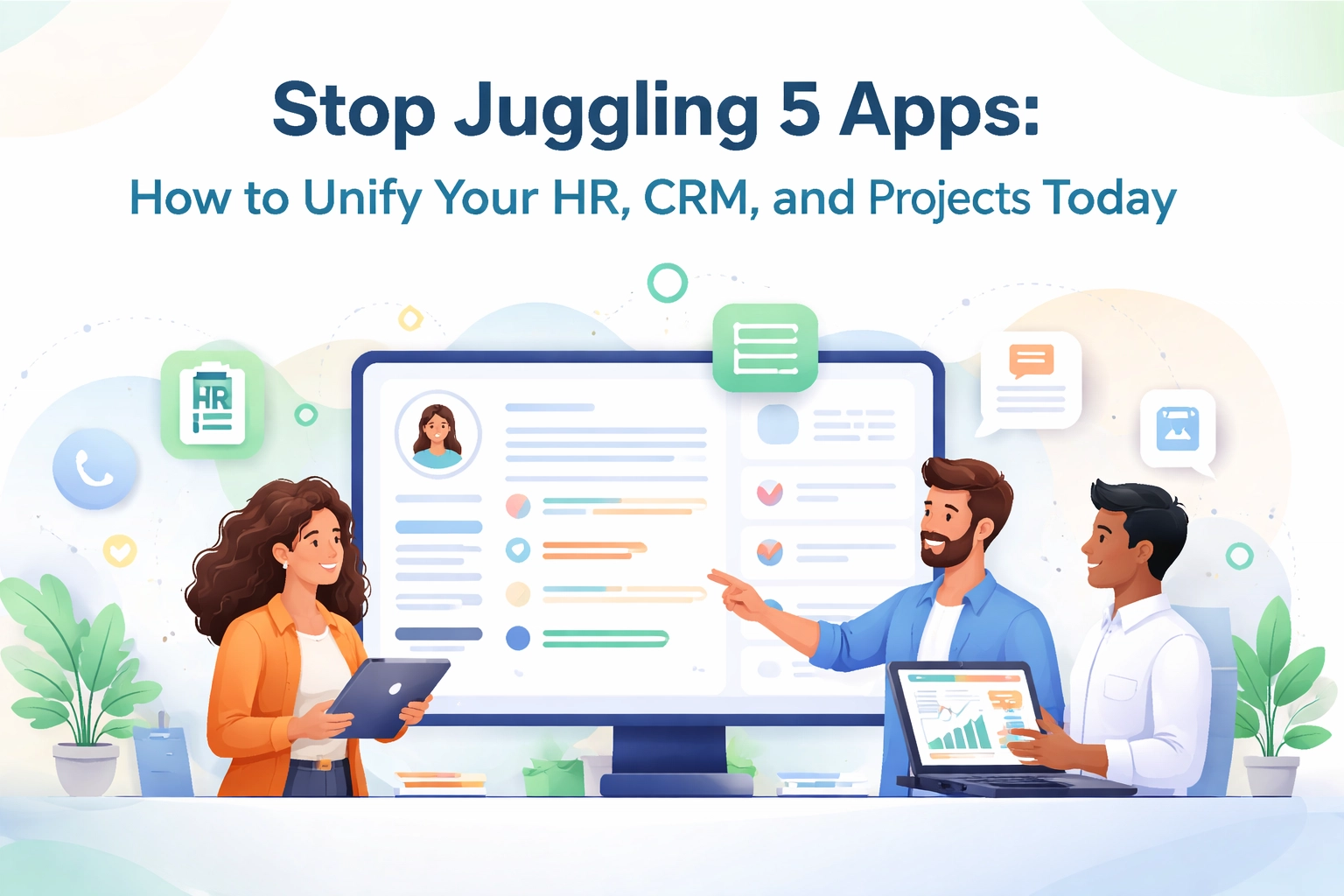
You've got one tool for HR. Another for your CRM. A third for project management. Maybe a fourth for time tracking.
Sound familiar?
Every day, your team juggles between apps. They copy data from one screen to another. They miss updates because information lives in five different places.
It's exhausting. And honestly? It's holding your business back.
Here's the good news. There's a better way to run your team. It's called unified business management. And once you experience it, you'll wonder how you ever operated without it.
The Hidden Cost of Scattered Tools
Let's talk about what's really happening when your systems don't talk to each other.
Your sales team closes a deal in your CRM. But your project manager doesn't see it until someone sends an email. Meanwhile, HR is tracking that client's contract in a spreadsheet. And finance? They're waiting for someone to manually enter the invoice details.
Every handoff creates friction. Every disconnected system creates delays.

Here's what that fragmentation actually costs you:
- Wasted time. Employees spend hours switching between apps instead of doing meaningful work.
- Missed opportunities. When data lives in silos, insights slip through the cracks.
- Frustrated teams. Nothing kills morale like hunting for information that should be at your fingertips.
- Slower decisions. Leaders can't move fast when they're waiting for reports from three different systems.
For small and medium businesses, these inefficiencies hit harder. You don't have unlimited resources. Every hour counts. Every decision matters.
What Unified Business Management Actually Means
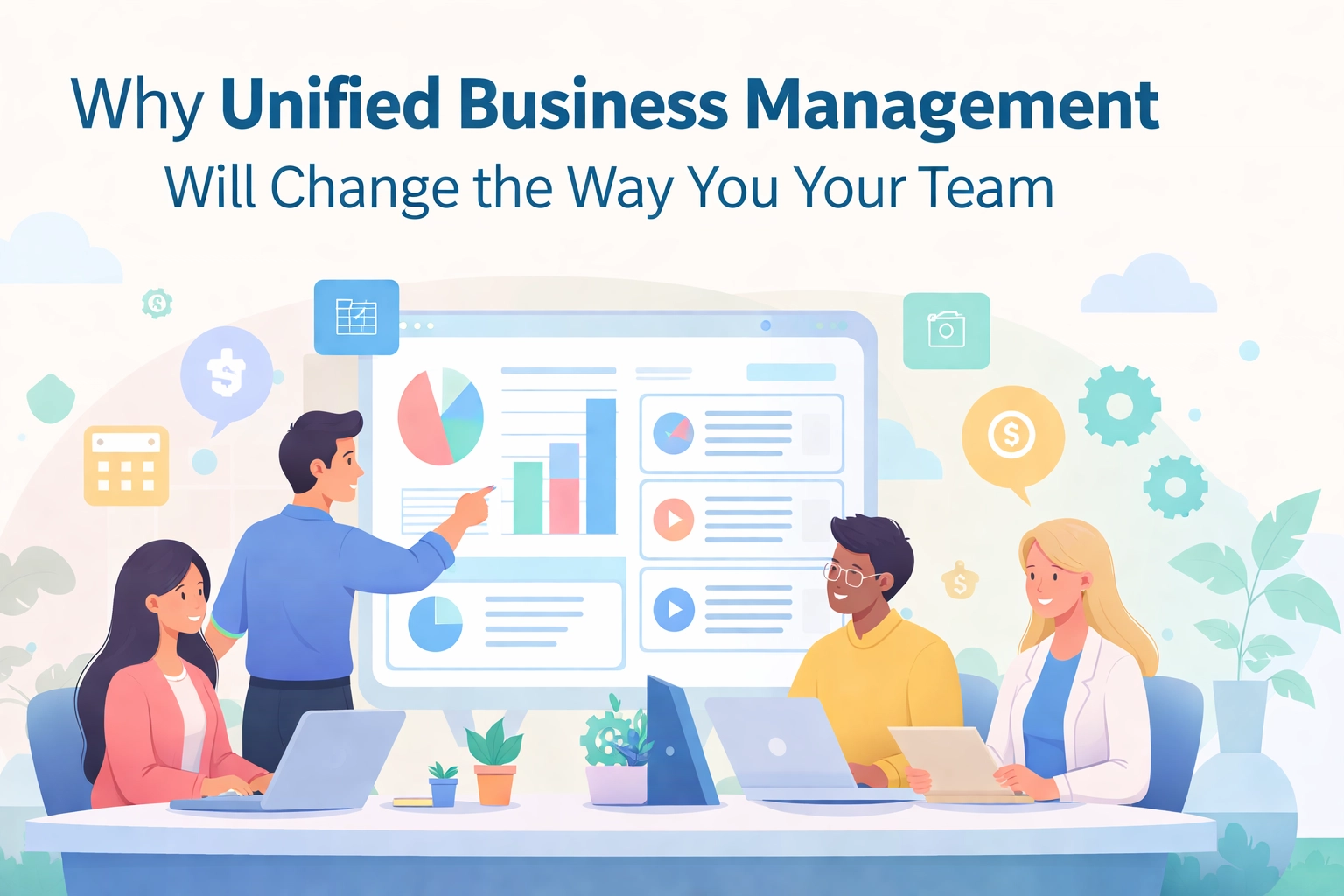
Unified business management isn't just a buzzword. It's a practical approach to running your company.
Think of it as bringing your HR, CRM, and project management under one roof. One platform. One source of truth.
Instead of jumping between tools, your team accesses everything from a single interface. Customer data. Employee records. Project timelines. Task assignments. All connected. All visible.
This integration changes how your business operates at every level.
Your sales rep closes a deal. The project team sees it immediately. HR knows when to onboard the new account manager. Finance has the billing details ready. No emails. No manual updates. No delays.
That's the Unified Advantage.
Five Ways Unified Management Transforms Your Team
Let's break down exactly how this shift impacts your daily operations.
1. Complete Visibility Across Your Business
When everything lives in one place, you see the full picture. No more guessing. No more piecing together reports from different sources.
You can track project profitability alongside employee utilization. You can see which clients need attention while monitoring team workload. You can spot problems before they become emergencies.
This visibility empowers faster, smarter decisions. Leaders don't wait for weekly updates. They have real-time data at their fingertips.

2. Seamless Collaboration Between Teams
Unified platforms break down walls between departments.
Your marketing team sees what sales is working on. Your project managers understand HR constraints. Your support team has full context on every customer interaction.
Built-in communication tools make collaboration natural. Instant messaging. File sharing. Video calls. Task comments. Everything happens where the work happens.
No more hunting through email threads. No more "let me check with the other department." Information flows freely.
3. Streamlined Workflows That Save Hours
Manual processes eat up your team's time. Copying data between systems. Sending status update emails. Creating reports from scratch.
Unified business management automates these repetitive tasks.
When a project status changes, stakeholders get notified automatically. When an employee completes their onboarding tasks, HR sees it instantly. When a client pays an invoice, the records update everywhere.
Your team stops managing tools. They start doing actual work.
4. Data-Driven Decisions Without the Headache
Good decisions need good data. But when your information is scattered across systems, analysis becomes a nightmare.
Unified platforms consolidate your data into one reliable source. You can:
- Forecast resource needs based on project pipelines
- Identify trends in customer behavior and employee performance
- Optimize strategies using comprehensive analytics
- Spot inefficiencies before they impact your bottom line
No more spreadsheet gymnastics. No more conflicting numbers. Just clear insights when you need them.
5. Real Cost Savings You Can Measure
Running multiple software subscriptions adds up fast. So does the hidden cost of managing them all.
With a unified approach, you eliminate redundant tools. You reduce the time spent on integration headaches. You cut down on training costs when new employees only need to learn one system.
Many businesses see significant reductions in their software spending. But the bigger savings come from productivity gains. When your team works efficiently, every project becomes more profitable.

Why This Matters More for Growing Businesses
Large enterprises have dedicated IT teams. They have integration specialists. They can afford to duct-tape their systems together.
Small and medium businesses? You need things to just work.
The Unified Advantage levels the playing field. It gives growing teams the operational efficiency that used to require enterprise-level resources.
Think about what you could do with an extra five hours per week. Per employee.
- Close more deals
- Deliver projects faster
- Improve client relationships
- Actually take a lunch break
Unified business management doesn't just make work easier. It creates space for growth.
Making the Switch: Easier Than You Think
Here's what holds most business owners back. They imagine a painful migration. Months of setup. Disrupted workflows. Frustrated employees.
Modern unified platforms are built differently.
They're designed for teams who don't have time for complicated implementations. They focus on intuitive interfaces that your team can learn quickly. They offer templates and guides that get you running fast.
The key is choosing a platform that understands small business realities. One that grows with you. One that simplifies instead of complicates.

What to Look for in a Unified Platform
Not all solutions are created equal. Here's what matters most:
True integration. Your HR, CRM, and project management should share data seamlessly. Not just live side by side.
Simplicity. If it takes weeks to learn, it's not the right fit. Look for clean interfaces and logical workflows.
Flexibility. Your business is unique. Your platform should adapt to how you work, not force you into rigid processes.
Scalability. Today you might have ten employees. Next year, maybe fifty. Your tools should grow with you.
Support that actually helps. When questions arise, you need real answers. Fast.
Your Team Deserves Better
Running a business is hard enough. Your tools shouldn't make it harder.
Unified business management brings clarity to chaos. It turns scattered data into actionable insights. It transforms frustrated employees into focused, productive team members.
The businesses that thrive aren't always the biggest. They're the ones that operate smarter. That move faster. That make decisions with confidence.
That's what the Unified Advantage delivers.
Your team is ready for it. Your business needs it. And the technology exists today to make it happen.
Take a look at how TeamsMaster brings HR, CRM, and project management together in one simple platform. Built for growing businesses. Designed to keep things uncomplicated.
Because managing your team should feel empowering. Not exhausting.