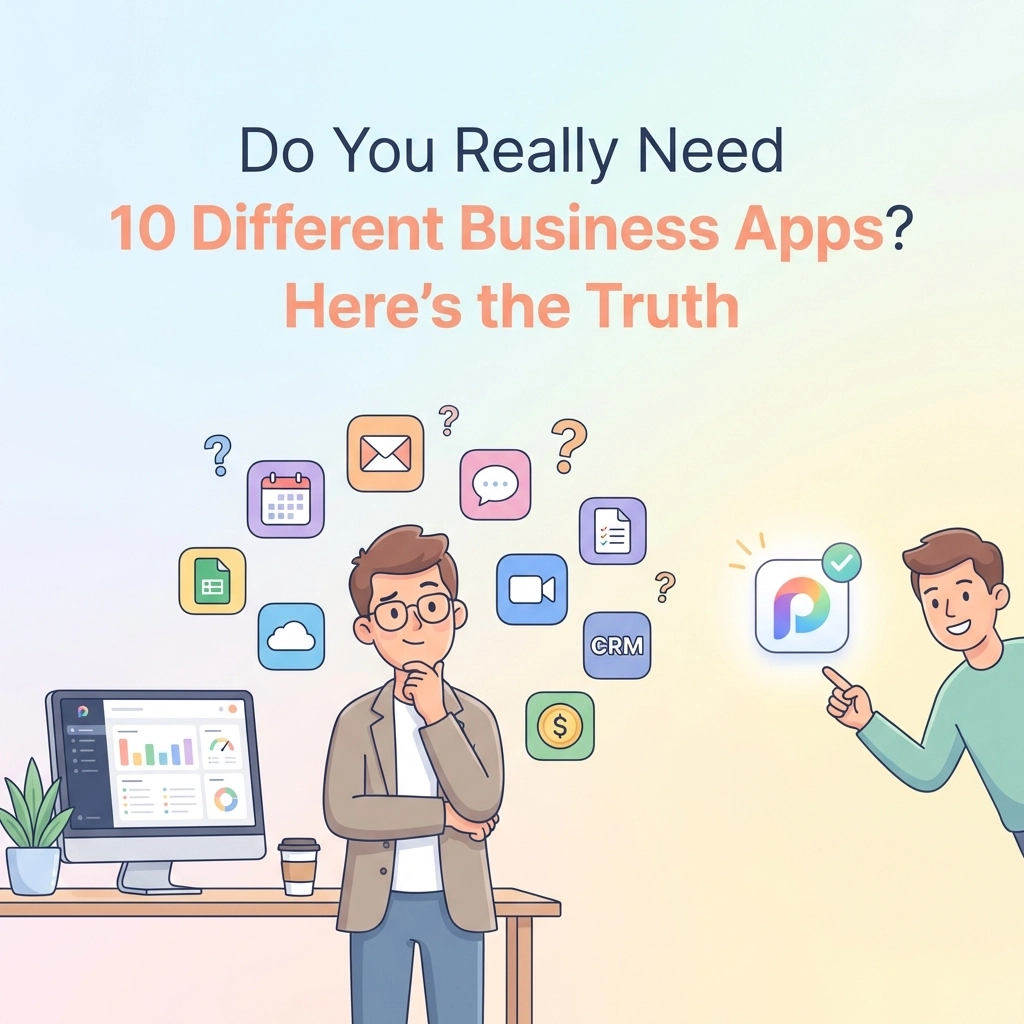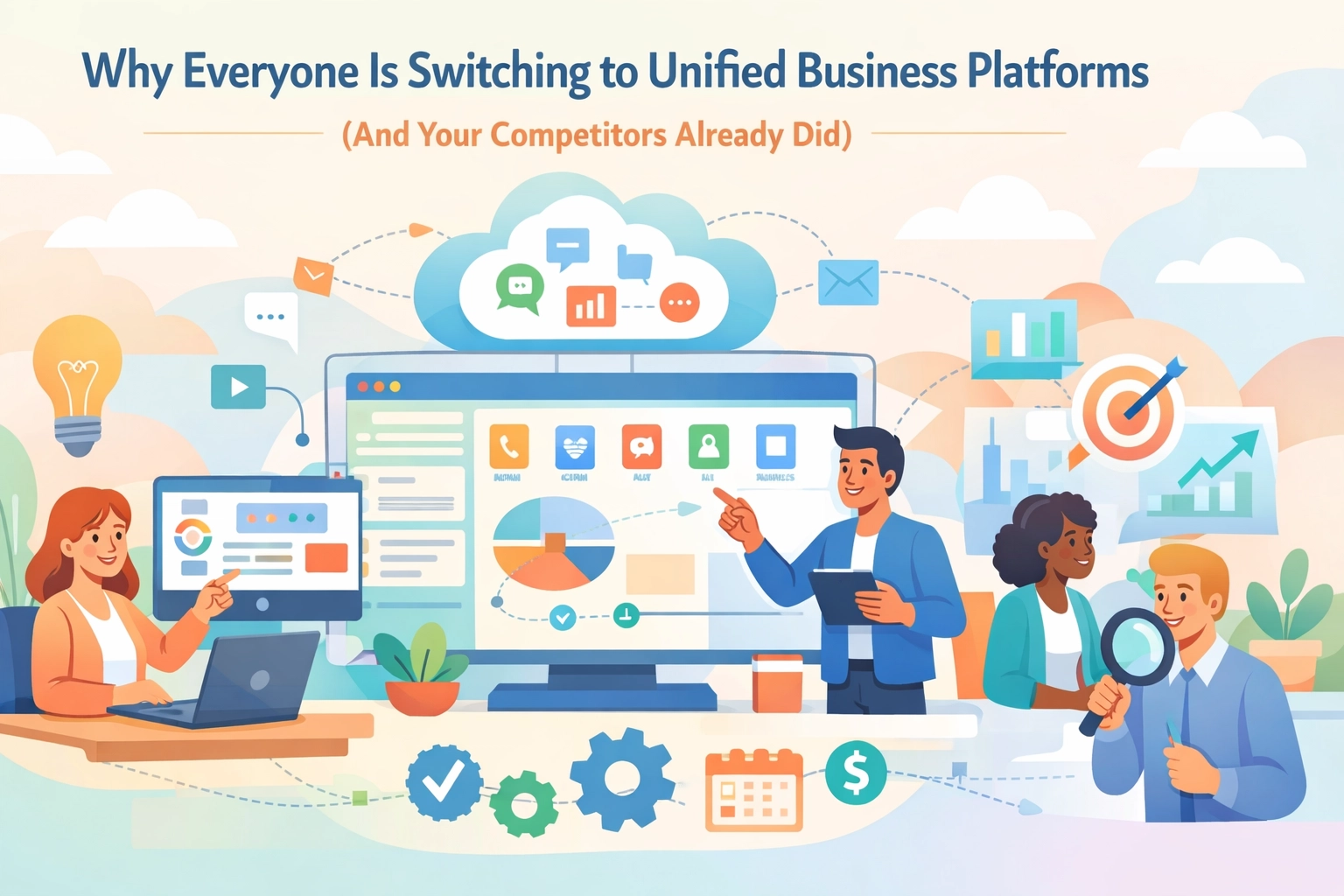
Let's be real. Your competitors aren't winning because they're smarter than you.
They're winning because they stopped juggling five different software tools and unified everything. While you're still copying data between your CRM, your project management tool, and your HR system, they're already analyzing results and moving on to the next opportunity.
The gap is widening. And it's happening faster than you think.
The Hidden Tax You're Paying Every Single Day
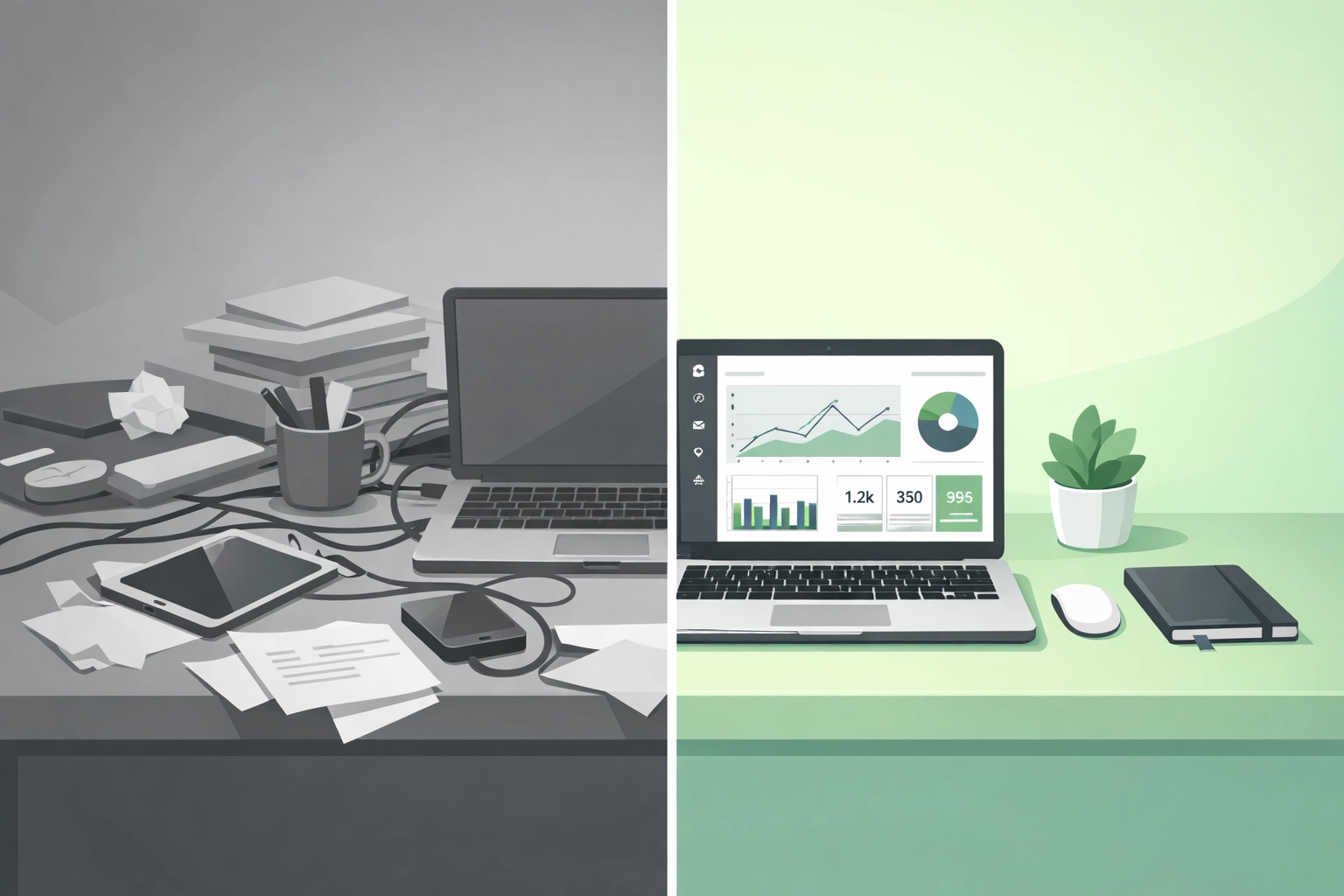
You probably don't even notice it anymore. But every day, your team wastes hours switching between apps, manually updating information, and trying to piece together what's actually happening in your business.
Your sales rep logs a call in the CRM. Then updates the project board. Then sends a message in Slack. Then updates the spreadsheet your finance person needs. That's one call. Multiply that by every interaction your team has, and you're bleeding productivity.

The math is brutal. Studies show fragmented systems cost SMBs an average of 20-30 hours per week in lost productivity. That's nearly a full-time employee doing nothing but moving information around.
Meanwhile, businesses on unified platforms are using that time to actually grow.
What Actually Happens When You Unify
Here's what changes when you stop managing software and start managing your business:
Your costs drop immediately. Instead of paying for separate HR software, CRM licenses, project management tools, and communication platforms, you're paying for one. Your software budget shrinks by 40-60% on average.
Your team speeds up dramatically. No more app switching. No more hunting for information. Everything lives in one place. Projects that took days to coordinate now take hours.
You actually know what's happening. Real-time dashboards show you everything. Revenue, project status, team capacity, customer satisfaction. You spot problems before they become disasters.
Your decisions get better. You're not guessing anymore. You have complete data, not fragments from different systems that don't talk to each other.
The Three Areas That Transform Completely
When SMBs unify their platforms, three areas see the biggest impact:
HR Gets Out of the Stone Age
Remember when managing time off meant checking an email, updating a spreadsheet, and hoping you didn't accidentally approve overlapping vacations?
Unified platforms put HR workflows on autopilot. Time tracking syncs with project management. Leave requests trigger automatic team notifications. Performance reviews pull data from actual project contributions, not vague memories.
Your HR person stops being a data entry clerk and starts being strategic.
CRM Becomes Actually Useful
Most CRMs are data graveyards. People enter information once and never look at it again because the CRM doesn't connect to anything else.
In a unified platform, your CRM is alive. When a sales opportunity closes, it automatically creates projects with the right team members. Customer issues trigger tasks. Revenue data flows straight into financial dashboards.
Your sales team stops hating the CRM. Because now it actually helps them.

Project Management Finally Reflects Reality
Ever opened your project management tool and realized half the tasks are outdated because people forgot to update them?
Unified platforms fix this. When your team logs time, updates client records, or completes HR tasks, the project management side updates automatically. You see real capacity, real progress, and real bottlenecks.
No more status meetings where everyone spends an hour explaining what the software should already show.
The SMB Advantage Nobody Talks About
Here's something big companies don't want you to know: unified platforms give SMBs a massive advantage.
Large corporations are stuck with legacy systems. They have decades of technical debt. Moving to unified platforms takes them years and millions of dollars.
You? You can switch in weeks.
You're nimble. You can make decisions fast. You don't have layers of approval and entrenched IT departments protecting their territory.
Businesses with under 200 employees are unifying faster than enterprise companies. And they're using that agility to compete directly with much larger competitors.
The playing field is leveling. Fast.
What Your Day Actually Looks Like After Switching
Morning starts differently. You open one dashboard instead of five tabs.
You see your team's capacity across all projects. You spot a potential deadline issue before anyone panics. You notice a customer hasn't heard from your team in a week and assign a check-in task.
All of this takes three minutes.
Your project manager messages you about a new client. You check their CRM history, see the project requirements, and assign team members based on their actual availability: because the system shows real workload, not guesses.
That takes two minutes.

Your HR person needs vacation approval. You see the request, check team coverage automatically, and approve it. The system updates the calendar and notifies the team.
Thirty seconds.
You're not managing software anymore. You're managing your business.
The Competitive Reality Right Now
Your competitors who switched six months ago? They're already seeing results.
Their project delivery time dropped by 30%. Their operational costs fell by 45%. Their customer satisfaction scores jumped because response times improved.
They're not working harder. They're working unified.
And every month you wait, the gap grows wider.
What to Look for in a Unified Platform
Not all unified platforms are created equal. Here's what actually matters for SMBs:
True integration, not bolted-on features. If the HR module feels like it was stapled onto a CRM, it probably was. Everything should feel like it was built together.
Simple enough for your team to actually use. Complicated software sits unused. Your team should understand the platform in hours, not weeks.
Scales with you. You need something that works for 20 people and still works when you hit 200.
Real-time visibility. If you can't see what's happening right now, across all departments, what's the point?
Designed for how you actually work. Does it fit your workflows, or do you have to contort your business to fit the software?
The Question Isn't If Anymore
The shift to unified platforms isn't a trend. It's a fundamental change in how businesses operate.
You can either lead this transition or play catch-up for the next five years.
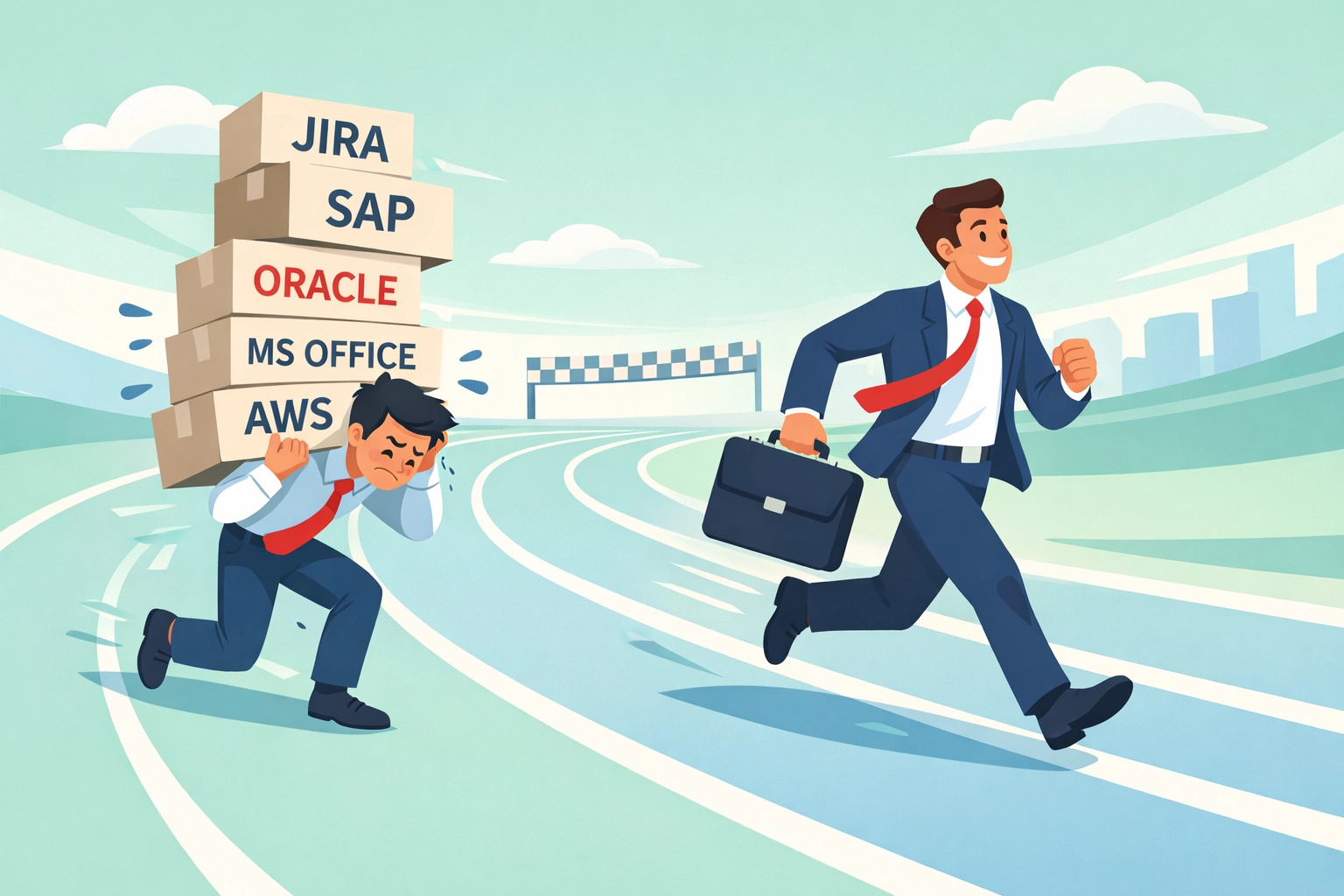
Your competitors already made their choice. The businesses winning in your market aren't there by accident. They unified, simplified, and accelerated while everyone else stayed fragmented.
The question isn't whether you should switch. It's how quickly you can make it happen.
Because every day you wait, someone else is using their unified advantage to take the business that should be yours.
Ready to see what unified actually feels like? Check out TeamsMaster and see why SMBs are making the switch.