Let's talk about something uncomfortable.
Your software stack is probably bleeding money. Right now. As you read this.
The average company uses over 100 SaaS applications. Most don't even know half of them exist. That's subscriptions renewing quietly in the background. Month after month. Year after year.
It's called SaaS sprawl. And it's the silent budget killer nobody talks about.
The good news? You don't need a six-month audit or an expensive consultant to fix it. These seven quick hacks will help you plug the leaks starting today.
What Exactly Is SaaS Sprawl?
SaaS sprawl happens when your organization accumulates too many software subscriptions. Some overlap. Some go unused. Many fly completely under the radar.
It usually starts innocently enough.
Marketing signs up for a project tool. Sales gets their own CRM. HR finds a "better" leave tracker. Finance picks a different invoicing app.
Before you know it, you're paying for five tools that do the same thing. And nobody's talking to each other.
Sound familiar?

The Real Cost of Software Chaos
Here's what SaaS sprawl actually costs you:
- Wasted subscriptions. Unused licenses sitting idle every month.
- Duplicate functionality. Three different apps for project management? Classic.
- Training overhead. New hires need to learn a dozen disconnected tools.
- Security risks. Shadow IT creates gaps you don't even know about.
- Lost productivity. Switching between apps eats hours every week.
One study found that companies waste about 30% of their SaaS budget on unused or duplicate software.
That's not a rounding error. That's real money walking out the door.
Ready to stop the bleeding? Let's dive into the hacks.
Hack #1: Run a Quick Software Audit
You can't fix what you can't see.
Start by listing every single software subscription your company pays for. Check credit card statements. Review expense reports. Ask department heads what tools their teams use.
You'll be surprised what shows up.
That random tool someone signed up for two years ago? Still charging $29/month. The "free trial" that converted to paid? Still running.
Create a simple spreadsheet with these columns:
- Tool name
- Monthly cost
- Department using it
- Primary purpose
- Last login date
This exercise alone usually uncovers thousands in wasted spend. Most companies find 5-10 subscriptions they forgot existed.
Hack #2: Hunt Down the Duplicates
Now look at your list with fresh eyes.
How many tools do the same thing?
It's common to find multiple project management apps. Or three different communication platforms. Or two HR systems running in parallel.
Ask yourself: Do we really need Slack AND Microsoft Teams AND Discord?
Pick one. Kill the others.
This doesn't mean forcing everyone onto terrible software. It means making intentional choices instead of letting chaos decide for you.

Hack #3: Check Your License Utilization
Here's a dirty secret about SaaS pricing.
Most companies buy more seats than they need. They plan for growth that never comes. Or they forget to remove departed employees.
Log into your admin panels. Check how many licenses you're paying for versus how many are actually active.
The math is often brutal.
Paying for 50 seats but only 32 people log in? That's 18 licenses you can downgrade or cancel. Instantly.
Set a calendar reminder to review this quarterly. People leave. Roles change. Your software costs should change too.
Hack #4: Establish a Simple Approval Process
This hack prevents future sprawl before it starts.
Create a basic rule: No new software without approval.
It doesn't need to be bureaucratic. A simple Slack message to IT or finance works fine. The goal is awareness, not red tape.
When someone requests a new tool, ask three questions:
- What problem does this solve?
- Do we already have something that does this?
- What's the actual cost (including hidden fees)?
You'd be amazed how often the answer to question two is "yes."
This small friction stops impulse purchases. It forces people to check existing tools first. And it keeps your software stack intentional.
Hack #5: Negotiate Like You Mean It
Most people accept the sticker price. Don't be most people.
SaaS vendors expect negotiation. Their pricing pages aren't set in stone.
Here's what to try:
- Ask for annual discounts. Paying yearly often saves 15-20%.
- Request volume pricing. More seats usually means lower per-seat costs.
- Mention competitors. Nothing motivates a sales rep like potential churn.
- Time it right. End of quarter? They're hungry to close deals.
Even a 10% discount across all your subscriptions adds up fast. That's money back in your pocket for a 15-minute conversation.

Hack #6: Set Up Recurring Reviews
Software sprawl isn't a one-time problem. It's an ongoing battle.
Set a quarterly reminder to review your stack. Just 30 minutes every three months keeps things tight.
During each review, ask:
- What new subscriptions appeared?
- What's not being used anymore?
- Are there any new overlap issues?
- Can we consolidate anything?
Think of it like weeding a garden. Do it regularly and it's easy. Ignore it and you've got a jungle.
Track simple metrics over time. Total number of apps. Total monthly spend. Average utilization rate. Watch those numbers trend downward.
Hack #7: Consolidate Into One Platform
This is the big one. The hack that makes all other hacks easier.
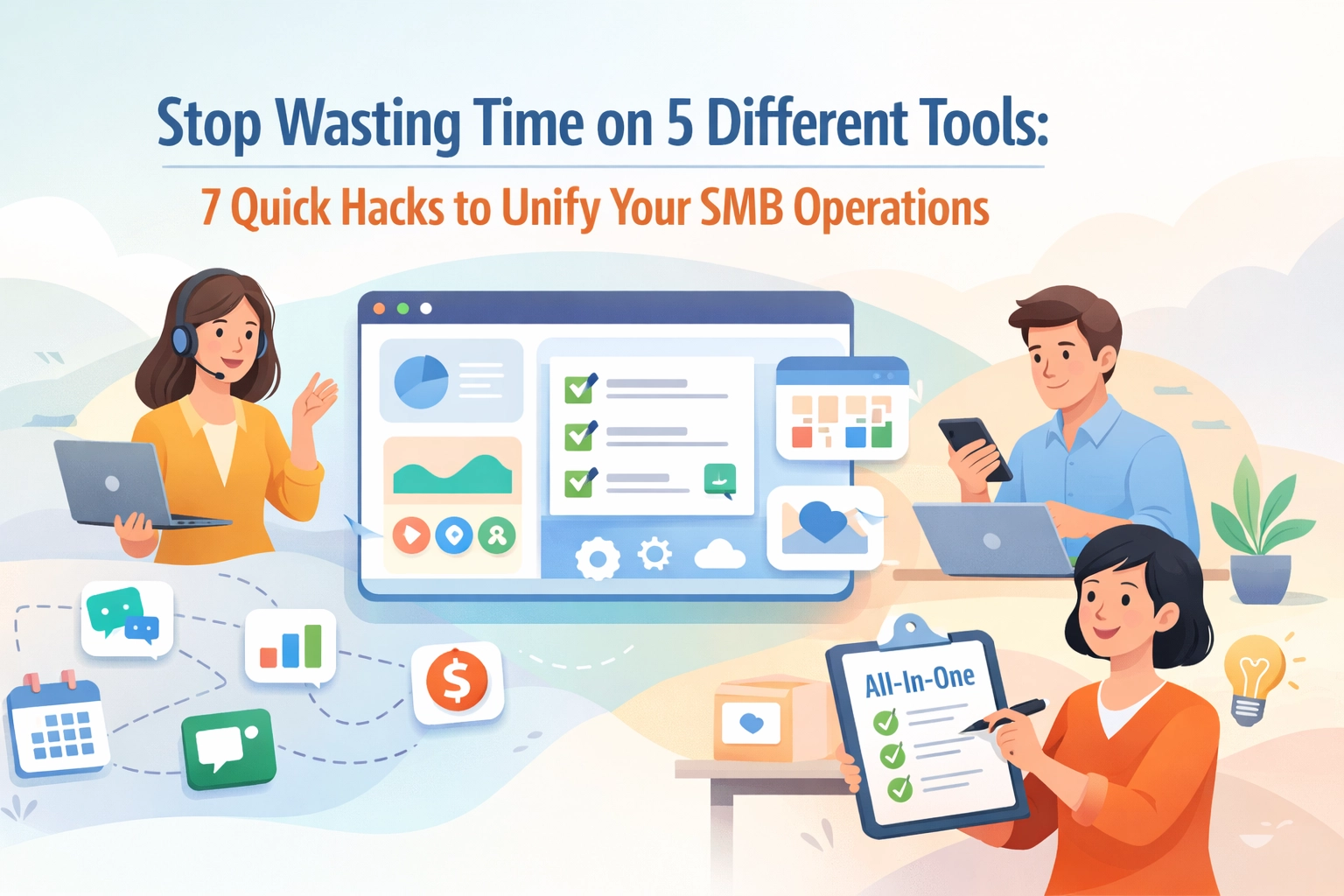
Instead of juggling 10 different tools, what if you had one?
One place for projects. One place for HR. One place for communication. One place for everything your team actually needs.
That's the whole idea behind TeamsMaster.
It combines project management, HR tools, CRM, communication, and more into a single platform. No more app-switching. No more duplicate subscriptions. No more wondering which tool has the information you need.
Your team learns one interface. Your finance team pays one bill. Your IT team manages one system.
Simple.
The consolidation approach doesn't just save money (though it definitely does that). It saves time. It saves sanity. It makes work actually feel like work instead of a software scavenger hunt.

The Bottom Line
SaaS sprawl is expensive. But it's also fixable.
You don't need a massive overhaul. Start small:
- Audit what you have
- Eliminate duplicates
- Right-size your licenses
- Approve new purchases carefully
- Negotiate better deals
- Review regularly
- Consolidate where possible
Each hack builds on the last. Together, they create a leaner, more intentional software stack.
The goal isn't to use less software. It's to use the right software. Fewer tools that do more. Less chaos, more clarity.
Your budget will thank you. Your team will thank you. And you'll wonder why you waited so long to tackle this.
Ready to simplify? TeamsMaster might be the consolidation partner you've been looking for.