Managing a hybrid team shouldn't feel like juggling flaming torches while riding a unicycle.
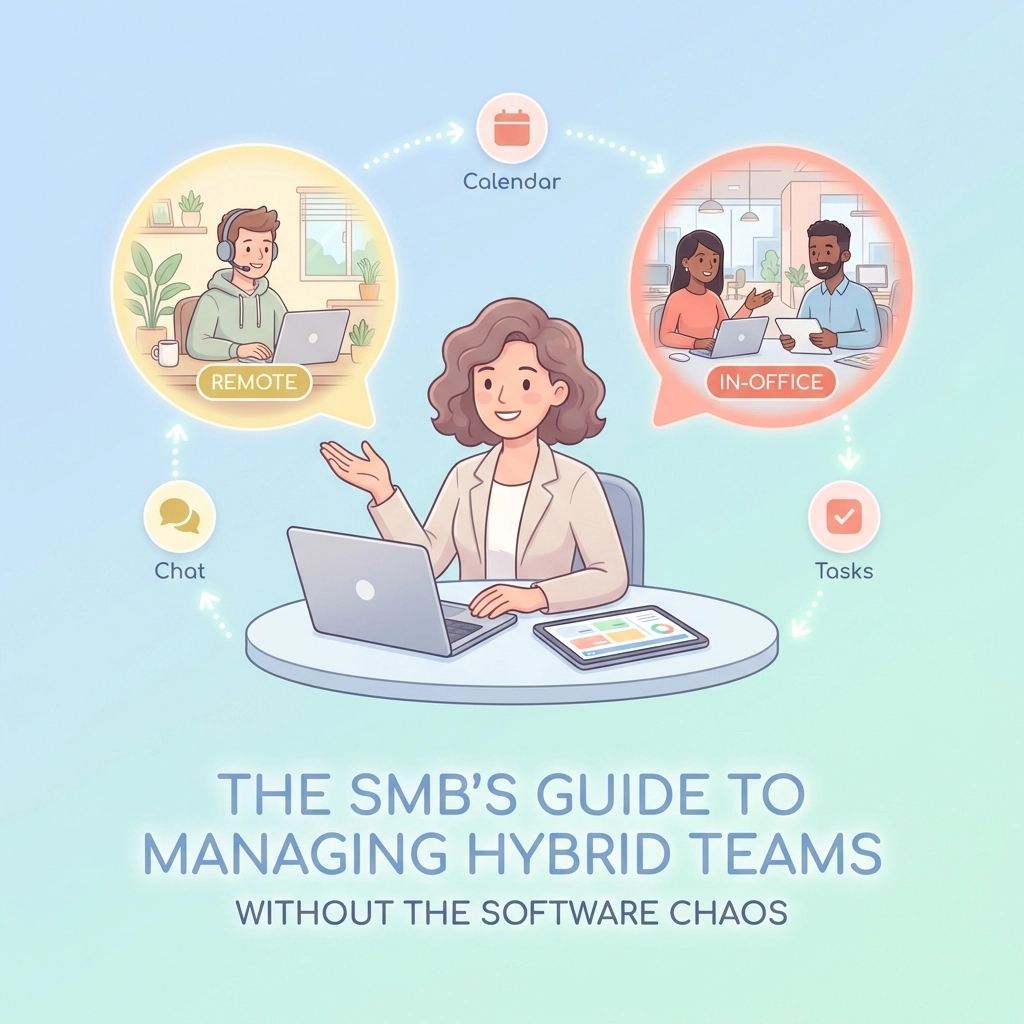
But for many small and medium business owners, that's exactly what it feels like. Half your team is in the office. The other half is scattered across living rooms, coffee shops, and home offices. And somehow, you're supposed to keep everyone on the same page.
The usual advice? Add more software. Get a tool for chat. Another for projects. One more for time tracking. Before you know it, you're drowning in tabs and subscriptions.
There's a better way. Let's talk about it.
The Real Problem Isn't Remote Work
Here's the thing. Remote and hybrid work isn't the enemy. The chaos comes from how we manage it.
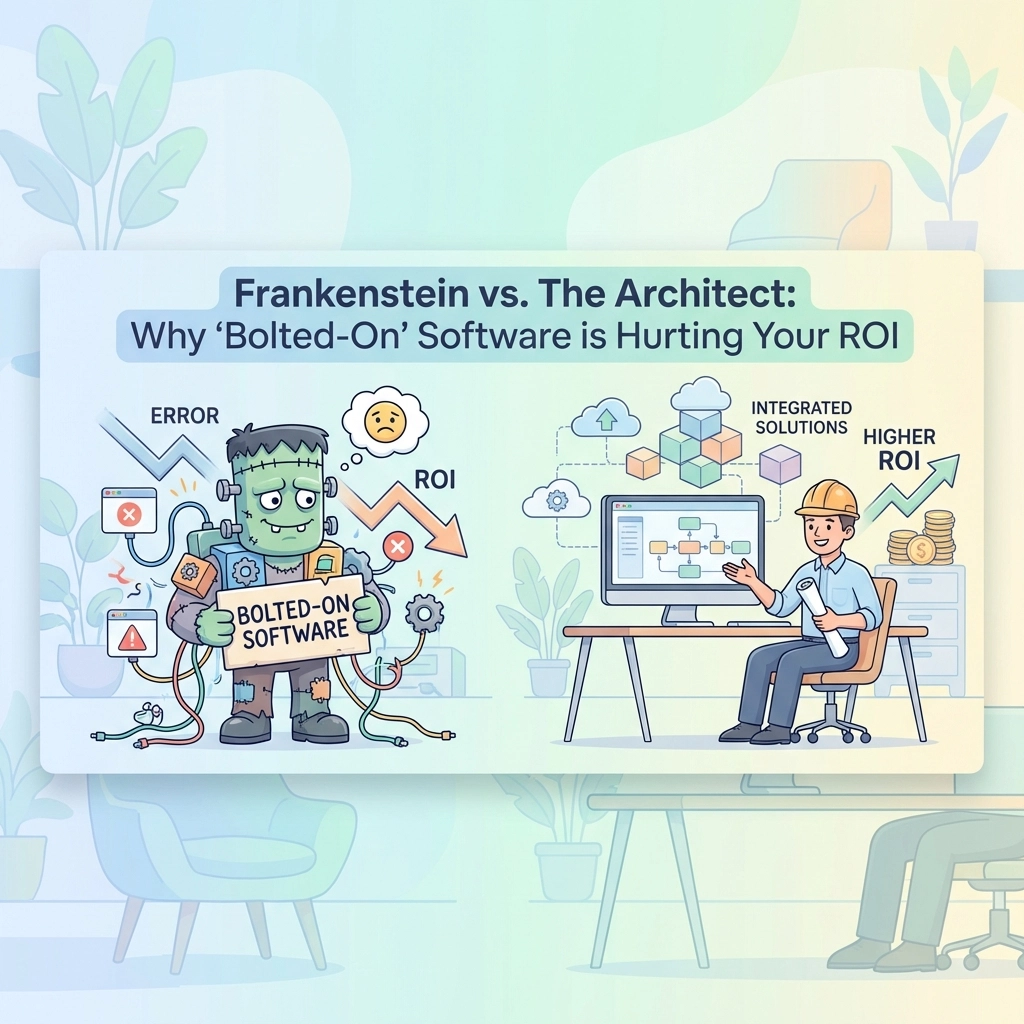
Most SMBs fall into the same trap. They adopt one tool for communication. Another for project management. A third for HR stuff. Maybe a fourth for customer relationships. Each tool has its own login. Its own notifications. Its own learning curve.
Your team ends up spending more time switching between apps than actually working.
Sound familiar?

Why Software Sprawl Hurts Your Team
Let's break down what happens when you have too many tools:
Information gets lost. Sarah posted the client update in Slack. But John was looking for it in email. Meanwhile, the project details are buried somewhere in Asana. Nobody knows where anything is.
Communication fragments. Some conversations happen in chat. Others in video calls. A few more in comment threads. Decisions get made in three different places. Good luck tracking what was agreed upon.
Onboarding becomes a nightmare. New hires need training on five different platforms before they can do their actual job. That's hours of productivity gone.
Costs add up. Each "affordable" $10/month tool doesn't seem like much. Until you realize you're running eight of them. That's nearly $100 per employee, per month. For a team of 20? You're looking at $24,000 a year. Just on software.
The irony? All these tools were supposed to make work easier.
The One-System Approach
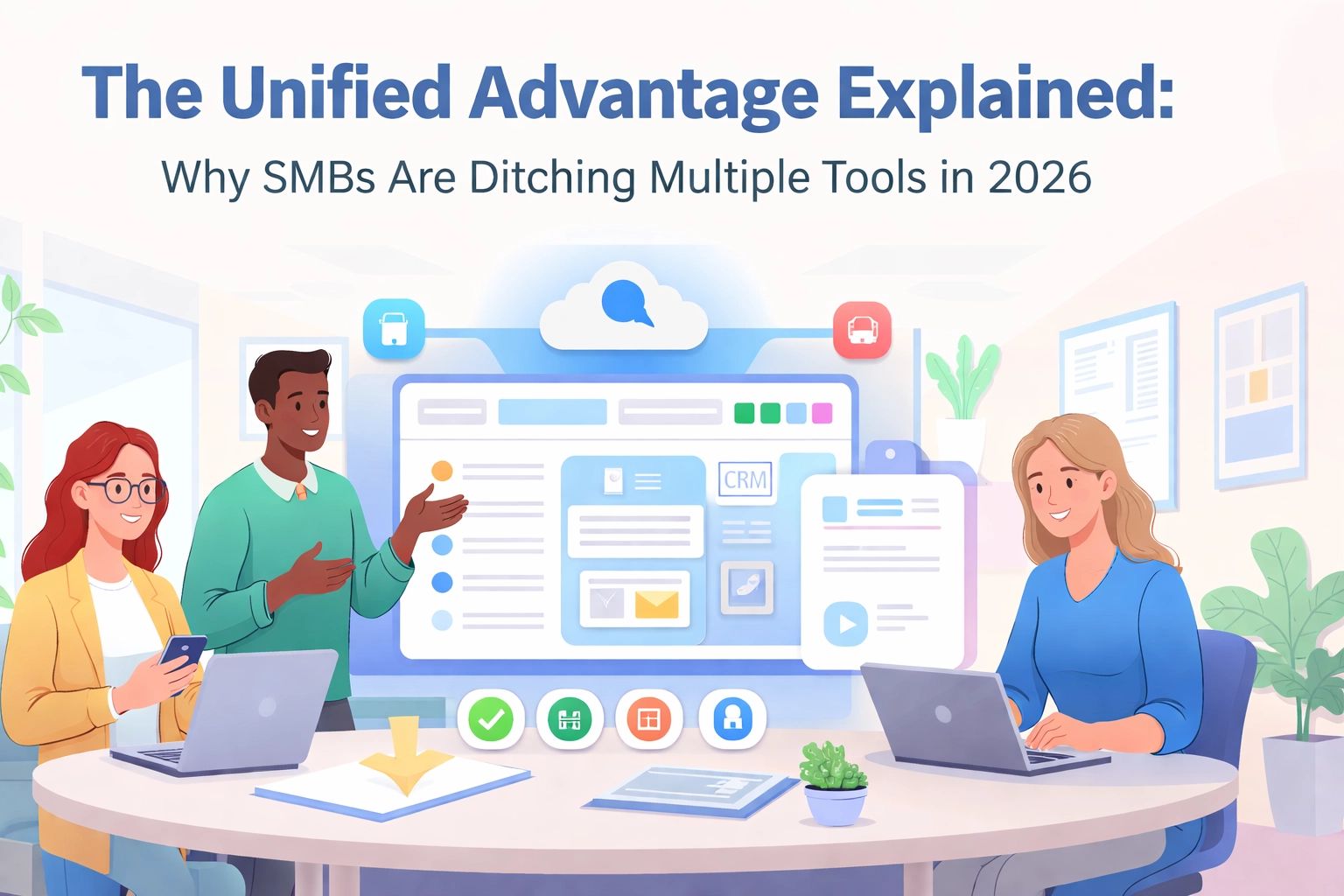
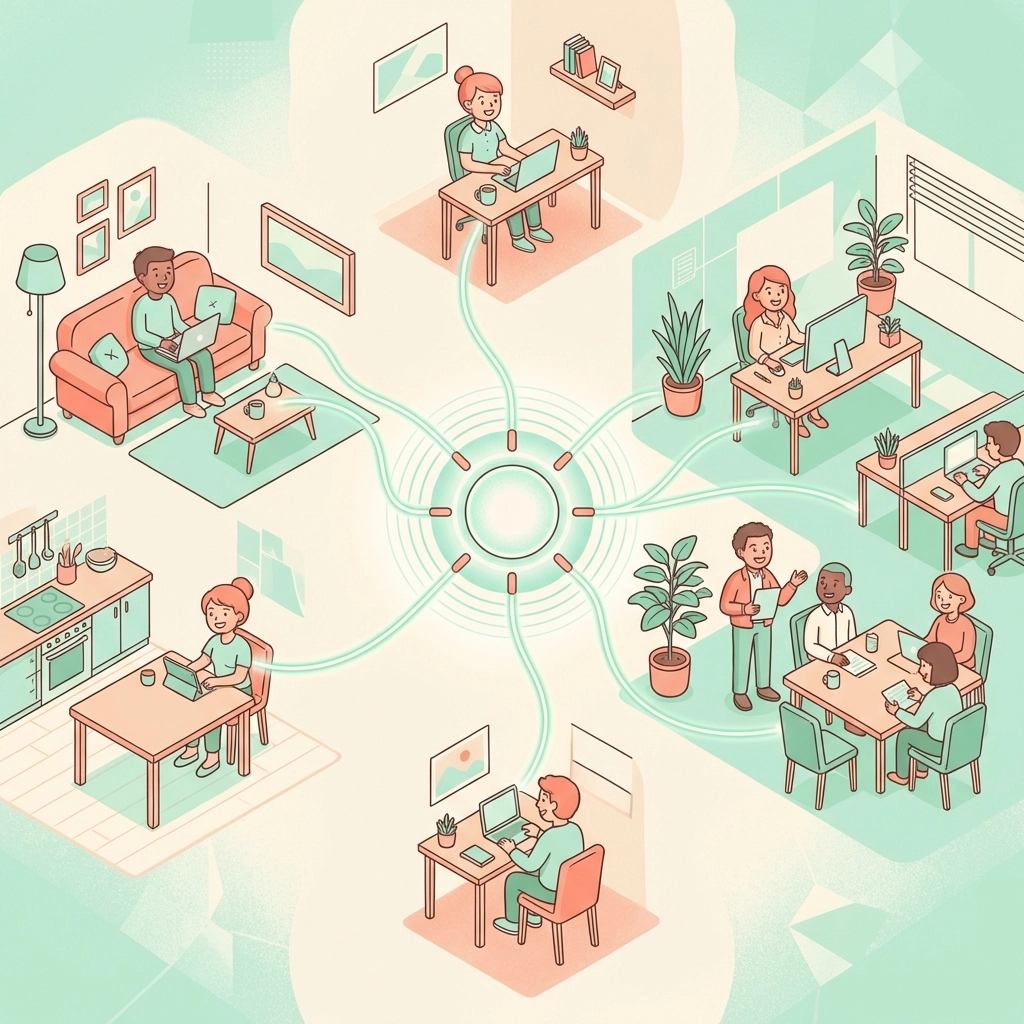
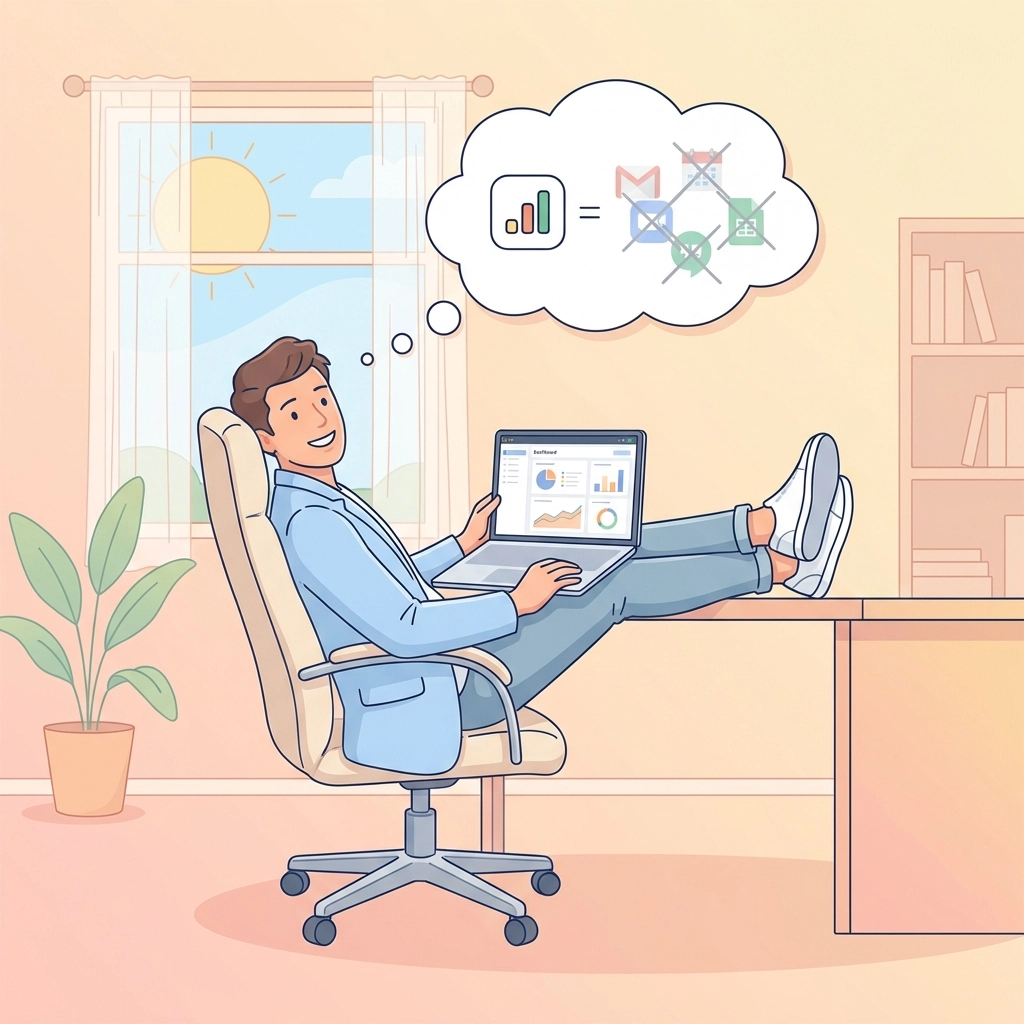
What if you could manage your entire hybrid team from one place?
Tracking. Communication. Reporting. All in a single system.
This isn't about finding the "perfect" tool. It's about simplifying your stack so your team can focus on work instead of tool management.
Here's what a unified approach looks like:
- One place for tasks. Everyone knows where to check their to-do list.
- One place for updates. No more hunting through three apps for that status report.
- One place for communication. Team chat, project comments, and announcements live together.
- One source of truth. When someone asks "where's that file?" the answer is always the same.
Building Your Hybrid Team Playbook
Switching to a simpler system is just the first step. You also need clear guidelines for how your team operates.
Define Your Communication Rules
Start by mapping out which channels serve which purpose. Keep it simple:
- Quick questions? Team chat.
- Detailed discussions? Project comments or threads.
- Official decisions? Documented in the system.
- Urgent emergencies? Phone call or direct message.
When everyone knows the rules, nobody wastes time wondering where to post something.
Create a Meeting Rhythm
Hybrid teams often overcorrect in two directions. Either they have zero meetings and lose all connection. Or they schedule endless video calls that kill productivity.
Find the middle ground:
- Daily async updates. Team members post brief status updates on their own schedule. This creates visibility without requiring everyone to be online at the same time.
- Weekly team standups. One 30-minute call to align on priorities and remove blockers.
- Bi-weekly one-on-ones. Short check-ins between managers and direct reports. Great for catching issues before they become problems.
- Monthly all-hands. A chance to reinforce culture and celebrate wins.
This rhythm keeps everyone connected without drowning in Zoom fatigue.
Focus on Outcomes, Not Activity
Here's where many SMBs go wrong with hybrid teams. They try to monitor everything.
Mouse movements. Keystrokes. Screenshots every five minutes. It's exhausting for everyone involved.
Instead, shift to an outcome-based approach. Define what success looks like. Set clear deliverables and deadlines. Then trust your team to get there.
This does two things:
- It reduces the need for surveillance software. Less tools, less chaos.
- It shows your team you trust them. That trust pays dividends in loyalty and performance.
What to Look for in a Unified Platform
Not all "all-in-one" platforms are created equal. Some are just bloated software pretending to do everything.
Here's what actually matters for SMBs:
Easy to learn. Your team shouldn't need a certification to use it. Look for intuitive interfaces and minimal setup time.
Flexible enough for your workflow. Every business is different. Your platform should adapt to how you work, not force you into someone else's process.
Solid mobile experience. Hybrid teams aren't always at desks. The tool needs to work just as well on a phone.
Affordable at scale. Check the pricing as your team grows. Some platforms get expensive fast.
Good support. When something breaks at 9 PM on a Tuesday, you need help. Not a chatbot that sends you to a FAQ page.
Making the Switch Without Losing Your Mind
Changing systems can feel overwhelming. But it doesn't have to be.
Start Small
Don't try to migrate everything at once. Pick one department or one project. Test the new system there. Iron out the kinks. Then expand.
Get Buy-In Early
Involve your team in the decision. Show them the benefits. Address their concerns. People support what they help create.
Set a Clear Cutoff Date
Running two systems in parallel leads to confusion. Set a date when the old tools go away. Stick to it.
Document Everything
Create a simple guide for your team. How to log in. Where to find things. Who to ask for help. Make it easy to reference.

The Payoff
When you get this right, something magical happens.
Your team stops asking "where is that?" They just know.
Meetings become shorter because everyone has context before they start.
New hires get up to speed in days, not weeks.
You spend less money on software and more on growing your business.
And most importantly? Your hybrid team actually feels like a team. Not a collection of people scattered across the internet, struggling to stay connected.
Ready to Simplify?
Managing a hybrid team doesn't require a dozen different tools. It requires clarity. One system. Clear guidelines. And a commitment to simplicity.
If you're tired of the software chaos, it might be time to rethink your approach.
TeamsMaster was built for exactly this. One platform for tracking, communication, and reporting. Everything your hybrid team needs, nothing they don't.
Give it a look. Your future self (and your team) will thank you.