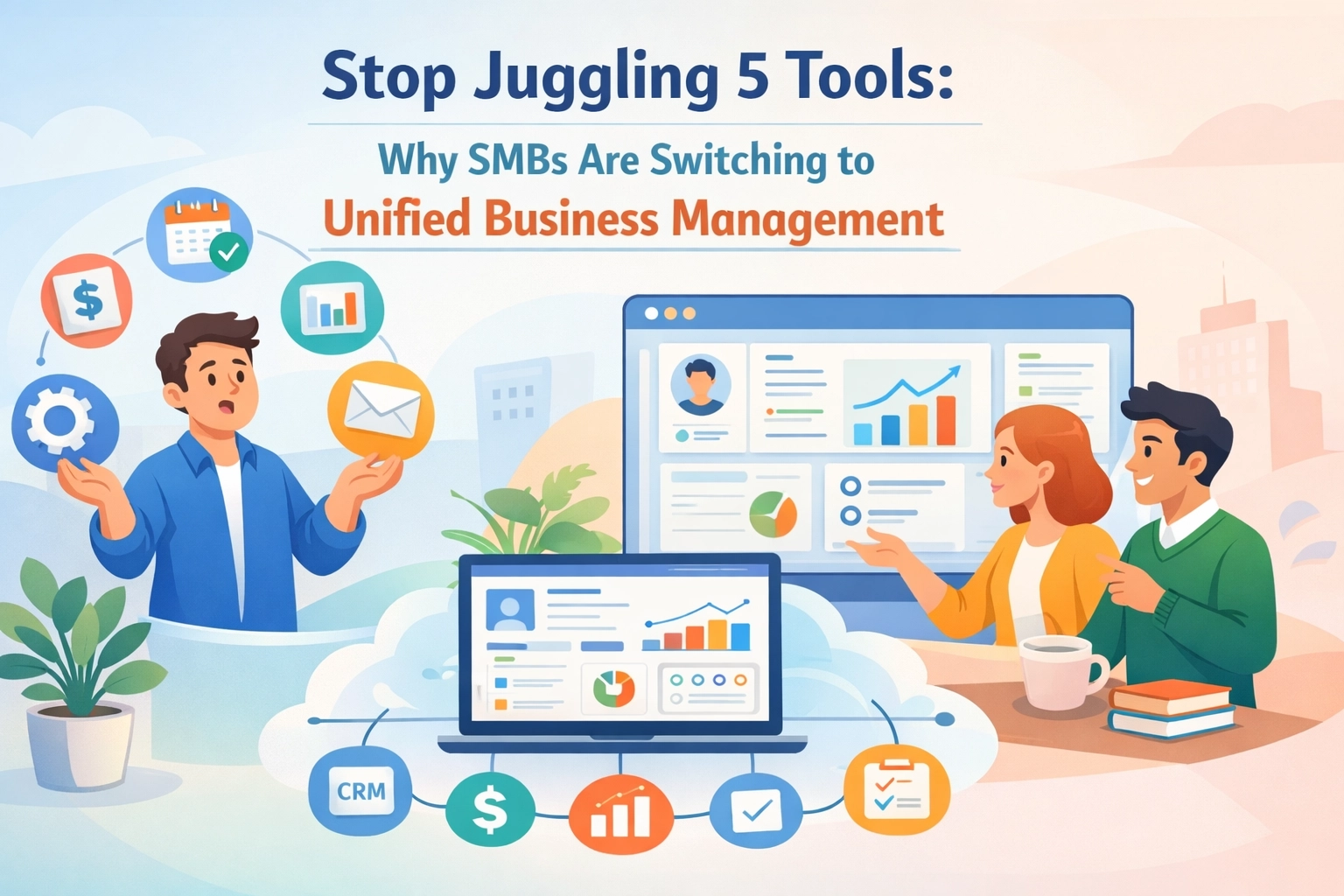
You know the drill. It's 10 AM and you're already drowning in tabs.
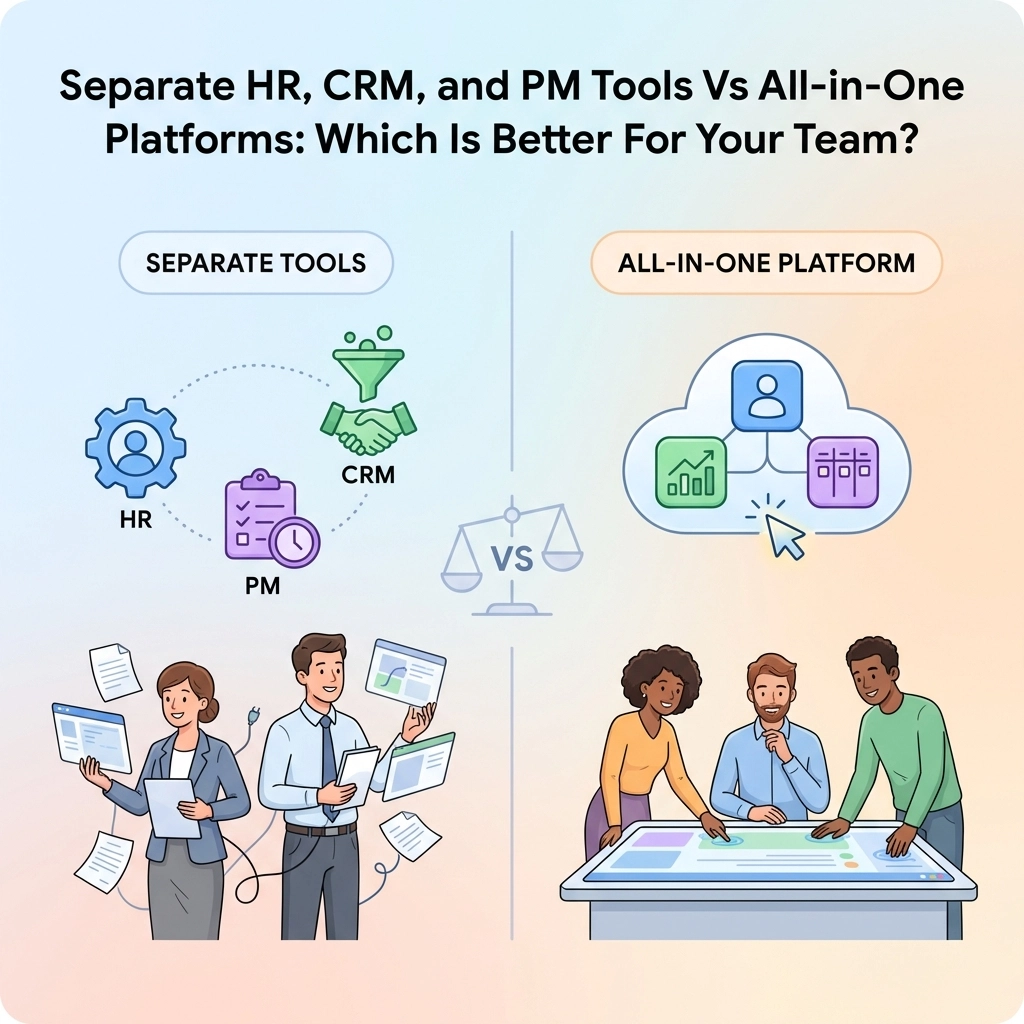
Your HR platform is open in one window. Your CRM is in another. Project management? That's tab number three. Plus Slack, plus your email, plus whatever accounting software you're using this quarter.
Sound familiar?
You're not alone. The average small business now uses five to seven different tools just to keep the lights on. And it's killing your productivity.
The Hidden Tax of Tool Sprawl
Here's what nobody tells you about running separate systems for everything.
Every time your team switches between apps, they lose momentum. They lose context. And they lose precious minutes that add up to hours every single week.

Your sales rep needs to check a customer's project status. They jump from your CRM to your project tool. Then back to email. Then to Slack to ask someone a question.
That's not efficiency. That's chaos with a subscription fee.
And the costs pile up fast. Multiple subscriptions mean multiple bills every month. Multiple logins mean multiple password resets. Multiple data silos mean your team never has the full picture when they need it most.
Customer information sits in your CRM. Project details live in another tool. HR records are somewhere else entirely. When everything's scattered, nothing connects.
Why Smart SMBs Are Making the Switch
The trend is clear. Small and medium businesses are ditching the multi-tool madness for unified business management platforms.
Why? Because they're tired of paying the hidden tax.
Unified systems bring everything under one roof. Your HR functions, your CRM, and your project management all work together. Same login. Same interface. Same place.
No more jumping between screens. No more "which tool was that in again?" moments. No more duplicate data entry because systems don't talk to each other.
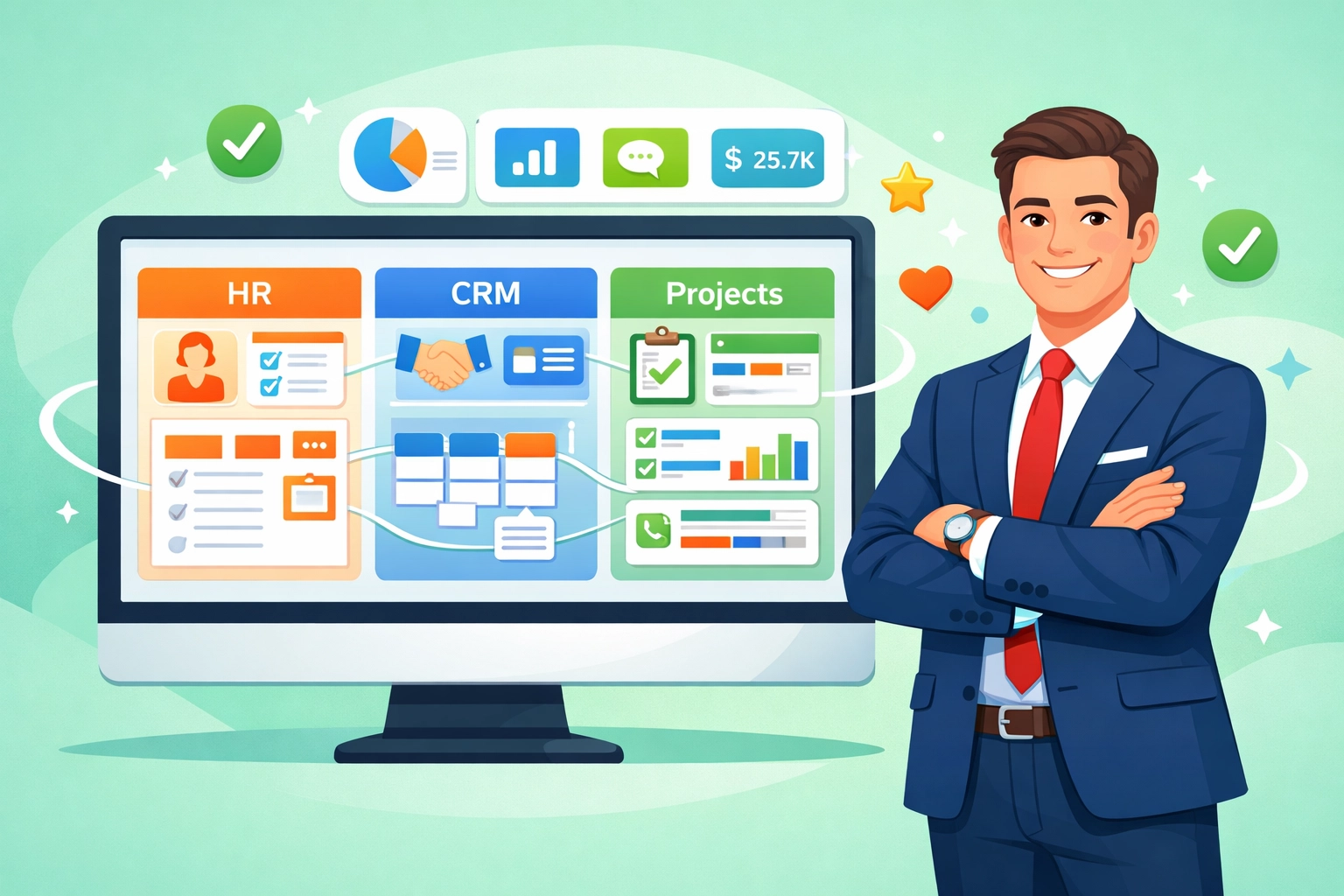
It's simple math. One platform means one subscription. One learning curve for your team. One place to find what you need.
The Real Benefits That Move the Needle
Let's talk about what actually changes when you switch to a unified platform.
Your Team Gets Time Back
Think about how many times a day your team switches apps. Now imagine cutting that down to zero.
With everything in one place, your employees spend their time working instead of hunting. They check a project update right next to the client's contact history. They assign tasks while looking at team availability.
No context switching. No mental gymnastics.
Your team knows exactly where everything lives. Files, conversations, customer data, project timelines: all accessible without opening another tab.
Your Customers Notice the Difference
Here's where unified systems really shine.
When a customer calls with a question, your team sees everything instantly. Their purchase history. Previous conversations. Current projects. Support tickets. All right there.

No more putting customers on hold while you dig through three different systems. No more "let me check and get back to you" when the answer should be at your fingertips.
Your response times drop. Your service quality jumps. And your customers feel the difference.
Your Budget Gets Breathing Room
Let's talk money.
Five separate tools at $30-50 each per user? That's $150-250 per person every month. For a team of 10, you're looking at $1,500-2,500 monthly just in software costs.
Unified platforms cut that dramatically. One subscription covers everything. One bill to track. One renewal to remember.
Plus, you eliminate the hidden costs. Less IT headaches. Fewer support tickets. No integration nightmares when one tool updates and breaks your carefully constructed workflow.
The savings add up fast.
You Can Actually Scale Without the Pain
Here's what happens when you try to grow with disconnected tools.
You hire five new people. Now you need to set them up in five different systems. Train them on five different interfaces. Pay for five new sets of licenses.
With a unified platform, scaling is simple. Add a user once. They get access to everything they need. One onboarding process instead of five.
Need to expand into a new market? Your system grows with you. No new tools to buy. No new integrations to set up. Just add what you need and keep moving.
The Unified Advantage for SMBs
Small businesses can't afford to waste time or money. You don't have enterprise budgets or massive IT teams.
That's exactly why unified business management makes sense for SMBs.
You get enterprise-level capabilities without the enterprise-level complexity. Everything works together because it was built to work together.
Your HR team can see project loads when planning hiring. Your sales team can check project capacity before promising delivery dates. Your project managers can pull in customer context from your CRM without leaving their workflow.
It's the kind of visibility that used to require custom integrations and IT specialists. Now it's just built in.

What This Looks Like in Practice
Picture your Monday morning.
You open one platform. Your dashboard shows everything that matters. Team availability. Project deadlines. Customer messages. New leads. HR notifications.
You assign a new project to your team. The system automatically checks who has capacity. It notifies the right people. It creates the project timeline. All in one place.
A customer emails with a question. You see their full history while typing your response. Their last project. Their current subscription. Their support tickets. You answer with confidence.
Your team member requests time off. You see their project commitments, approve the request, and reassign their tasks. Three actions that used to require three different tools.
That's the unified advantage. Less friction. More flow. Better results.
Making the Switch
Moving to a unified platform isn't just about changing software. It's about changing how your business operates.
You stop managing tools and start managing outcomes. You stop patching together systems and start working with a system designed to work together.
The businesses making this switch aren't doing it because it's trendy. They're doing it because scattered tools were holding them back.
They were tired of paying for complexity. Tired of training their team on multiple platforms. Tired of watching productivity leak away one tab switch at a time.
Unified business management isn't the future. It's what works right now.
Your competitors are already making the move. Your team is already frustrated with the current setup. Your budget is already stretched thin.
The question isn't whether to unify your business management. It's when.
Ready to stop juggling and start growing? Check out TeamsMaster and see what unified business management can do for your SMB.