Picture this. Your sales team just closed a big deal. High fives all around.
Then comes the handoff to your project team. And suddenly, things get messy.
"Wait, what did the client actually ask for?"
"Who has the notes from that discovery call?"
"When is this supposed to be delivered?"
Sound familiar? You're not alone.
This disconnect between sales and delivery is one of the biggest profit killers for small and medium businesses. The good news? There's a simple fix.
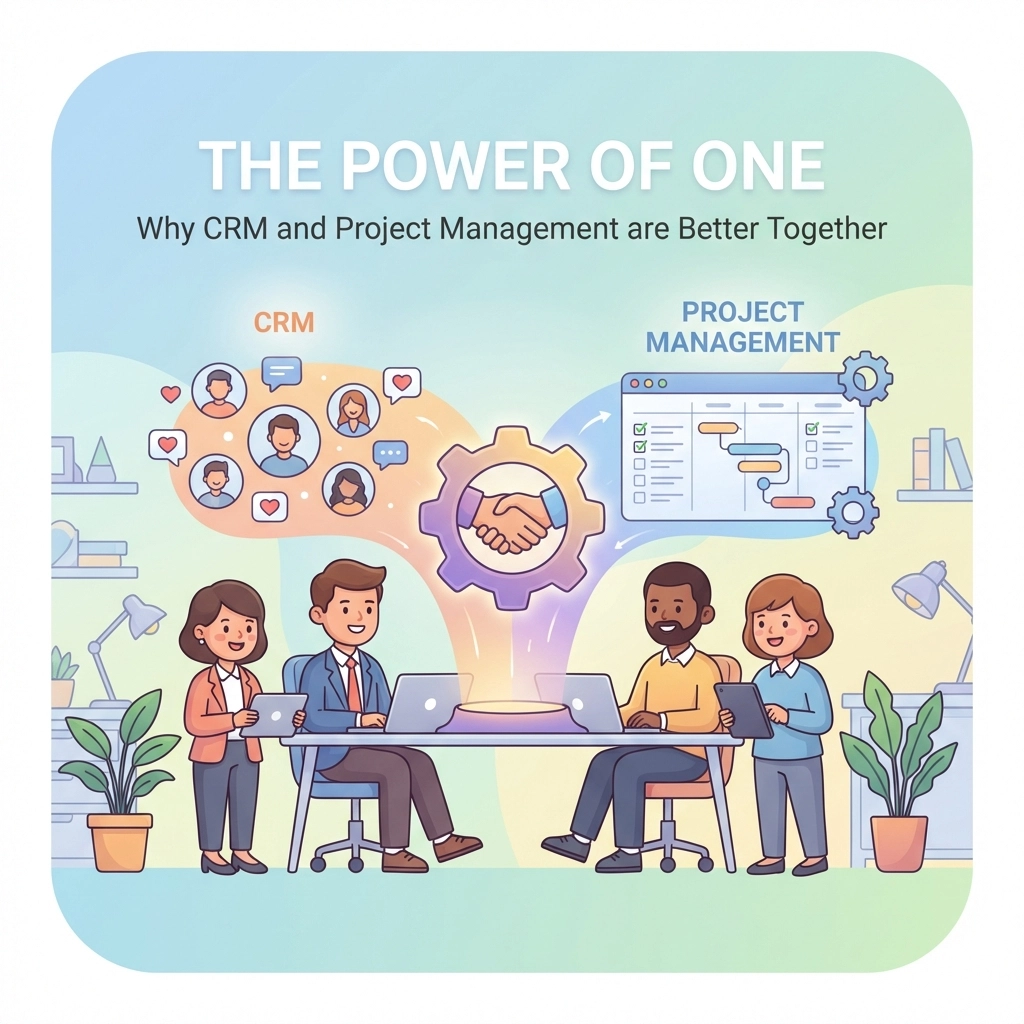
Bring your CRM and project management under one roof.
The Hidden Cost of Separate Systems
Most businesses start with the best intentions. They buy a CRM to track leads and customers. Then they grab a project management tool to handle tasks and deadlines.
Two separate systems. Two separate logins. Two separate headaches.
Here's what happens next:
- Information gets lost. Client preferences live in your CRM. Project details live somewhere else. Nobody has the full picture.
- Teams stop talking. Sales and delivery become two different worlds. Communication breaks down.
- Mistakes multiply. Manual data entry leads to errors. And errors lead to unhappy clients.
- Time disappears. Your team spends hours switching between apps. That's hours they could spend on actual work.
The result? Projects run over budget. Clients feel ignored. And your profit margins shrink.

What Changes When You Combine CRM and Project Management
Imagine a different scenario. Your sales rep closes that same deal. But this time, everything flows automatically.
The client's contact info, preferences, and conversation history move directly into a new project. Your delivery team sees exactly what was promised. No guessing. No frantic Slack messages.
That's the power of integration.
One Source of Truth
When your CRM and project management live in the same place, everyone works from the same data.
Your sales team knows what's being delivered. Your project managers know what was sold. And your clients feel like they're working with one cohesive team: not a bunch of disconnected departments.
No more "let me check with someone and get back to you."
Faster Handoffs
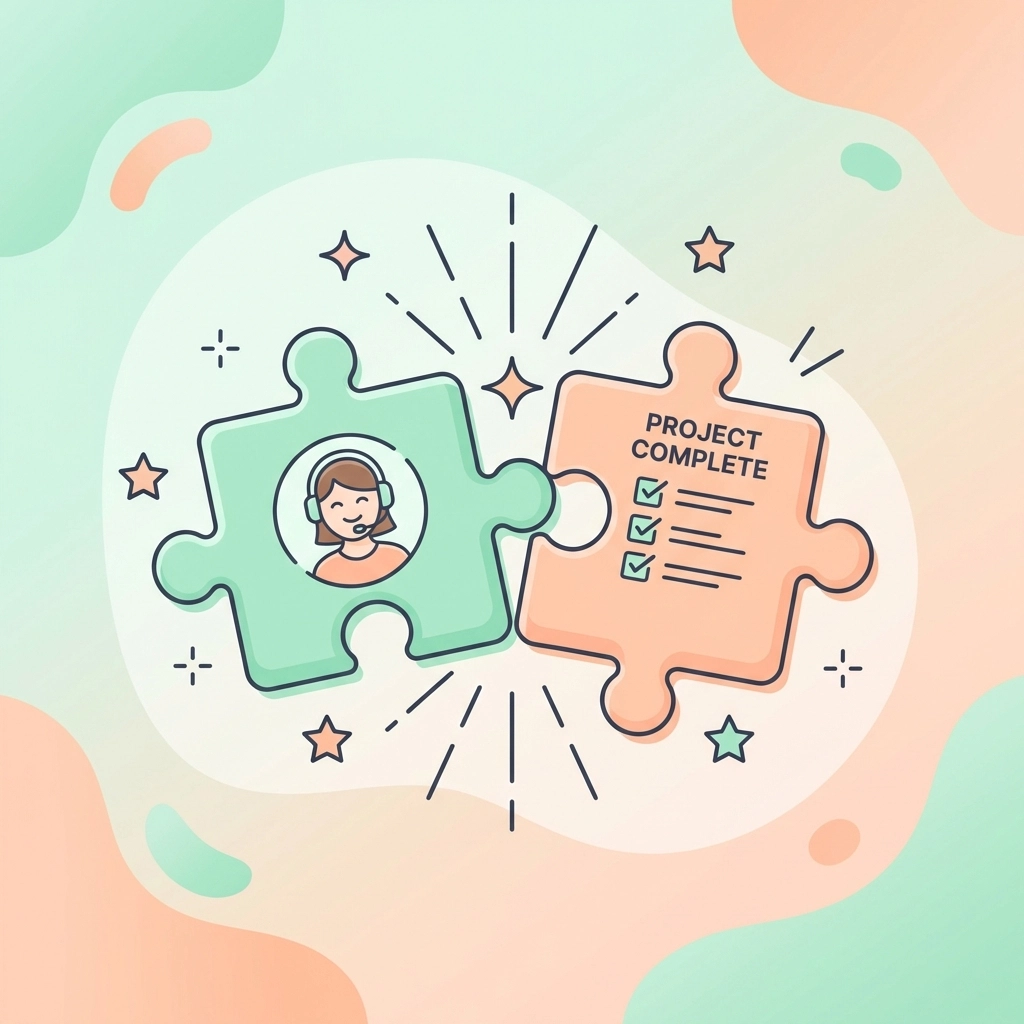
The moment a deal closes, the project kicks off. Automatically.
Tasks get assigned. Deadlines get set. Resources get allocated. All without anyone copying and pasting information from one system to another.
Your team saves hours every week. And projects start on the right foot.
Better Client Relationships
Here's a secret. Clients don't care about your internal processes. They just want to feel heard.
When you have their entire history in one place, you can deliver that experience. You remember their preferences. You anticipate their needs. You follow up faster.
That's how you turn one-time buyers into loyal advocates.
Real Benefits for Real Businesses
Let's get specific. What does this actually mean for your bottom line?
Improved Profitability
Every minute your team spends searching for information is a minute they're not billing. Every mistake caused by miscommunication costs you money to fix.
Integrated systems cut the waste. Your projects run leaner. Your margins get healthier.
Higher Customer Satisfaction
Clients notice when things run smoothly. They notice even more when things don't.
When your CRM and project management work together, you deliver projects that match what was promised. On time. On budget. Every time.
Happy clients stick around. They refer their friends. They become your best marketing channel.
Smarter Decision-Making
Data is only useful when you can actually see it.
A unified platform shows you the full picture. You can track which types of clients are most profitable. You can spot bottlenecks before they become disasters. You can forecast your pipeline and plan your resources accordingly.
No more flying blind.
Reduced Training Time
New team members face a steep learning curve. Multiple systems make it steeper.
One platform means one thing to learn. Your new hires get productive faster. And your veterans stop wasting time teaching people how to navigate a maze of disconnected tools.

Signs You Need to Make the Switch
Not sure if this applies to you? Here are some red flags:
- Your sales and delivery teams have different information about the same client.
- You've lost track of a project because the details were stuck in someone's inbox.
- Your team complains about "too many tools."
- Client handoffs feel chaotic and stressful.
- You're spending more time on admin work than actual client work.
If any of these sound familiar, it's time to simplify.
How TeamsMaster Brings It All Together
This is exactly why we built TeamsMaster.
We believe small and medium businesses shouldn't have to juggle a dozen different apps just to do their jobs. Your CRM, project management, and team collaboration should live in one place.
With TeamsMaster, you get:
- Unified client profiles. Every interaction, every preference, every project: all in one view.
- Automatic project creation. Close a deal and kick off a project without lifting a finger.
- Real-time collaboration. Your whole team stays aligned, no matter where they're working.
- Clear reporting. See your pipeline, project progress, and team performance at a glance.
It's not about adding more features. It's about removing the friction that slows you down.

Making the Transition Easier Than You Think
Change can feel overwhelming. Especially when you're already busy running a business.
Here's the thing. Moving to an integrated system doesn't have to be painful.
Start with your most common workflow. Pick the process that causes the most headaches: probably client handoffs: and fix that first.
Involve your team early. Get input from the people who will actually use the system. They know where the pain points are.
Don't try to migrate everything at once. Move your active projects first. Archive the old stuff later.
Give it time. Any new system takes a few weeks to feel natural. Stick with it.
The short-term adjustment is worth the long-term payoff.
The Bottom Line
Running a business is hard enough. Your tools should make it easier, not harder.
When your CRM and project management work as one, everything flows better. Your team communicates. Your clients feel valued. Your profits grow.
That's not just efficiency. That's competitive advantage.
So ask yourself: how much is disconnection costing you?
And more importantly: what could you accomplish if everything just worked together?
Ready to see what unified business management looks like? Check out TeamsMaster and discover how simple running your business can be.