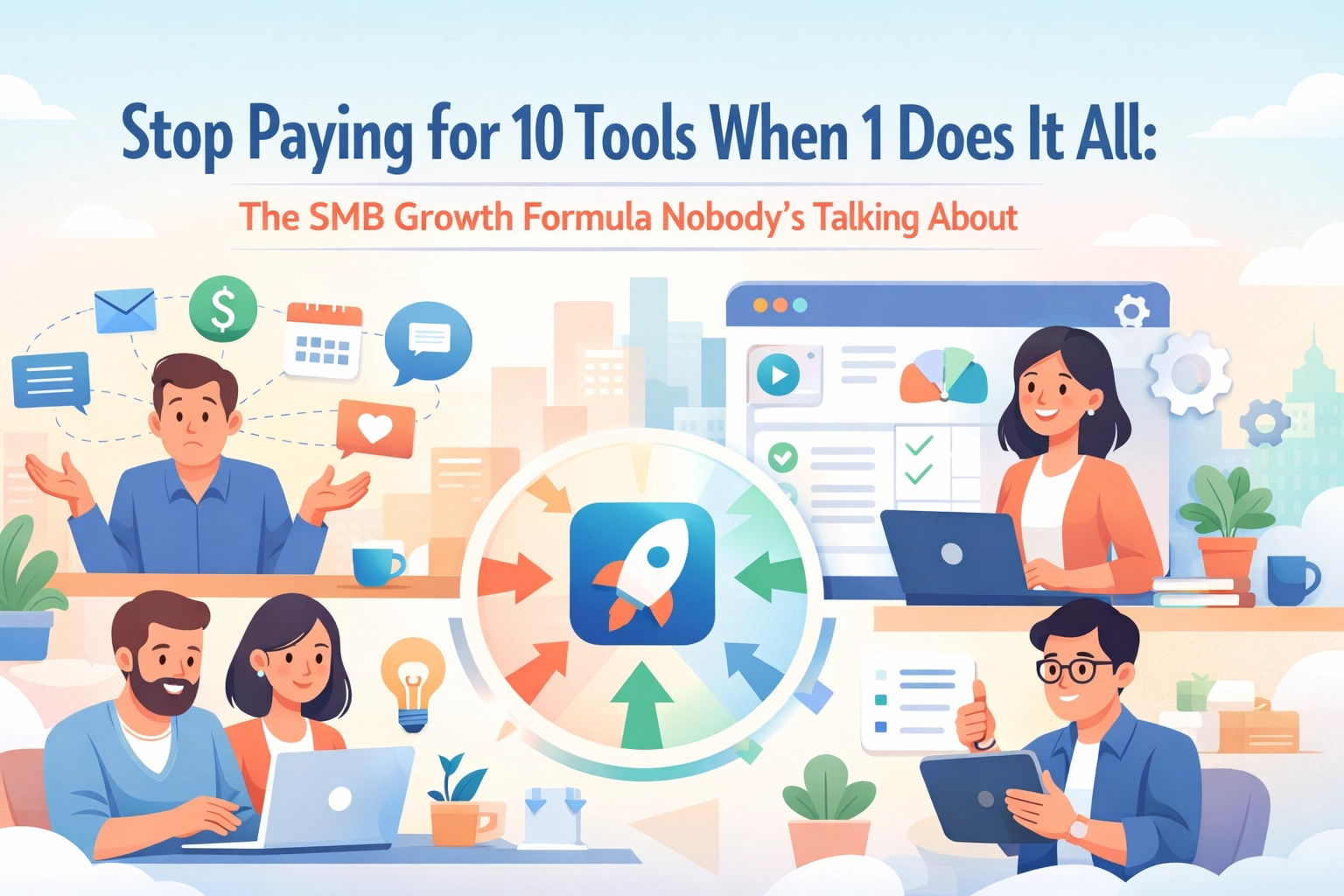
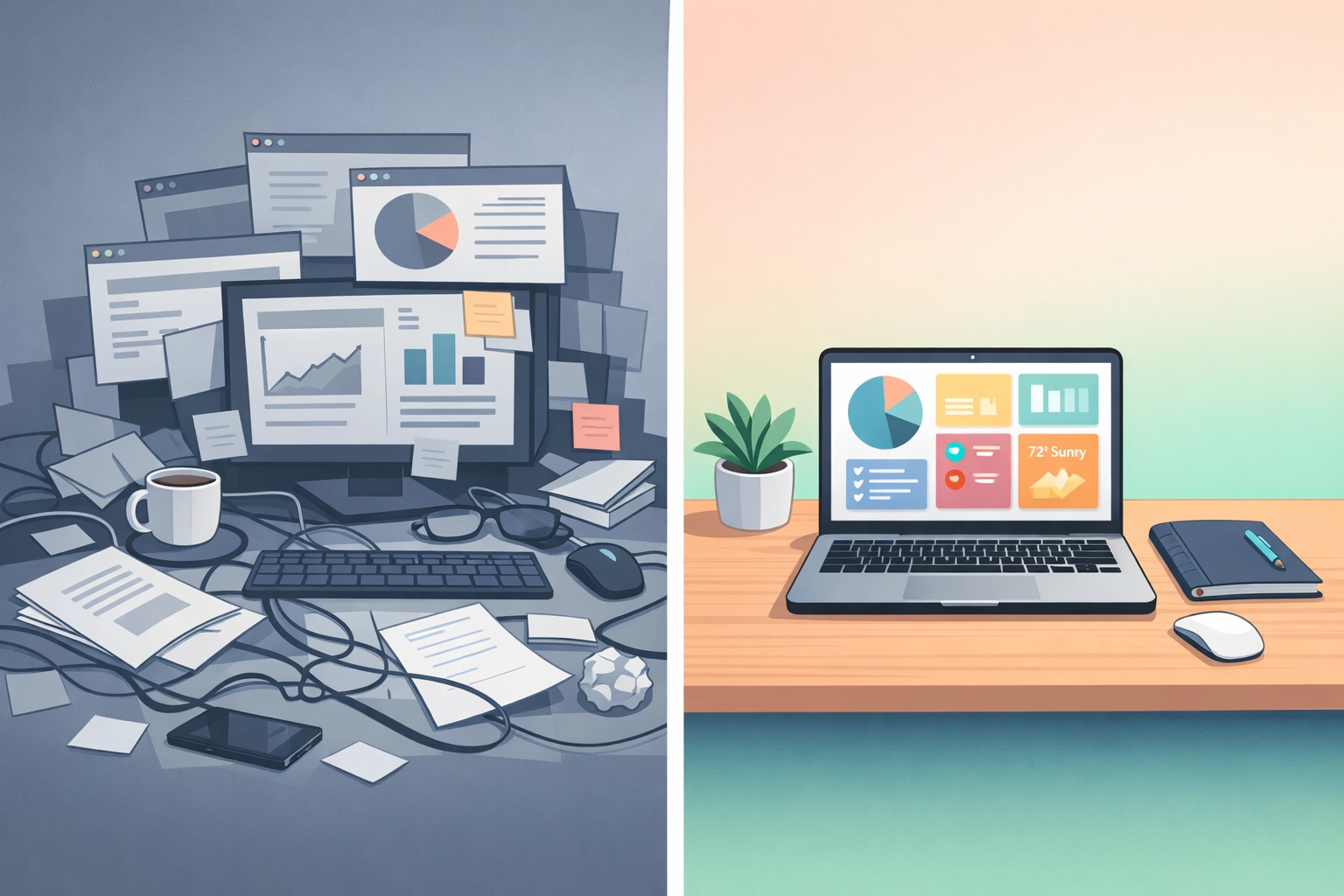
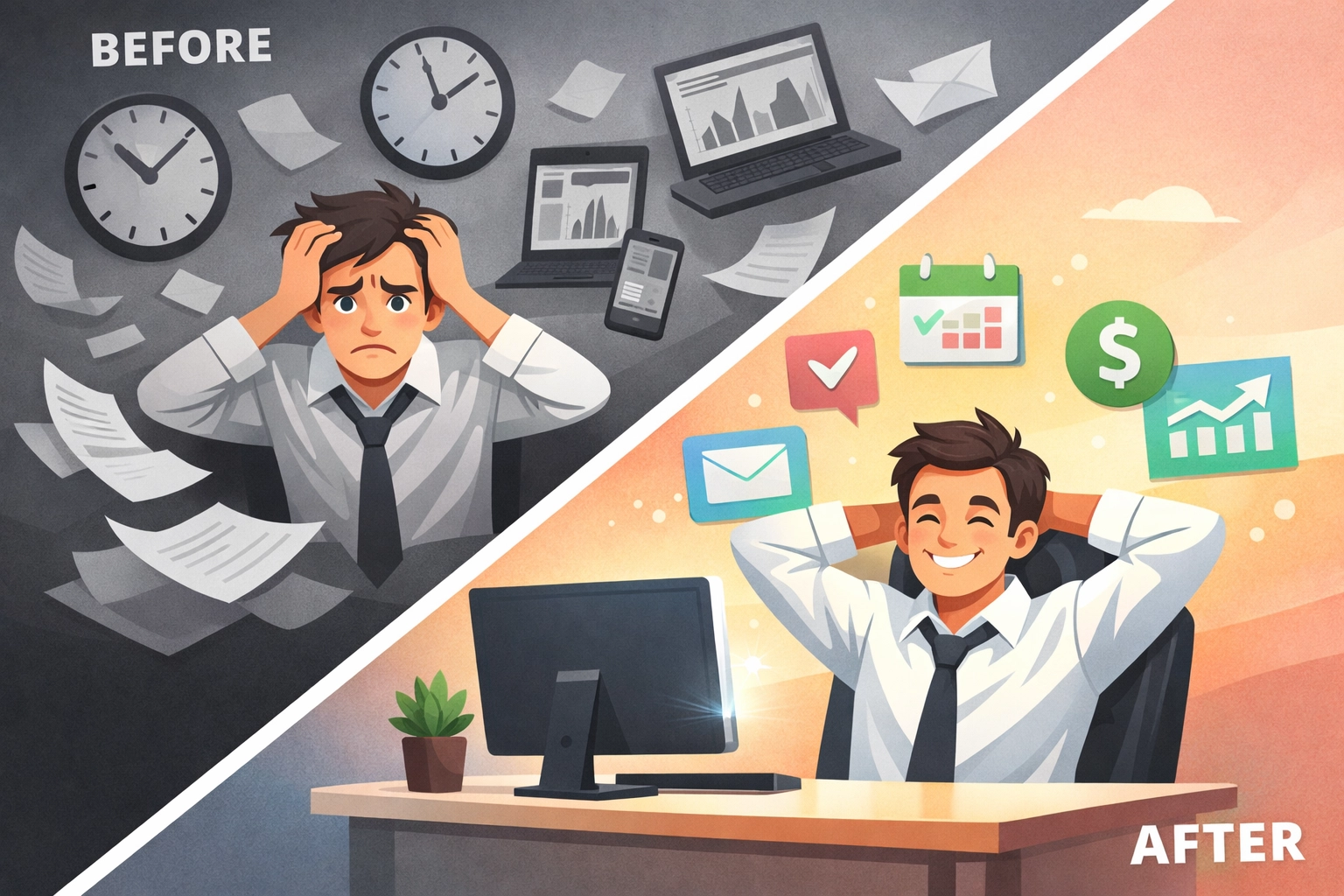
You're juggling six browser tabs right now, aren't you?
One for your CRM. Another for project tracking. HR software over here. Time tracking somewhere else. A spreadsheet buried in tab number five.
Sound familiar?
Here's the thing: your business isn't complicated. But your tools are making it complicated.
Let's change that.
What a Unified Dashboard Actually Means
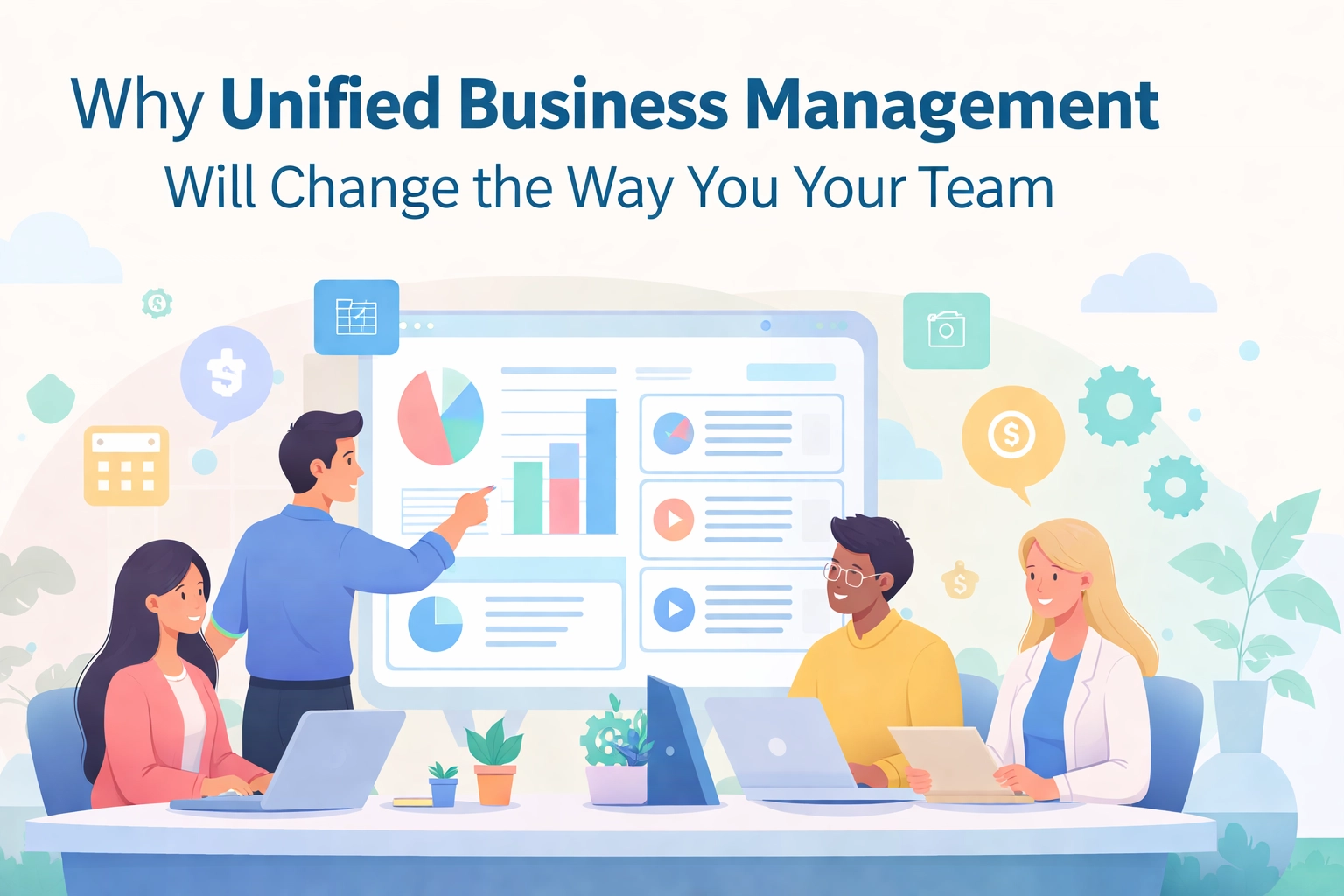
A unified dashboard puts everything in one place. Simple as that.
Your customer relationships. Your employee data. Your project timelines. All visible from a single screen.
No more tool-hopping. No more lost information. No more "wait, which system has that data again?"
Think of it like moving from ten remote controls to one universal remote. Same functionality. Way less headache.
The Real Cost of Scattered Systems
Let's talk about what's actually happening when your business runs on multiple platforms.
Your team wastes time switching contexts. Studies show it takes 23 minutes to fully refocus after a distraction. Multiply that by every tool switch, every day.
Data lives in silos. Your sales team can't see what projects are actually getting delivered. Your project managers don't know which clients are happy or frustrated. Your HR team has no visibility into workload distribution.
Things fall through the cracks. A client request gets logged in the CRM but never makes it to the project board. An employee's performance review mentions deliverables that aren't tracked anywhere. You're flying blind.
You're paying for redundancy. Five tools at $50/month each? That's $3,000 per year. Per person. For small businesses, that adds up fast.
The scattered approach doesn't just cost money. It costs momentum.
How One Dashboard Changes Everything
Here's what happens when you consolidate.
Your morning routine transforms. Instead of checking five systems before 9 AM, you open one dashboard. You see everything that needs attention. You spot problems before they become fires.
Real-time visibility becomes normal. Who's working on what? Check. Which projects are on track? Check. Who's overwhelmed and who has capacity? Check.
No more status meetings that could have been an email. Just look at the dashboard.

Decision-making speeds up. When all your data lives together, patterns emerge. You notice that Client A always requests changes after initial delivery. You see that projects with certain team combinations finish faster. You identify bottlenecks before they choke productivity.
This isn't about having more information. It's about having the right information, when you need it, without hunting for it.
The Three Pillars of Business Unity
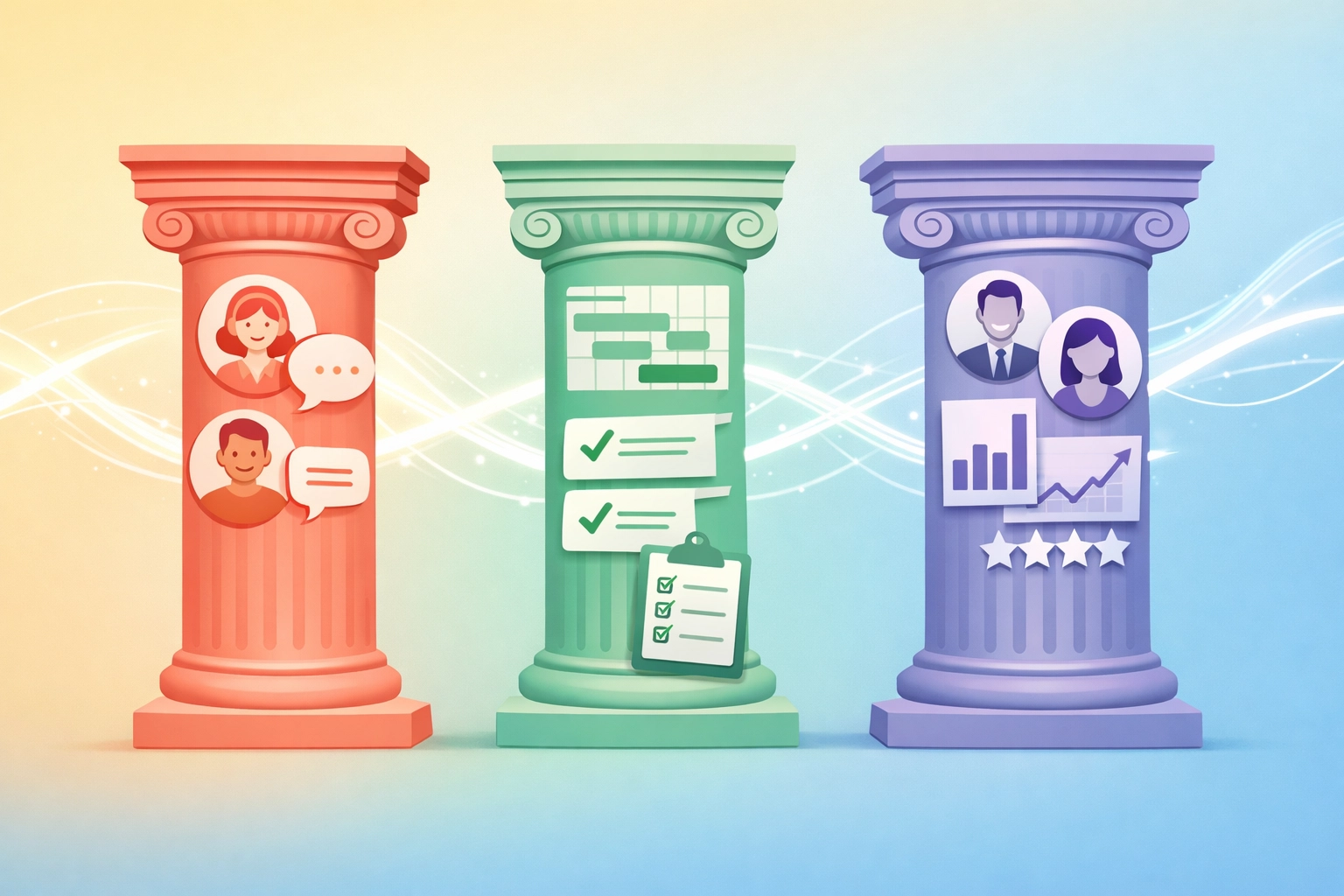
A truly unified system brings together three critical areas.
CRM: Know Your Customers
Every interaction tracked. Every conversation logged. Every opportunity visible.
But here's the key: this data doesn't live in isolation. Your project team sees client history. Your team members understand context before they start work. Nobody ever asks, "wait, what did we promise them again?"
Project Management: Deliver with Clarity
Tasks assigned. Timelines tracked. Progress visible to everyone who needs to see it.
Your clients aren't wondering where their project stands. Your team isn't confused about priorities. You're not scrambling to piece together status updates for stakeholders.
HR: Empower Your People
Employee data organized. Performance tracked. Workload balanced.
You know who's crushing it. You know who needs support. You can make smart decisions about assignments, promotions, and capacity planning.
When these three systems work together, something magical happens. They multiply each other's value.
The Growth Factor
Here's what most business owners miss: unified systems don't just save time. They enable growth.
Onboarding gets easier. New employees learn one system instead of five. They're productive faster. Your training costs drop.
Scaling becomes manageable. Adding your tenth employee feels the same as adding your fifth. The system grows with you. No need to completely restructure your tech stack every time you hire.
Client capacity increases. When your team works more efficiently, you can serve more clients. Without working longer hours. Without hiring more people. That's leverage.
One company using a unified approach reported saving over 12,000 hours annually by eliminating manual data transfers. That's not a typo. Twelve thousand hours.
What could your business do with that time back?
What This Looks Like in Practice
Let's get concrete.
Monday morning: You open your dashboard. Three projects need attention today. Two clients haven't been contacted in two weeks. One team member is approaching their project deadline. You tackle these before they become problems.
Mid-week client call: A client asks about their project status. Instead of saying "let me get back to you," you screen-share your dashboard. They see exactly where things stand. Trust increases.
End of month: Billing time. Instead of hunting through spreadsheets and timesheets, you click one button. Hours tracked. Projects billed. Reports generated. What used to take days now takes minutes.
Performance review season: You pull up employee dashboards. Completed projects, client feedback, workload history, all there. Reviews become data-driven conversations, not vague discussions based on memory.
The Budget Reality
Here's the money part.
Running separate systems typically costs SMBs between $200-500 per employee per month. That's before accounting for the hidden costs of integration, training, and switching time.
A unified platform? You're looking at one subscription. One training process. One support relationship.
But here's the real financial win: budget tracking becomes automatic. You see when projects hit 50% of budget but only 20% of completion. You course-correct before overruns happen. Companies report 7% improvements in on-time execution just from having better visibility.
That's not just saving money. That's protecting margins.
Making the Switch
The biggest concern? "This sounds great, but migration seems overwhelming."
Fair point.
Here's the truth: yes, there's a transition period. But consider the alternative: continuing to operate with scattered systems, watching inefficiency compound month after month.
The key is starting with one area. Maybe you unify CRM and project management first. Get comfortable. Then add HR. Build momentum rather than doing everything at once.

Most businesses report that the time saved in the first month exceeds the time spent on setup. By month three, they wonder why they waited so long.
Your Next Move
Running your business from one dashboard isn't futuristic thinking. It's current reality for growing SMBs who refuse to let their tools slow them down.
The question isn't whether unified systems work. The data proves they do. The question is: how long will you keep paying the scattered system tax?
Your team wants fewer tools, not more. Your clients want better visibility. Your bottom line wants improved efficiency.
A unified dashboard delivers all three.
Ready to see how TeamsMaster brings it all together? Check out what's possible when your business runs from a single source of truth.
Because your business deserves better than browser tab chaos.