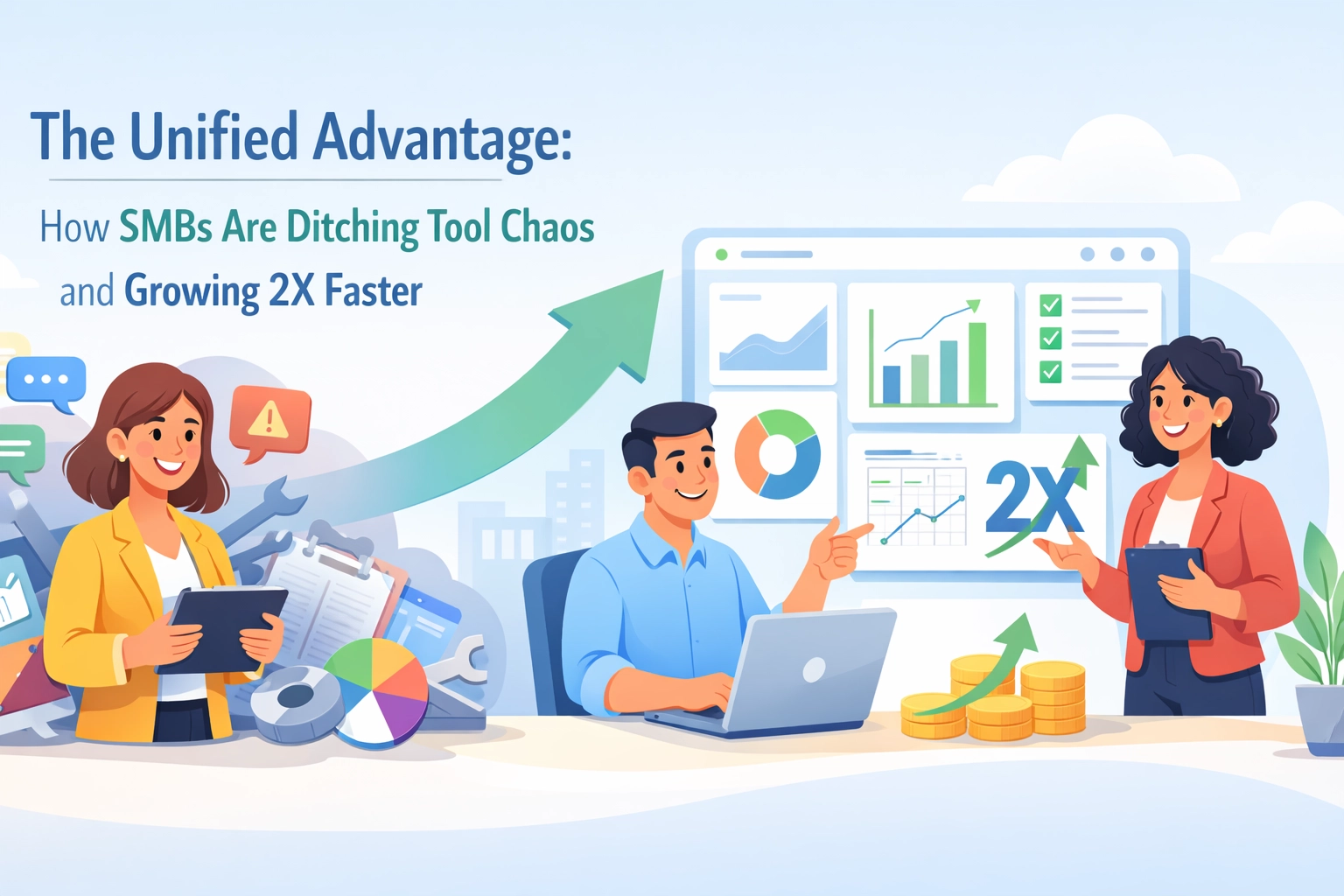
Let's be honest. Your competition isn't just working harder than you. They're working smarter. And chances are, they've already made the switch to an all-in-one business platform.
You might think that's dramatic. But here's the thing: while you're juggling five different apps, logging into three dashboards, and wondering why your team keeps missing customer follow-ups, they're running circles around you with a single unified system.
The business landscape changed. Fast. And the companies that figured it out early? They're not looking back.
The Hidden Cost of "Just One More Tool"
Remember when you thought adding another app would solve your problems?
You got a CRM for customer tracking. Then a separate project management tool. Then something for HR. Maybe a communication platform. Oh, and that scheduling thing everyone swears by.
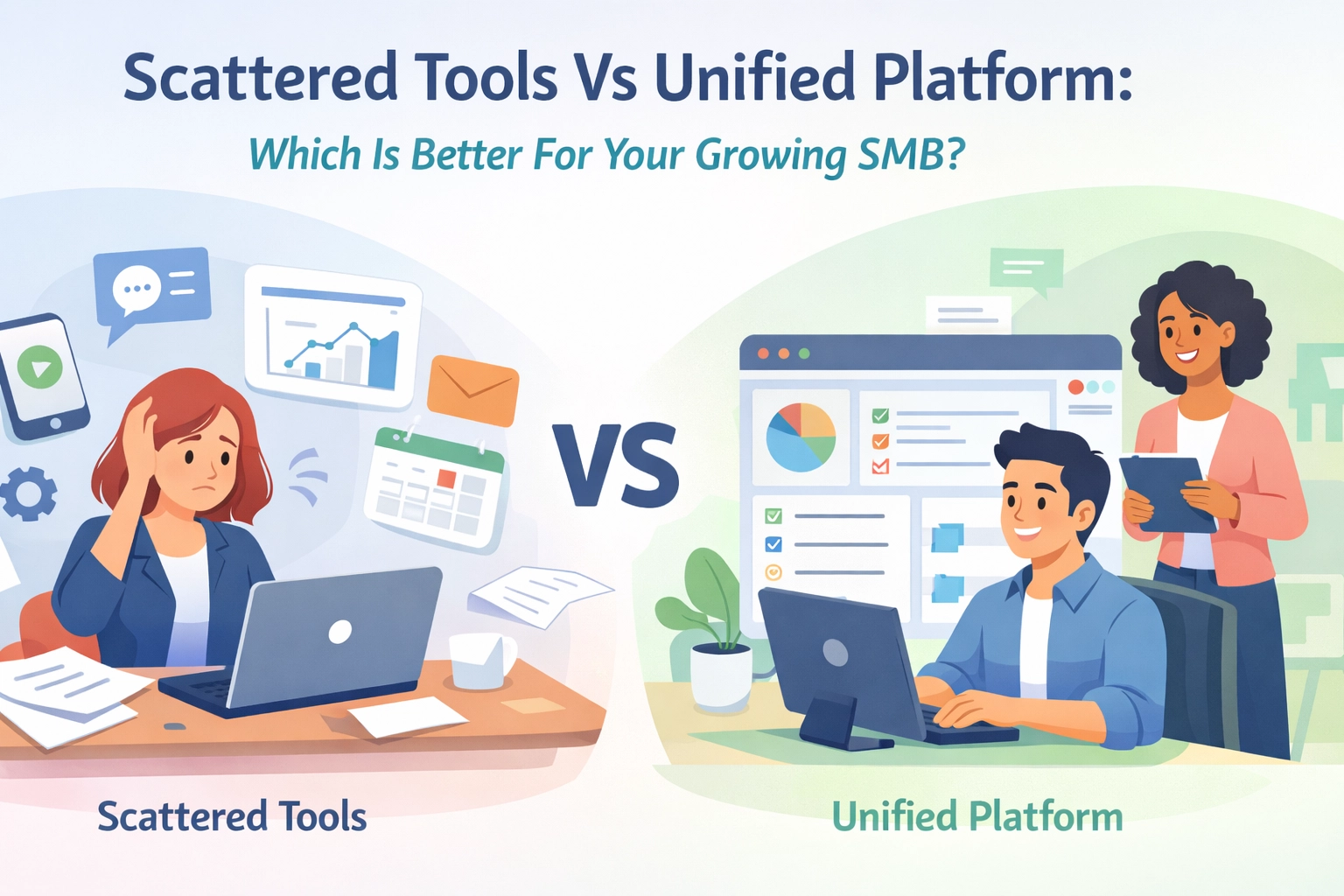
Now you're paying for five subscriptions. Your team is switching between eight browser tabs. And nobody can find that one conversation from last Tuesday because: wait, was that in Slack or email?

This isn't just annoying. It's expensive.
Every additional tool costs you more than the monthly fee. There's the learning curve. The integration headaches. The IT support tickets. The duplicated data entry. The information that lives in one system but never makes it to another.
By 2026, smart business owners realized something crucial: more tools don't equal more productivity. They equal more chaos.
Why All-in-One Platforms Are Winning Right Now
The companies crushing it aren't using more software. They're using better software.
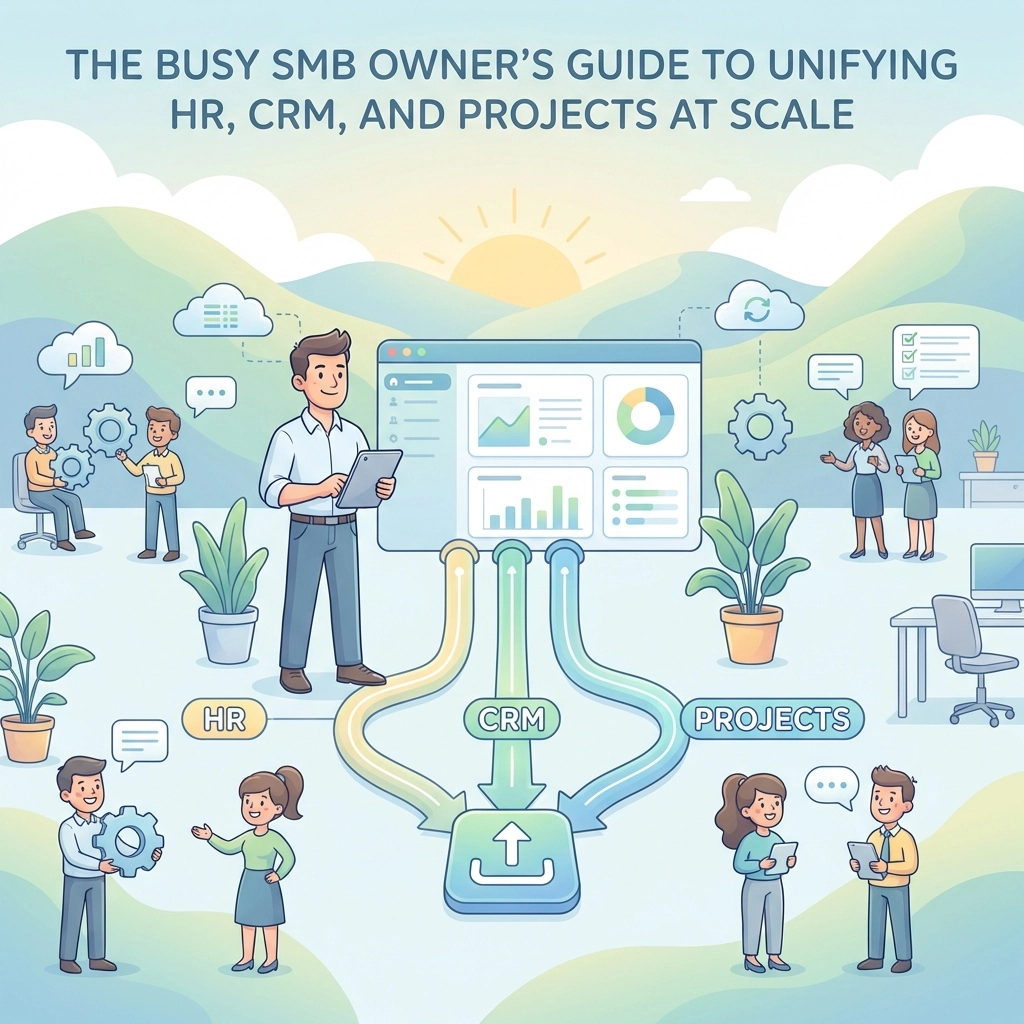
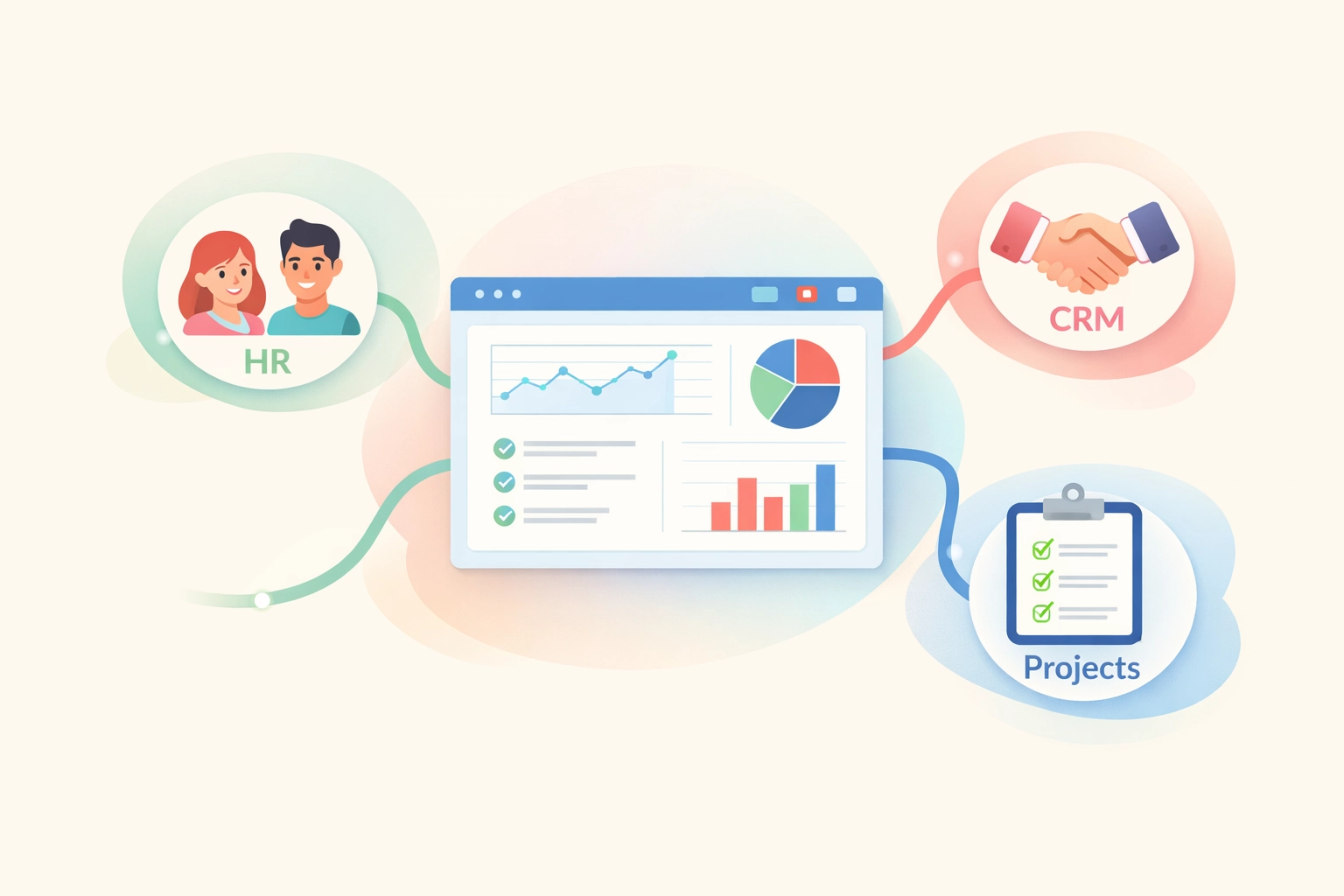
All-in-one platforms consolidate everything your business needs into a single ecosystem. Your customer relationships. Your project workflows. Your HR processes. Your team communication. All living in one place, talking to each other, working together.
Think about what that means for your daily operations.
Your sales team closes a deal? That information flows instantly to your project team. They can start work without waiting for someone to forward an email. Your HR team can assign the right people immediately. Everyone sees the same customer history, the same project timeline, the same priorities.
No more "Can you send me that link again?" No more "Which version is current?" No more "Did anyone follow up on that?"
Just smooth, efficient work.
The Numbers Don't Lie
Here's what happens when you unify your systems.
Businesses using integrated CRM platforms see an average ROI of $8.71 for every dollar spent. Small businesses often see even higher returns because the efficiency impact hits harder when you're working with a lean team.
Your costs drop dramatically. Not just subscription fees: though consolidating five tools into one definitely helps your budget. The real savings come from eliminated redundancies.
Think about how many hours your team spends each week:
- Re-entering data across different systems
- Searching for information scattered across platforms
- Fixing mistakes from miscommunication between tools
- Waiting for integrations that should be automatic
- Fighting with software instead of serving customers
When everything lives in one place, those hours disappear. Your team focuses on growth, not infrastructure management.
Your Customer Gets the Full Picture Treatment
Let's talk about the customer experience advantage.
When someone reaches out to your business: through email, social media, your website chat, or phone: where does that information go?
If you're using disconnected tools, it probably goes into one system. Maybe two if you're diligent about manual updates. But the full picture? The complete history of every interaction? That's scattered across multiple platforms, and good luck piecing it together during a live sales call.

All-in-one platforms change this completely.
Every customer touchpoint appears in one unified view. Your entire team sees the complete story. The sales rep knows what the support team discussed last week. The project manager understands what the customer actually needs, not just what the contract says. Your account managers can spot opportunities because they see everything, not fragments.
This is how you deliver personalized service at scale. This is how small businesses compete with enterprise companies. This is how you turn first-time buyers into lifetime customers.
Automation That Actually Works
By 2026, AI and automation aren't buzzwords anymore. They're practical tools that separate fast-moving companies from those stuck in manual mode.
But here's the catch: automation only works when your systems can talk to each other.
In a unified platform, your automations flow across your entire business:
- Lead scoring happens automatically based on real behavior
- Follow-up sequences trigger based on actual customer actions
- Project tasks assign to the right team members without manual sorting
- Reports generate from live data across all departments
- Reminders fire before things fall through the cracks
You're not building complex integrations or hoping your Zapier connections hold together. Everything just works because it's designed to work together from the ground up.
Your team saves hours. Your customers get faster responses. Your business runs while you sleep.
The Integration Advantage
Modern all-in-one platforms don't exist in isolation. They connect seamlessly with the tools you need to keep.
Your WordPress website? Integrated. Google Workspace? Connected. Social media accounts? Linked. Payment processors? Synced.
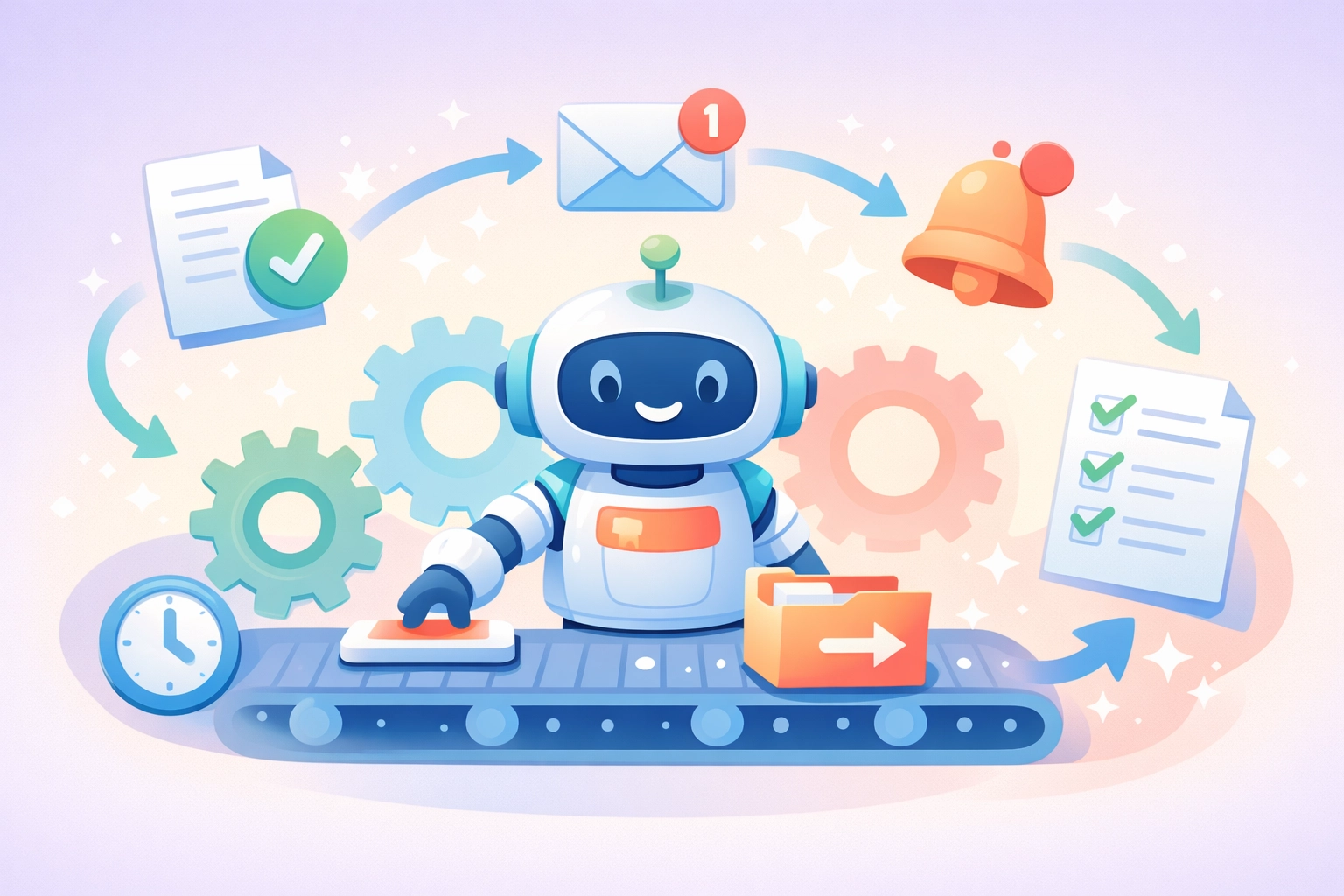
But unlike a patchwork of separate tools held together with digital duct tape, these integrations are built into the core platform. They're maintained, updated, and optimized by the same team that built your main system.
When something breaks: and let's be real, something always eventually breaks: you have one support team to call. One login to manage. One dashboard to check.
Your team responds faster because they're not waiting for data to sync across three different systems. Your customers get better service because information flows instantly to everyone who needs it.
Your Competition Isn't Waiting
Here's the uncomfortable truth: while you're evaluating options, your competitors are already executing.
They switched six months ago. Maybe a year. They've already streamlined their operations, automated their repetitive tasks, and unified their customer data. They're moving faster, spending less, and delivering better experiences.
They're not necessarily smarter than you. They just acted sooner.
The good news? It's not too late. The better news? Making the switch is easier than staying stuck in your current chaos.
What This Means for TeamsMaster Users

For businesses using TeamsMaster, the unified advantage is clear and immediate.
Your HR processes connect directly to your project assignments. Your CRM insights inform your resource allocation. Your team communication happens in context, right where the work lives.
You're not asking people to switch between platforms or remember which tool does what. Everything they need sits in one place. Simple. Clean. Efficient.
Small and medium businesses grow faster because they're not fighting their own infrastructure. They're focusing energy on customers, not on managing software.
The Bottom Line
All-in-one business platforms dominate conversations in 2026 because they solve a fundamental problem: fragmented systems hold you back.
Your competition figured this out. They consolidated. They unified. They simplified.
Now they're growing while spending less on software, less on training, and less time managing their tech stack.
The question isn't whether unified platforms are the future. They're already the present. The question is how much longer you'll wait before joining them.
Every day you spend juggling multiple disconnected tools is a day your competition pulls further ahead. Every customer interaction that falls through the cracks is revenue walking out the door. Every hour your team wastes searching for information is growth you're leaving on the table.
The shift is happening. Your competition already switched. Your customers expect the seamless experience that unified platforms deliver.
What are you waiting for?