You started your business with a vision. Not a vision of juggling fifteen different apps just to get through Monday.
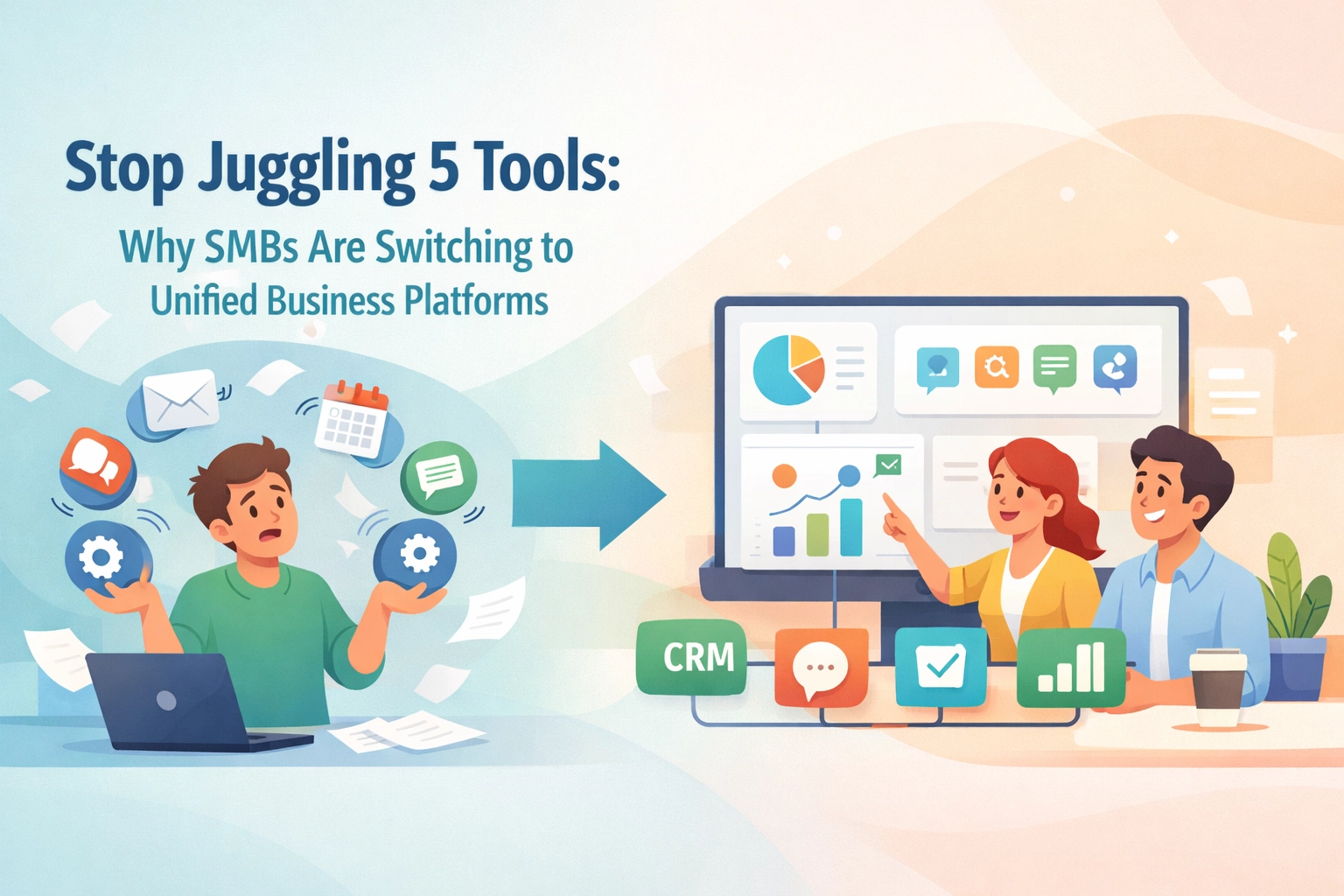
Yet here you are. One tool for HR. Another for customer relationships. A third for project tracking. Maybe a fourth for invoicing. And somehow, they never talk to each other.
Sound familiar?
If you're an SMB owner watching your team grow, you've probably felt that familiar tension. The excitement of scaling. The frustration of systems that can't keep up.
Here's the good news. There's a better way. And it doesn't require hiring an entire IT department.
The Hidden Cost of Disconnected Tools
Let's talk about what's really happening when your business runs on a patchwork of separate systems.
Your HR manager updates an employee's information in one platform. Your project lead has outdated details in another. Your sales team is working from a CRM that doesn't sync with anything else.
The result? Data silos everywhere.

These silos create more than just confusion. They create real problems:
- Duplicate data entry. Your team wastes hours entering the same information across multiple platforms.
- Inconsistent records. One system says a client's contract renewed. Another shows it expired.
- Missed opportunities. Without a complete picture, you can't spot trends or act on insights.
- Communication gaps. Teams work in isolation because their tools don't connect.
For SMBs, these inefficiencies hit harder. You don't have the bandwidth to waste. Every hour counts. Every dollar matters.
What Unified Business Management Actually Means
Unified business management isn't just a buzzword. It's a practical approach to running your company.
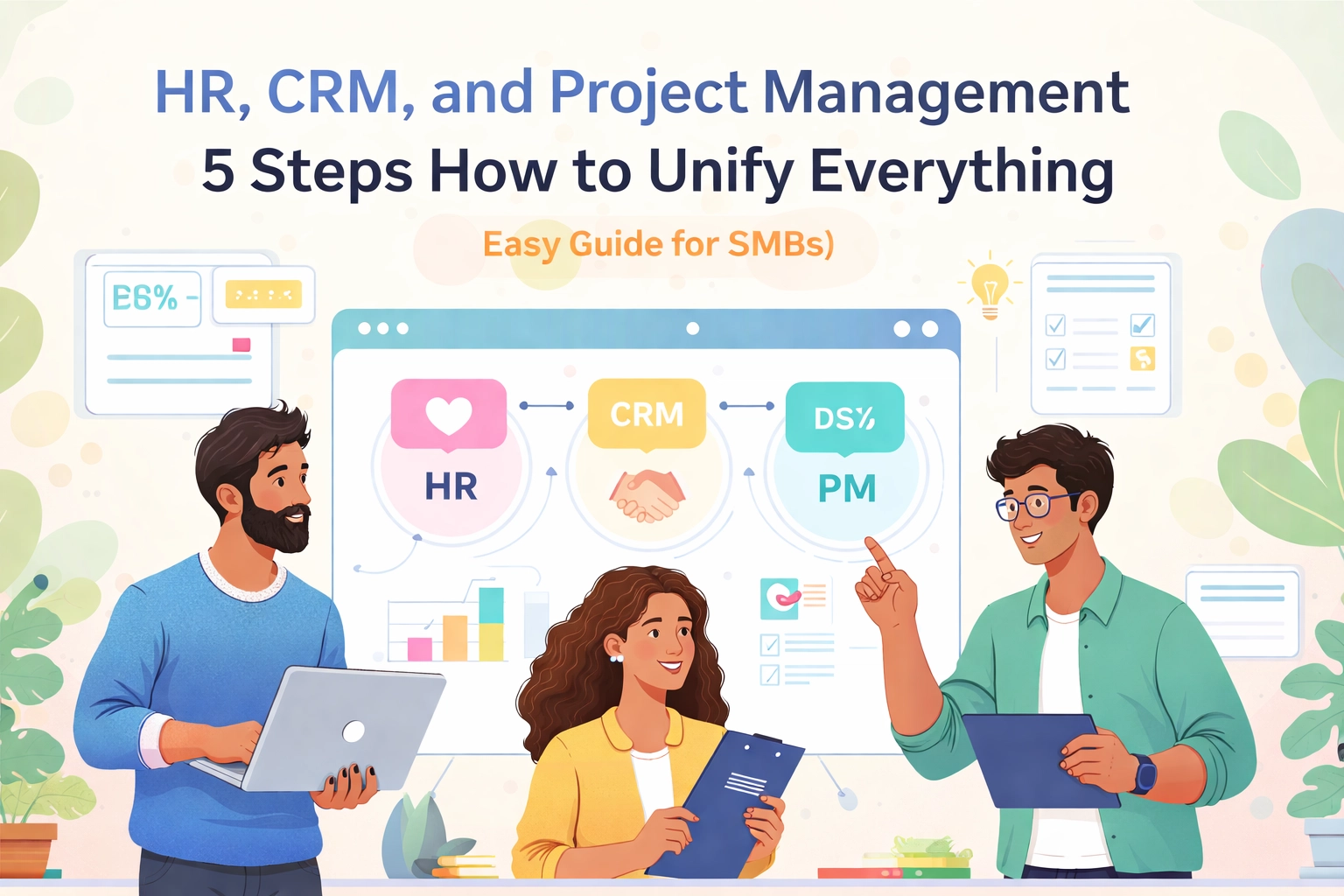
The idea is simple. Instead of managing ten different tools, you consolidate everything into one platform. One place for HR. One place for CRM. One place for project management.
One source of truth.
When your systems are unified, data flows naturally between departments. Your HR team onboards a new hire. That information automatically appears in your project management tool. Your sales team closes a deal. The project team sees it immediately and can start planning.
No manual transfers. No copy-paste errors. No "I thought someone else handled that" moments.

The Unified Advantage for Growing SMBs
Here's where things get exciting for SMB owners like you.
When you unify your business management, you unlock what we call the Unified Advantage. It's not just about efficiency. It's about positioning your business for sustainable growth.
You Save Time (Lots of It)
Automation becomes possible when your systems are connected. Think about all the repetitive tasks eating up your team's day:
- Onboarding paperwork
- Approval workflows
- Status update emails
- Report compilation
A unified platform handles these automatically. When an employee updates their address, it triggers updates in payroll and benefits. When a project milestone is reached, stakeholders get notified instantly.
Your team stops managing tools. They start doing meaningful work.
You Make Better Decisions
Scattered data leads to guesswork. Unified data leads to insights.
With everything in one place, you get real-time visibility into your entire operation. You can spot trends before they become problems. You can identify your most profitable clients. You can see which projects are on track and which need attention.
This isn't just nice-to-have information. It's the foundation for strategic decision-making.
You Scale Without the Chaos
Here's the real magic. Unified systems grow with you.
Adding a new team member? They plug into the same platform everyone else uses. Opening a second location? Your processes stay consistent. Expanding into new markets? Your data stays connected.
Growth doesn't mean starting from scratch. It means building on what already works.
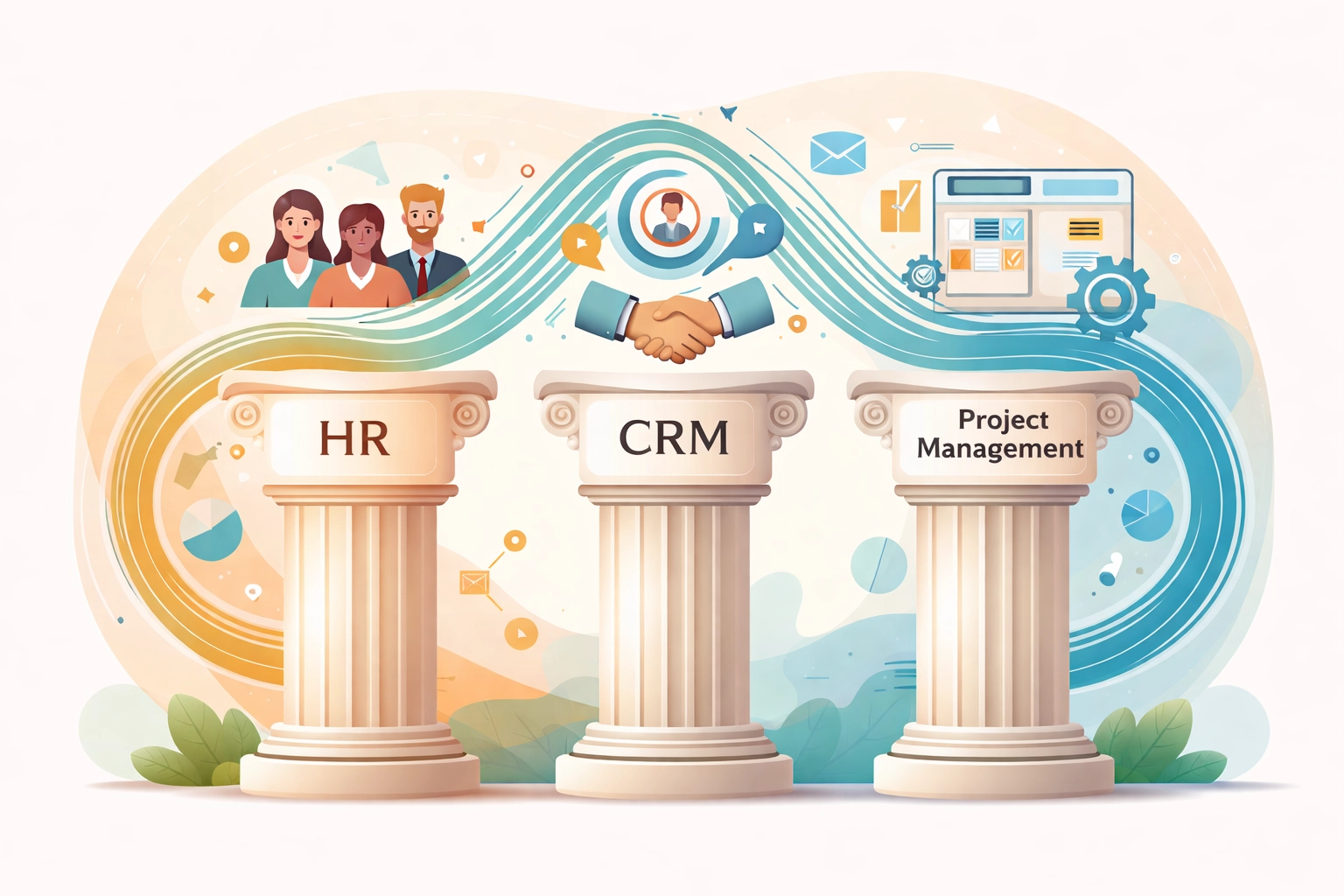
The Three Pillars: HR, CRM, and Project Management
For SMBs, three functions form the backbone of unified business management. Get these right, and everything else falls into place.
Human Resources
Your people are your greatest asset. Managing them shouldn't feel like herding cats.
A unified HR system handles:
- Employee onboarding and offboarding
- Time tracking and attendance
- Performance management
- Workforce analytics
- Compliance documentation
When HR connects to the rest of your operation, you see the full picture. Who's working on what. Where skills gaps exist. How to plan for future hiring needs.
Customer Relationship Management
Your customers are the lifeblood of your business. Treat them like it.
A unified CRM gives you:
- Complete customer history in one view
- Sales pipeline visibility
- Communication tracking
- Quote and order management
- Customer service integration
When your CRM talks to your project management tool, handoffs become seamless. Sales closes a deal. Delivery knows exactly what was promised. No more "that's not what the client expected" surprises.
Project Management
Execution is where strategy meets reality. Don't let it fall apart here.
Unified project management includes:
- Task assignment and tracking
- Resource allocation
- Timeline management
- Collaboration tools
- Progress reporting
When project management connects to HR and CRM, you can assign the right people to the right projects. You can see capacity at a glance. You can keep clients informed without extra effort.
Making the Transition: A Practical Roadmap
Ready to unify your business management? Here's how to do it without losing your mind.
Step 1: Assess Your Current State
Take inventory. What tools are you using today? What's working? What's causing headaches?
Be honest. That software you've been "making work" for three years might be holding you back more than you realize.
Step 2: Define Your Goals
What does success look like for your business? Maybe it's:
- Reducing time spent on admin tasks by 50%
- Getting real-time visibility into project status
- Eliminating data entry duplication
- Improving client communication
Clear goals guide better decisions.
Step 3: Choose the Right Platform
Look for a solution designed for SMBs. Not a bloated enterprise system. Not a collection of disconnected apps pretending to be unified.
Find a platform that:
- Integrates HR, CRM, and project management natively
- Scales as your business grows
- Offers intuitive interfaces your team will actually use
- Provides the support you need during transition

Step 4: Implement in Phases
Don't try to change everything overnight. That's a recipe for frustration.
Start with one function. Get your team comfortable. Then expand. Maybe you begin with project management. Then add CRM. Then integrate HR.
Steady progress beats chaotic transformation every time.
Step 5: Monitor and Adjust
Unified business management isn't a set-it-and-forget-it situation. As your business evolves, your systems should too.
Review regularly. Gather feedback from your team. Make adjustments. Keep improving.
Your Competitive Edge
Here's the bottom line. SMBs that embrace unified business management gain a real competitive advantage.
While your competitors wrestle with disconnected systems, you'll operate with clarity. While they waste time on manual processes, your team will focus on growth. While they guess at decisions, you'll act on data.
The Unified Advantage isn't just about running a smoother operation. It's about building a business that can scale confidently.
You started your business with a vision. Unified business management helps you actually achieve it.
Ready to see what the Unified Advantage looks like for your business? TeamsMaster brings HR, CRM, and project management together in one simple platform built for growing SMBs.
Your future self will thank you.