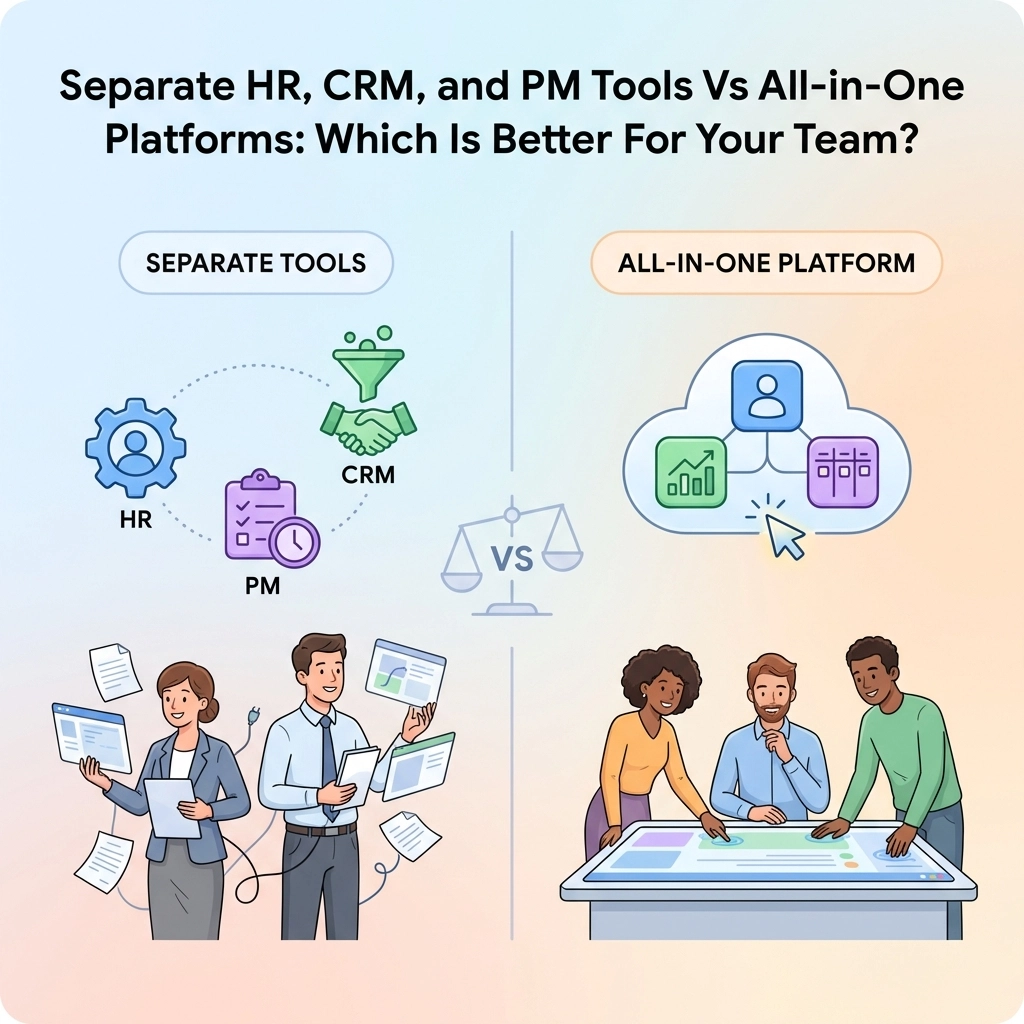
You're juggling three different apps before your first coffee. One for tracking employee leave. Another for managing leads. A third for project deadlines. Sound familiar?
Here's the thing. Running a small or medium business shouldn't feel like air traffic control.
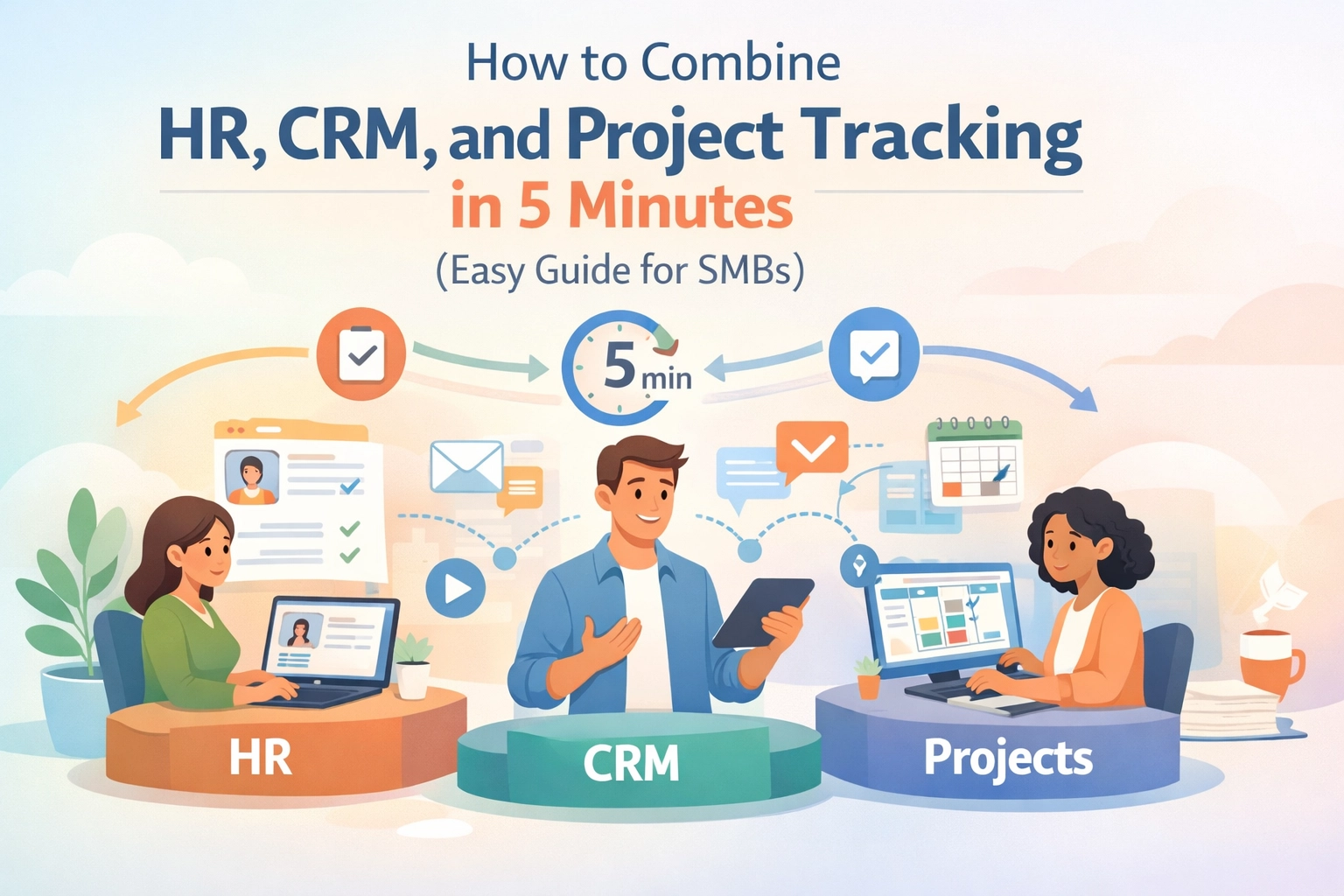
The good news? You can combine HR, CRM, and project tracking in about five minutes. No IT team required. No weekend migration headaches. Just a smarter way to work.
Let's break it down.
Why SMBs Need All Three Systems Talking to Each Other
Your HR data, customer relationships, and project timelines aren't separate universes. They're deeply connected.
Think about it:
- Your sales team closes a deal. Now someone needs to deliver.
- A team member goes on leave. Projects need reshuffling.
- A client asks for a status update. You scramble across three tabs.
When these systems live in silos, you waste time. You miss context. And your team gets frustrated.
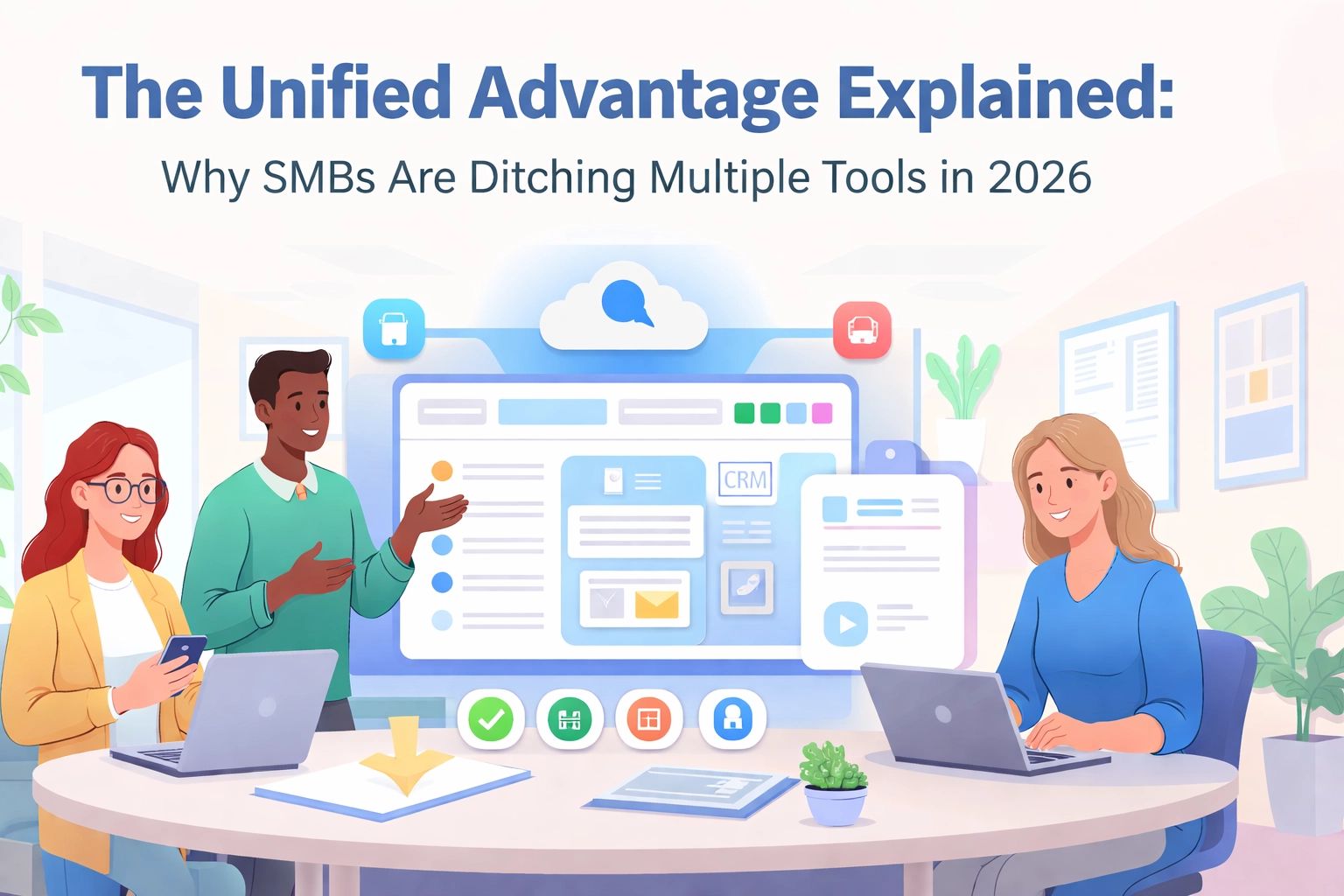
The Unified Advantage is simple. One place for everything. Less switching. More doing.

The Real Cost of Disconnected Tools
Before we dive into the how, let's talk about what fragmented systems actually cost you.
Time drain. Your team spends hours each week copying data between platforms. That's time they could spend on actual work.
Data errors. Manual entry means typos. Outdated info. Conflicting records. One wrong number can derail a project or lose a customer.
Training overload. Every new tool means new training. New logins. New support tickets. Your team learns three interfaces instead of one.
Visibility gaps. When data lives in separate places, you can't see the full picture. Decisions get made with half the information.
For SMBs, these costs add up fast. You don't have enterprise budgets to absorb inefficiency.
The 5-Minute Setup: Step by Step
Ready to unify your operations? Here's how to do it in five minutes flat.
Step 1: Choose Your Unified Platform (1 Minute)
This is the foundation. Pick a platform that handles HR, CRM, and project management in one place.
Look for these essentials:
- Employee management – Track time off, performance, and team info
- Customer pipeline – Manage leads, deals, and client communication
- Project tracking – Assign tasks, set deadlines, monitor progress
- Role-based access – Let people see what they need, nothing more
Some teams piece together separate tools. That works, but it creates the exact problem you're trying to solve.
An all-in-one platform like TeamsMaster gives you everything connected from day one. No duct tape required.

Step 2: Set Up Your Data Sync (2 Minutes)
Here's where the magic happens. Your platform should automatically sync data across HR, CRM, and projects.
What does that look like in practice?
- Add a new employee in HR. They instantly appear in project assignments.
- Close a deal in CRM. A project kicks off automatically.
- Update a client's contact info once. It changes everywhere.
No more double entry. No more "which version is correct?" conversations.
During setup, enable continuous syncing. This keeps everything updated in real time. Your data stays clean without you lifting a finger.
Step 3: Configure Roles and Access (1 Minute)
Not everyone needs to see everything. And that's okay.
Set up role-based permissions so:
- HR staff access employee records, leave requests, and performance data
- Sales teams manage customer pipelines, deals, and communication history
- Project managers track deliverables, timelines, and team workloads
- Leadership gets the bird's-eye view across all three areas
This keeps things organized. It protects sensitive information. And it reduces noise for your team.
Most platforms let you configure this with a few clicks. Pick a role template. Assign team members. Done.

Step 4: Connect Your Existing Tools (1 Minute)
You probably already use accounting software. Email clients. Maybe a calendar app.
Don't abandon them. Connect them.
Good unified platforms integrate with the tools you already love. Your invoices sync with project completion. Email conversations attach to customer records. Calendar events link to project deadlines.
This isn't about replacing everything. It's about making everything work together.
Check your platform's integration options during setup. Most common business tools connect in under a minute.
The Unified Advantage: What Changes for Your Team
Once your systems are combined, here's what you'll notice.
Faster decisions. Need to know if you can take on a new project? Check team availability, current workload, and client history in one view. No tab-switching required.
Better customer service. When a client calls, you see their full history. Past projects. Open issues. Communication notes. You sound prepared because you are.
Smoother handoffs. Sales closes a deal. The project team already has context. No long email chains. No "can you fill me in?" meetings.
Reduced training time. New hires learn one system instead of three. They get productive faster. You spend less time on onboarding.
Cleaner data. One source of truth means no conflicts. No outdated spreadsheets floating around. Everyone works from the same information.

Common Mistakes to Avoid
Unifying your tools is straightforward. But a few missteps can slow you down.
Overcomplicating permissions. Start simple. You can always add complexity later. Too many roles on day one creates confusion.
Skipping the sync setup. If data doesn't flow automatically, you'll end up back in manual-entry land. Enable continuous syncing from the start.
Ignoring your team's input. The people using these tools daily know what they need. Ask them what's working. What's frustrating. Build your setup around real workflows.
Trying to migrate everything at once. You don't need to import five years of history on day one. Start with current projects and active clients. Add historical data later if needed.
Forgetting to train. Even simple platforms need a quick walkthrough. Fifteen minutes of training saves hours of support questions.
Is This Really for SMBs?
Absolutely. In fact, SMBs benefit the most from unified platforms.
Large enterprises have entire IT departments to manage integrations. They have budgets for custom solutions. They can afford inefficiency.
You can't.
When you're running lean, every minute counts. Every dollar matters. Unified tools give you enterprise-level coordination without enterprise-level complexity.
You get to focus on growing your business. Not wrestling with software.
Ready to Simplify?
Combining HR, CRM, and project tracking doesn't require a weekend project. It doesn't require a consultant. It takes about five minutes and the right platform.
Your team gets clarity. Your customers get better service. You get your sanity back.
That's the Unified Advantage. And it's waiting for you at TeamsMaster.