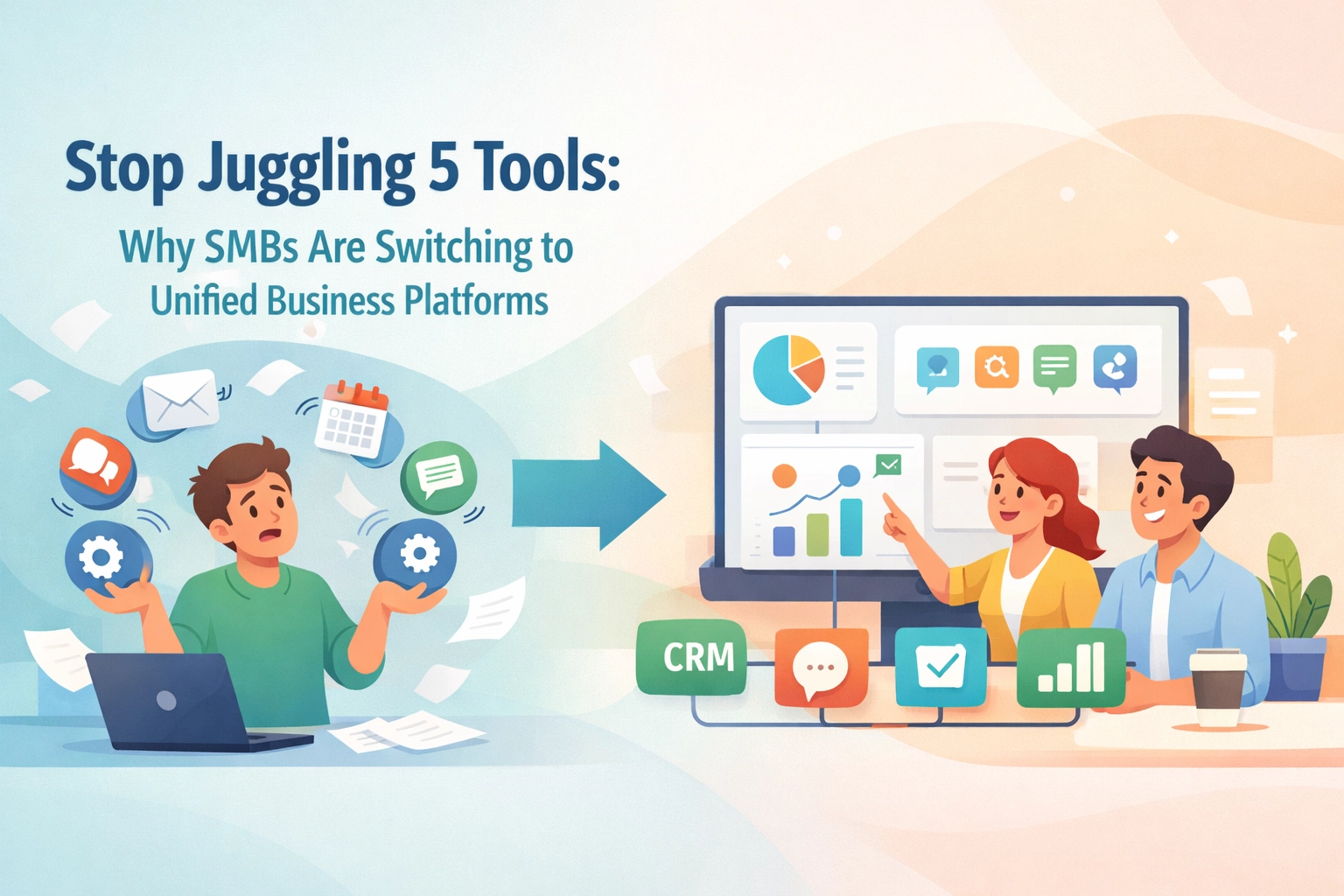
You know the drill. You check Slack for messages. Jump to Asana for project updates. Switch to BambooHR for team schedules. Open HubSpot for customer data. And somewhere in there, you're supposed to actually get work done.
Sound familiar?
If you're running an SMB, you're probably living this reality. Multiple tools. Multiple logins. Multiple headaches. And the worst part? You thought these tools were supposed to make life easier.
Here's what's really happening: your business is bleeding time, money, and sanity because everything's disconnected.
The good news? There's a better way.
The Hidden Cost of Tool Overload
Let's talk about what all these separate tools are actually costing you.
Time waste is massive. Your team switches between apps constantly. Each switch takes mental energy. Each login takes seconds. Those seconds add up to hours every week.
Data lives in silos. Your HR data doesn't talk to your project management system. Your CRM doesn't know what your team is working on. You're making decisions with half the picture.
Integration nightmares multiply. Want these tools to work together? You'll need Zapier. Or custom integrations. Or a developer. More money. More maintenance. More things that break.

Training becomes endless. New hire? They need to learn five different systems. Different interfaces. Different workflows. Different passwords they'll definitely forget.
Costs stack up fast. Five tools means five subscriptions. Five times you're paying for features you don't use. Five times the renewal headaches.
And security? Don't even get started. More tools mean more vulnerabilities. More places where data can leak. More compliance headaches.
You didn't sign up for any of this.
Why Unified Platforms Are Taking Over
Smart SMBs are ditching the tool circus. They're switching to unified platforms that do everything in one place.
Here's what makes unified platforms different:
Everything lives in one system. Your HR records, customer relationships, and project workflows all connect. Real-time. No integration gymnastics needed.
Your data actually works together. When a team member updates availability, your project timelines adjust. When a customer inquiry comes in, you see the full context instantly.
One login for everything. Your team stops wasting time switching contexts. They stay in flow state longer. Productivity jumps.
Onboarding gets simple. New employees learn one platform. One interface. One way of working. They're productive faster.

Costs become predictable. One subscription replaces five. No hidden integration fees. No surprise renewals. Your budget thanks you.
Security tightens up. Single sign-on. Unified permissions. One place to manage access. Your data stays safer.
Scaling happens smoothly. Add users instantly. Expand features as you grow. No infrastructure headaches. No costly migrations.
The Unified Advantage for SMBs
Unified platforms aren't just for enterprises anymore. SMBs are discovering they're actually the perfect fit.
You get enterprise features at SMB prices. Video conferencing. Document collaboration. Advanced reporting. Features that used to cost thousands now come bundled.
Your IT burden disappears. No servers to maintain. No complex systems to troubleshoot. You focus on your business, not your tools.
Speed becomes your advantage. While competitors coordinate across five tools, you move fast. Make decisions quicker. Execute faster.
Your team actually uses it. One clean interface beats five clunky ones. Adoption is easier. Resistance drops. Everyone's actually on board.

Customer experience improves. Your team has complete context for every interaction. No more "let me check another system." Customers notice the difference.
Growth doesn't break things. Scale from 10 to 100 employees without switching systems. Your foundation is already solid.
What This Looks Like in Practice
Let's get concrete. Here's how unified platforms change daily operations:
Monday morning: Your project manager opens one dashboard. She sees team capacity, active projects, and customer priorities. All in one view. She assigns work in minutes, not hours.
Customer calls: Your sales team answers a question. They see the customer's history, current projects, and team availability. All right there. No tab switching. No awkward holds.
Team planning: HR knows who's available. Projects show resource needs. The system suggests optimal team assignments. What used to take a full meeting now takes five minutes.
Performance reviews: You pull reports that combine project delivery, customer satisfaction, and team growth. Real data. Real insights. No spreadsheet hell.
Hiring season: New employees get one login. One training session. They see exactly what they need for their role. They're productive by day three, not week three.

Budget planning: You review one subscription instead of managing five vendors. Your finance team breathes easier. You actually know what you're spending.
Making the Switch Makes Sense
You might be thinking: "Switching sounds painful."
Here's the reality. Staying with disconnected tools is more painful. Every single day.
The businesses making the switch report something interesting. The migration is easier than they expected. And the results show up fast.
Week one: Login frustration disappears. Your team stops asking "which tool was that in?"
Month one: Productivity measurably increases. Projects move faster. Communication improves.
Quarter one: Costs are lower. Security is tighter. Everyone wonders why you didn't switch sooner.
The question isn't whether unified platforms are better. The data is clear. The question is how long you'll wait before making the switch.
Your Business Deserves Better
You started your business to solve problems. Not to manage a maze of disconnected software.
Your team wants to do great work. Not waste time hunting for information across five different tools.
Your customers expect seamless service. Not conversations interrupted by system switching.
Unified platforms deliver on all three. They're not perfect. But they're dramatically better than the alternative.
The SMBs switching to unified platforms aren't just saving money. They're building competitive advantages. They're moving faster. Growing smarter. Operating cleaner.

And they're not looking back at their five-tool circus days.
Your business might not need every bell and whistle. But you definitely need your tools to work together. You need your data in one place. You need your team to spend time on work, not on tool management.
That's not asking for much. That's asking for the basics.
Unified platforms deliver those basics. And a whole lot more.
The question is simple: How long will you keep juggling?