You're juggling twelve browser tabs. Your HR tool doesn't talk to your CRM. Project updates live in three different apps. Sound familiar?
Running a small or medium-sized business is already demanding. You don't need your software stack making it harder.
Here's the good news. There's a better way. It's called unification. And it might just change everything about how you work.
The Hidden Cost of Tool Sprawl
Let's be honest. Most SMBs didn't plan their tech stack. They accumulated it.
You needed a CRM. You signed up for one. HR became complicated. You added another tool. Projects got messy. Another subscription joined the party.
Before you knew it, your team was bouncing between five or six different platforms daily.
This creates real problems:
- Data lives in silos. Customer info here. Employee records there. Project timelines somewhere else entirely.
- Manual data entry multiplies. Your team copies information from one system to another. Errors creep in.
- Context switching kills productivity. Every app switch costs mental energy. Those minutes add up fast.
- Costs spiral quietly. Each tool has its own subscription. Training requirements. Integration headaches.
The average SMB uses over 40 different software applications. That's not efficiency. That's chaos wearing a productivity mask.

Why Unified Platforms Win
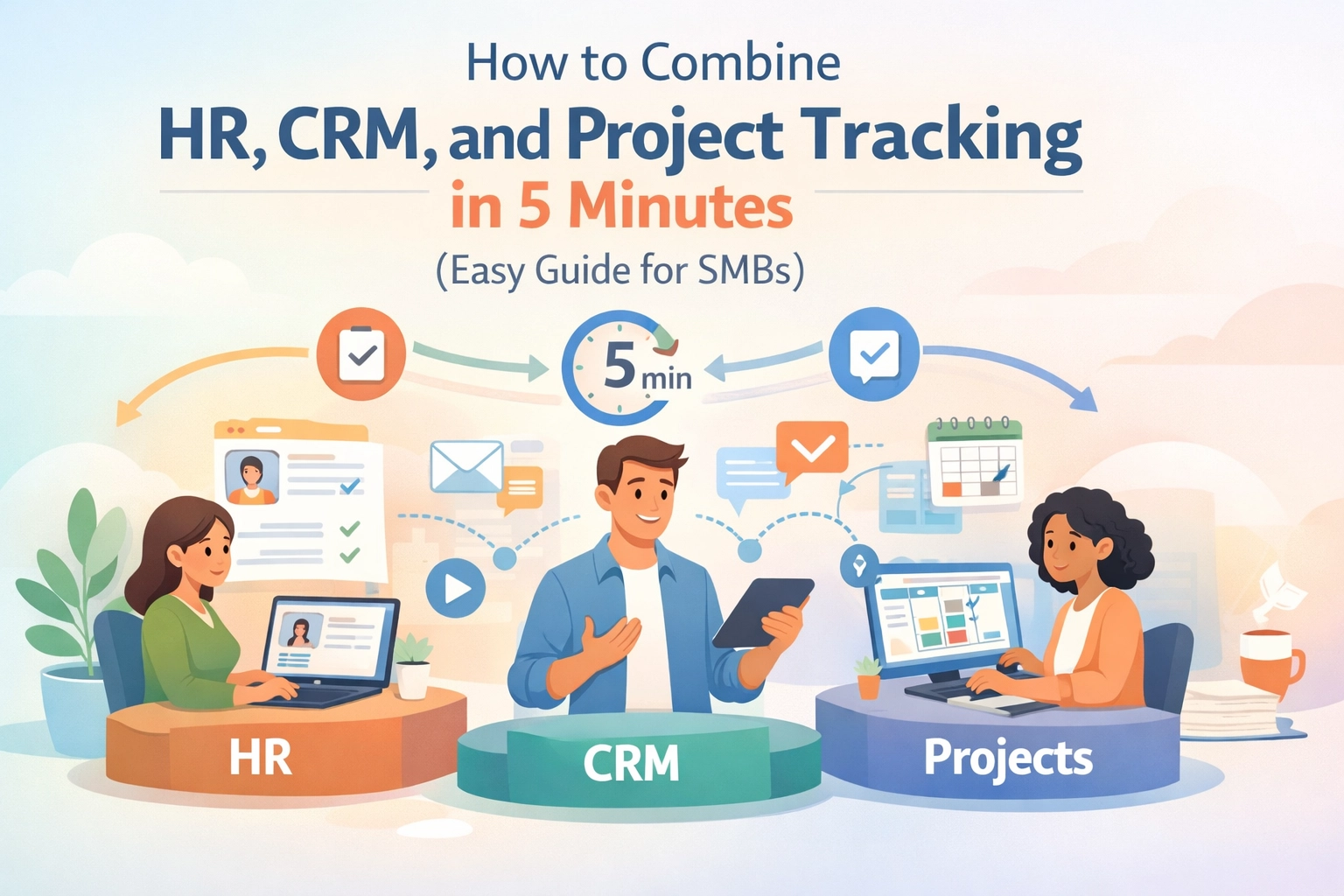
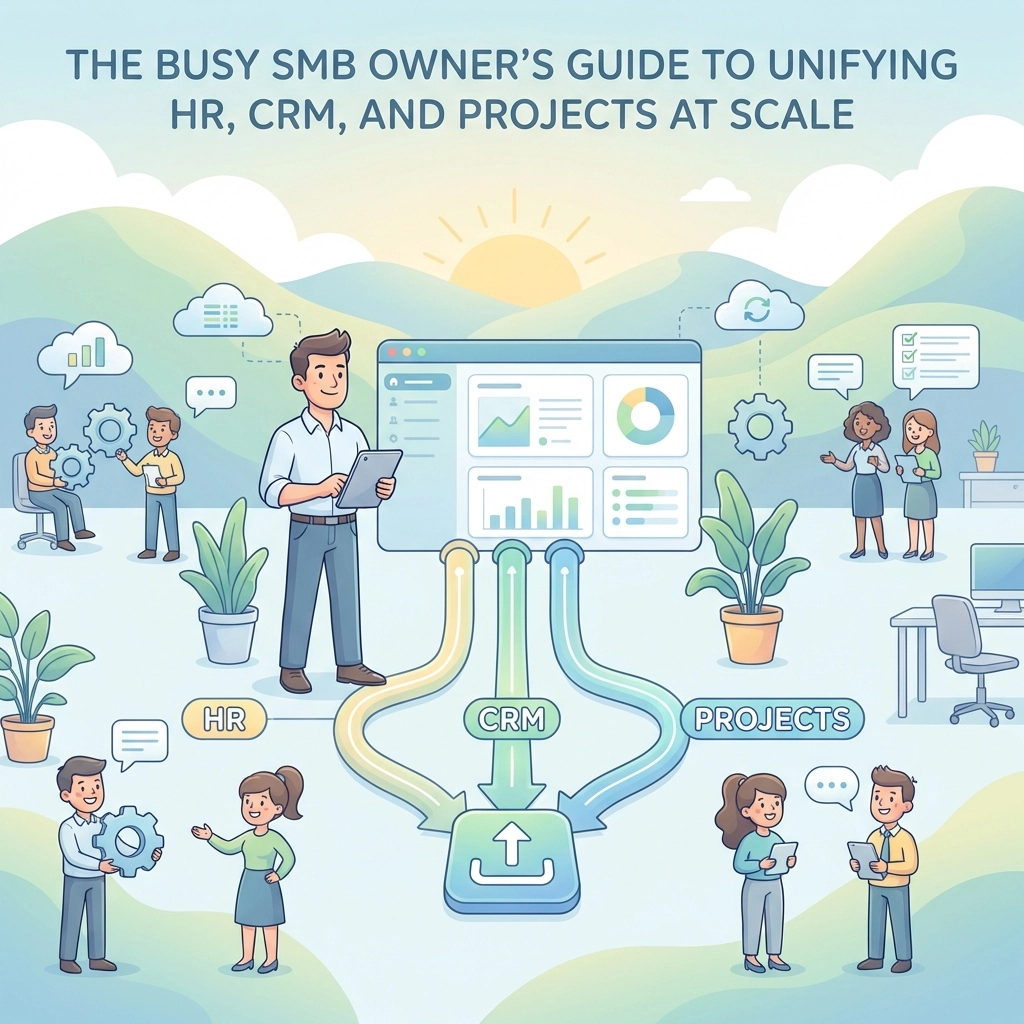
Here's where things get interesting. Unifying HR, CRM, and project management isn't just convenient. It's strategic.
Think of it as building one reliable headquarters instead of renting scattered offices across town.
Everything Connects Naturally
When your systems share the same foundation, magic happens. A new client deal closes in your CRM. The project team sees it instantly. HR knows about upcoming resource needs. No emails required. No Slack messages. It just flows.
Your Data Becomes Trustworthy
Standardizing processes in one system means consistent, accurate information. No more wondering which spreadsheet has the latest numbers. No more conflicting reports from different departments. One source of truth. Always.
Your Team Actually Collaborates
Sales, marketing, HR, and project managers gain visibility into shared information. Silos break down. People align naturally around the same goals. Cross-functional work stops feeling like pulling teeth.
You Save Real Money
Fewer tools mean lower overhead. Fewer integration headaches. Less time spent on training. More budget for things that actually grow your business.
The Unified Advantage for Growing SMBs
Let's talk about scale. Because that's really what this is about.
When you're small, disconnected tools feel manageable. Annoying, sure. But survivable.
As you grow? Those cracks become canyons.

Unified platforms give you something precious: operational leverage.
Here's what that looks like in practice:
- Onboarding new team members takes hours, not weeks. One system to learn. One login to remember.
- Reporting becomes effortless. Pull insights across HR, sales, and projects from a single dashboard.
- Automation actually works. Build workflows where your data already lives. No middleware required.
- Scaling doesn't multiply complexity. Add ten new employees or a hundred new customers. Your systems handle it gracefully.
This is the unified advantage. It's not about having fewer features. It's about having connected capabilities that grow with you.
What to Look For in a Unified Platform
Not all "all-in-one" solutions are created equal. Some are just multiple mediocre tools stitched together awkwardly.
Here's what actually matters:
Workflow Automation That Makes Sense
Automation separates basic tools from genuine productivity boosters. Look for platforms where you can create automated workflows right where your data lives. No need for Zapier workarounds or custom coding.
Good automation handles the repetitive stuff. Lead follow-ups. Approval chains. Status updates. Task assignments. Your team focuses on work that actually requires human brains.
Native Integrations With Your Essentials
Your unified platform should play nice with what you're already using. Think accounting software like QuickBooks or Xero. Communication tools like Slack. Calendar systems like Google or Outlook.
Native integrations beat third-party connectors every time. They're more reliable. Easier to maintain. Less likely to break at the worst possible moment.
Customization Without Complexity
Your business isn't generic. Your tools shouldn't be either.
The best platforms let you customize fields, workflows, and dashboards without needing a developer. Pre-designed templates help you start fast. But flexibility lets you make it truly yours.

Mobile Accessibility
Your team isn't always at their desks. Field workers. Remote employees. Executives on the go. Mobile access matters more than ever.
Look for platforms with genuine mobile apps. Not just responsive websites pretending to be apps. Real functionality on the go.
Onboarding That Doesn't Require a PhD
Implementation complexity kills adoption. If your team needs weeks of training, something's wrong.
Good unified platforms include built-in tutorials. Intuitive interfaces. Helpful support when you need it. Your ROI accelerates when people actually use the tools you're paying for.
Making the Switch: Practical Tips
Transitioning to a unified platform doesn't have to be traumatic. Here's how to do it right.
Start With Your Biggest Pain Point
Don't try to migrate everything at once. Identify your most frustrating workflow. Maybe it's lead tracking. Maybe it's employee onboarding. Maybe it's project visibility.
Start there. Get one thing working beautifully. Then expand.
Clean Your Data First
Moving messy data into a new system just creates messy data in a new location. Take time to audit and clean your existing records before migration.
Remove duplicates. Update outdated information. Standardize formats. Future you will be grateful.
Get Buy-In From Your Team
Technology changes fail when people resist them. Involve your team early. Show them what's in it for them. Less busywork. Fewer frustrating workarounds. More time for meaningful work.
Champions across departments help drive adoption faster than any mandate from above.
Plan For Parallel Running
Don't flip the switch overnight. Run your old and new systems simultaneously for a transition period. This catches issues before they become disasters. It builds confidence in the new approach.
Measure What Matters
Define success metrics before you start. Time saved on reporting. Reduction in manual data entry. Customer response times. Employee onboarding duration.
Track these numbers. They'll prove the value of unification. And they'll guide future improvements.
The Bottom Line
Running an SMB is hard enough without fighting your own tools.
Unifying HR, CRM, and project management isn't about chasing the latest trend. It's about building operational infrastructure that supports sustainable growth.
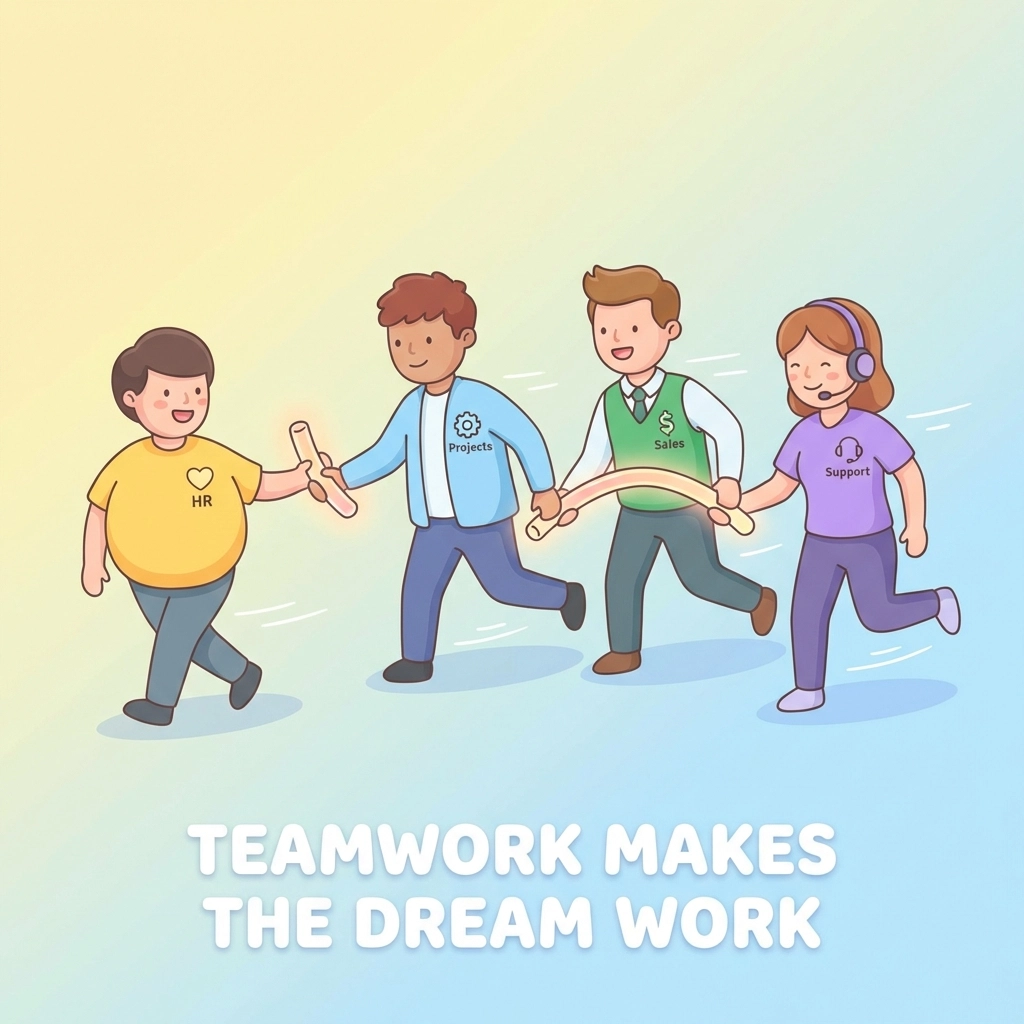
One system. One source of truth. One team working in harmony.
That's the unified advantage. And it's more accessible than you might think.
Your business deserves tools that work together as seamlessly as you want your team to. Simplicity isn't a compromise. It's a competitive edge.
Ready to see what unified operations look like for your business? TeamsMaster brings HR, CRM, and project management together in one intuitive platform built specifically for growing SMBs.
Stop tab-hopping. Start scaling.