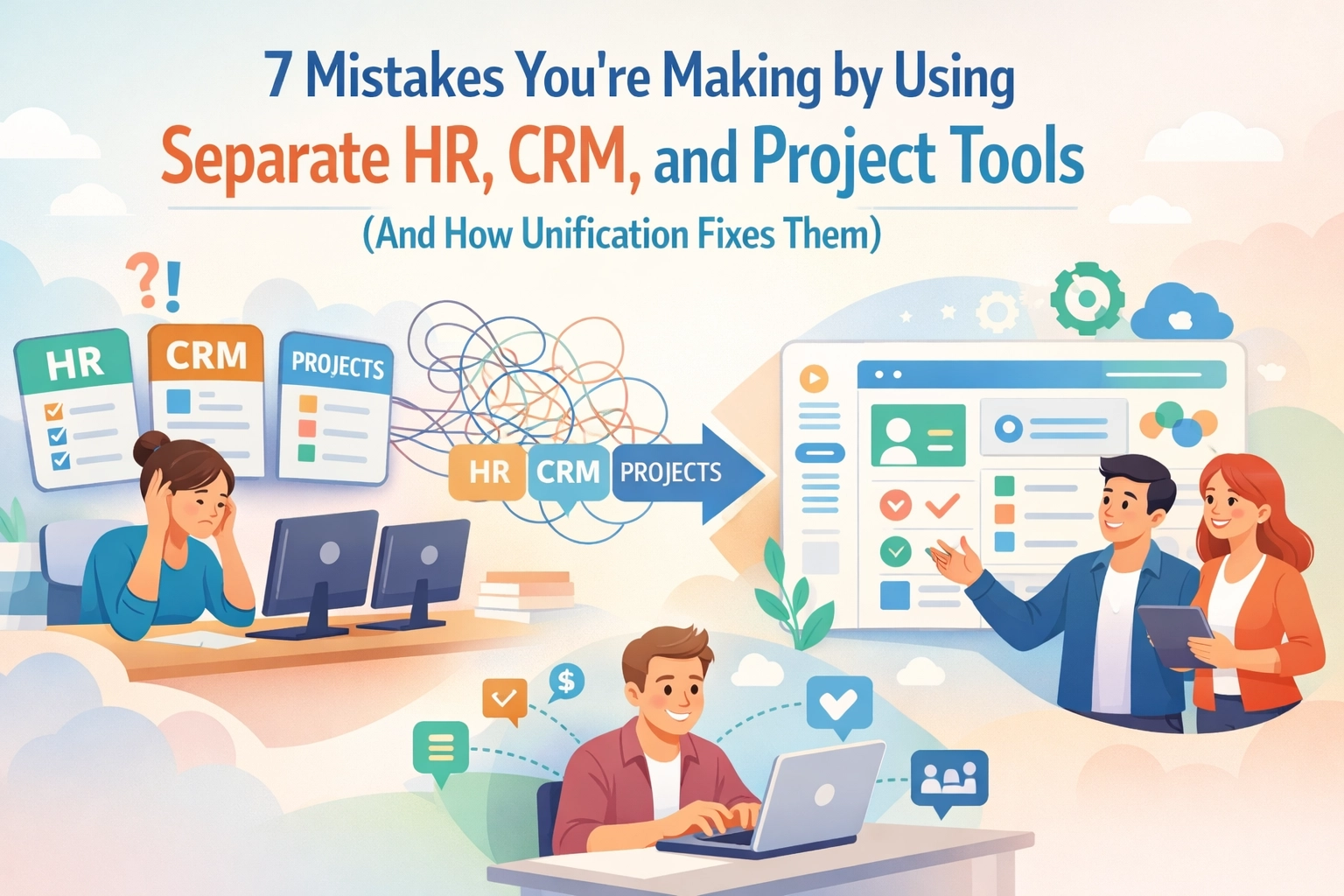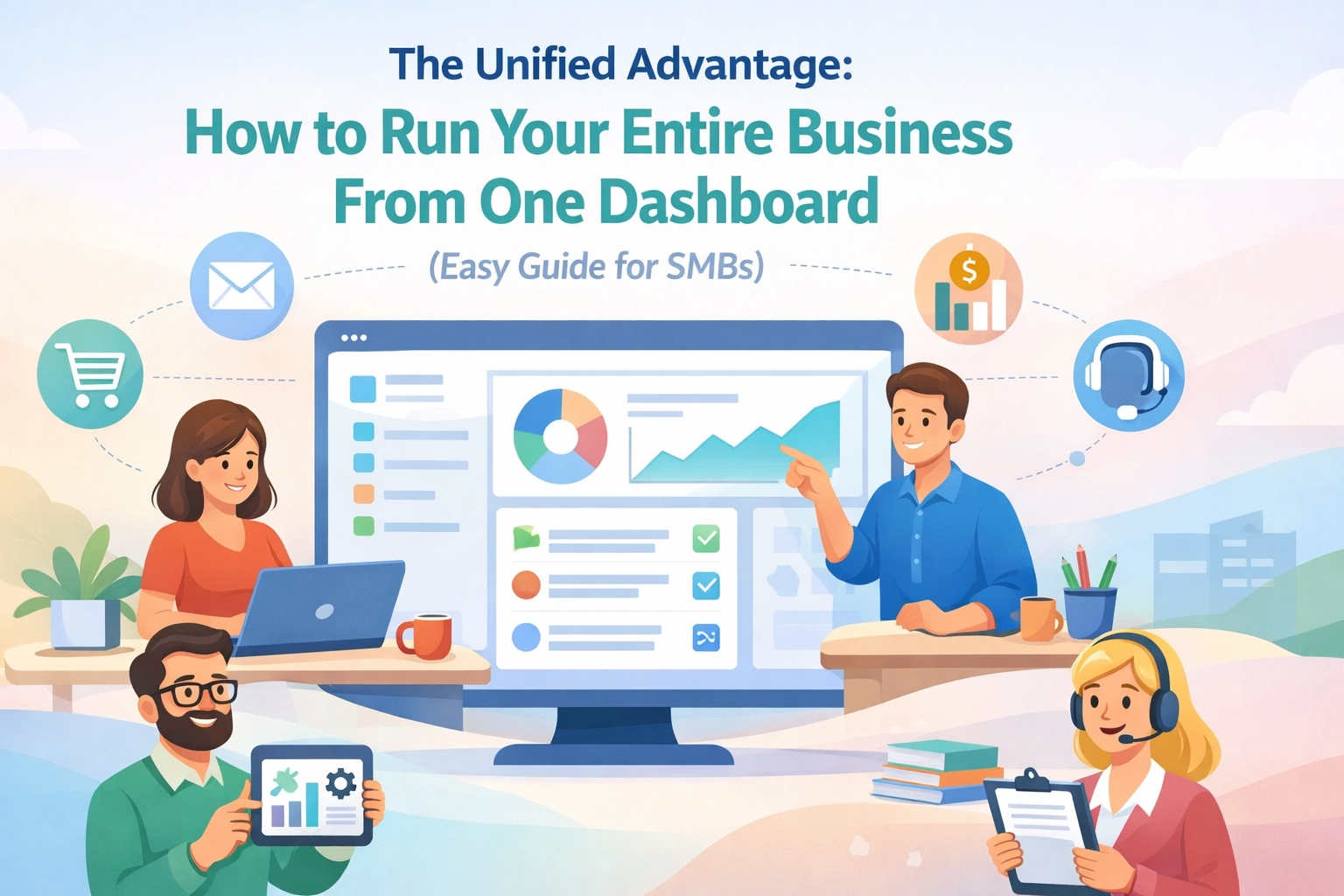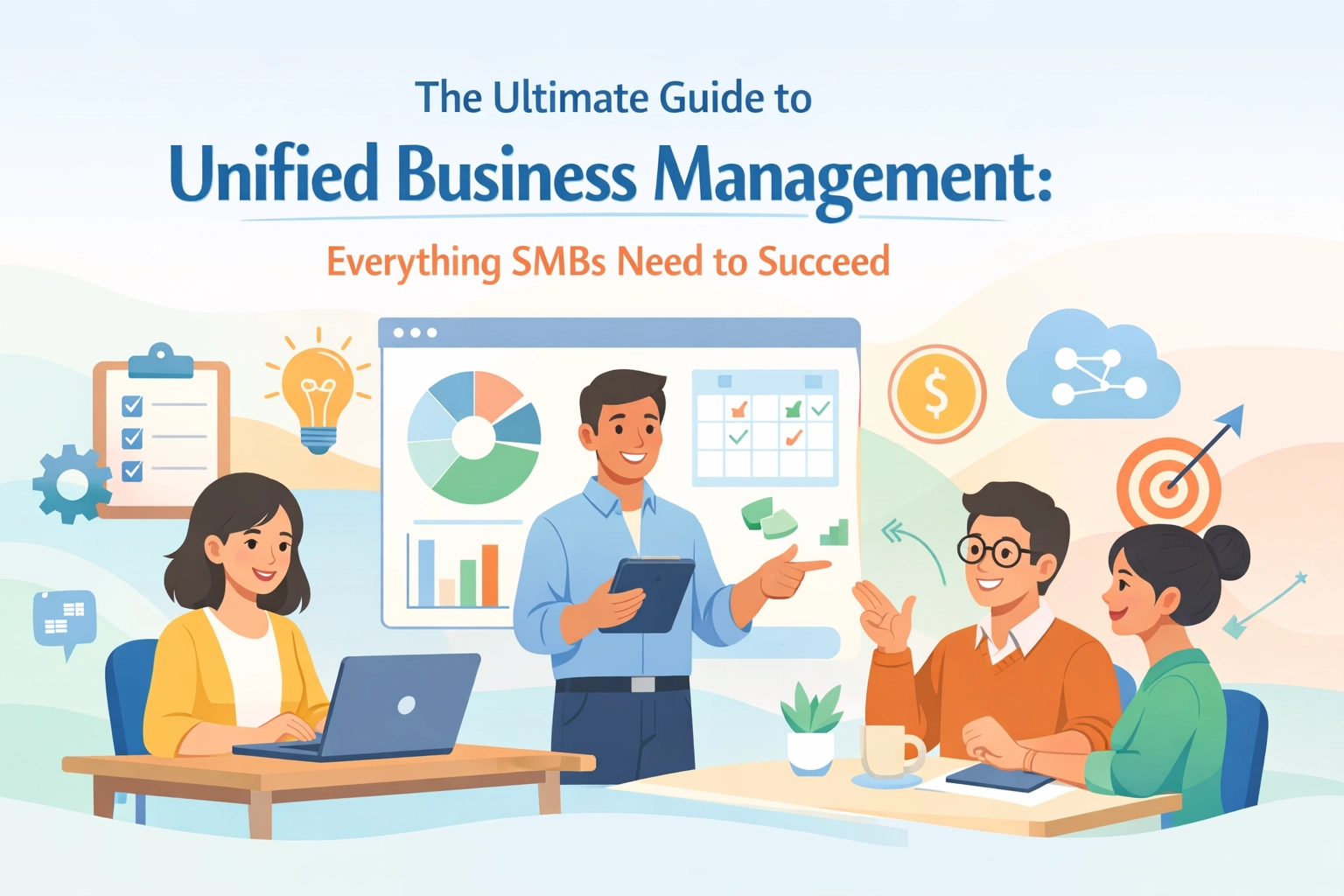
Running a small or medium-sized business shouldn't feel like juggling flaming torches. Yet here you are, switching between your HR software, your CRM, your project management tool, and three different spreadsheets. Sound familiar?
You're not alone. Most SMBs operate with disconnected systems that create more chaos than clarity. But there's a better way.
Welcome to unified business management, the game-changer that brings your entire operation under one roof.
What Is Unified Business Management?
Think of it as your business's central nervous system.
Unified business management integrates all your critical systems, sales channels, customer data, projects, HR processes, and workflows, into a single platform. One dashboard. One source of truth. No more jumping between apps or wondering which version of the spreadsheet is current.
This isn't just convenient. It's transformative.
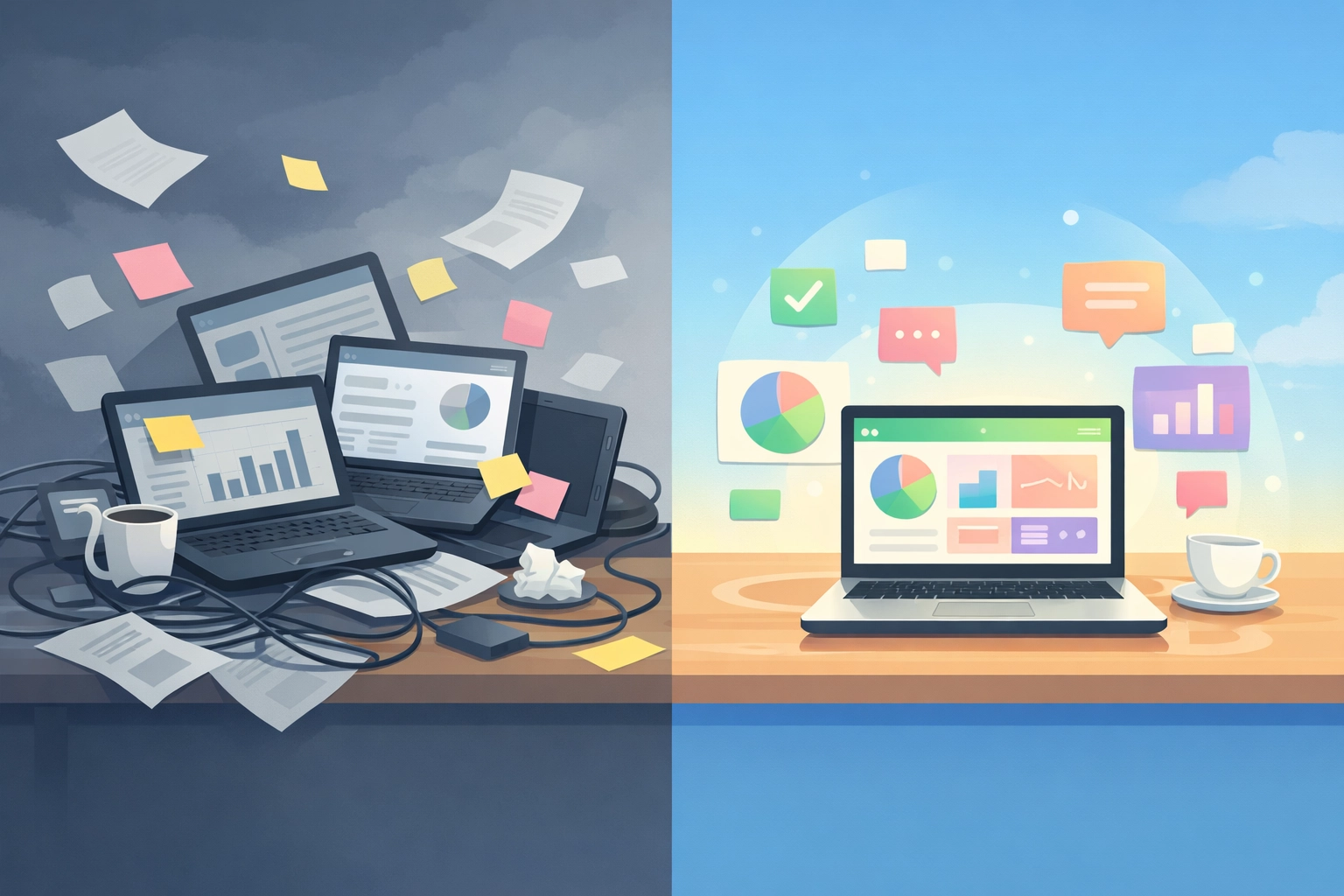
The Real Cost of Disconnected Systems
Let's talk about what scattered systems are actually costing you.
Time hemorrhage: Your team spends hours toggling between platforms, re-entering data, and searching for information. That's time they could spend growing your business.
Data disasters: When information lives in silos, errors multiply. Your sales team has one version of customer data. Your HR team has another. Your project managers have a third. Who's right? Nobody knows.
Decision paralysis: You need to make a strategic call, but the data you need is scattered across five different systems. By the time you gather everything, the opportunity has passed.
Team frustration: Your employees didn't sign up to be data archaeologists. They want to do meaningful work, not hunt for files.
The solution? Bring it all together.
The Three Pillars of Unified Business Management
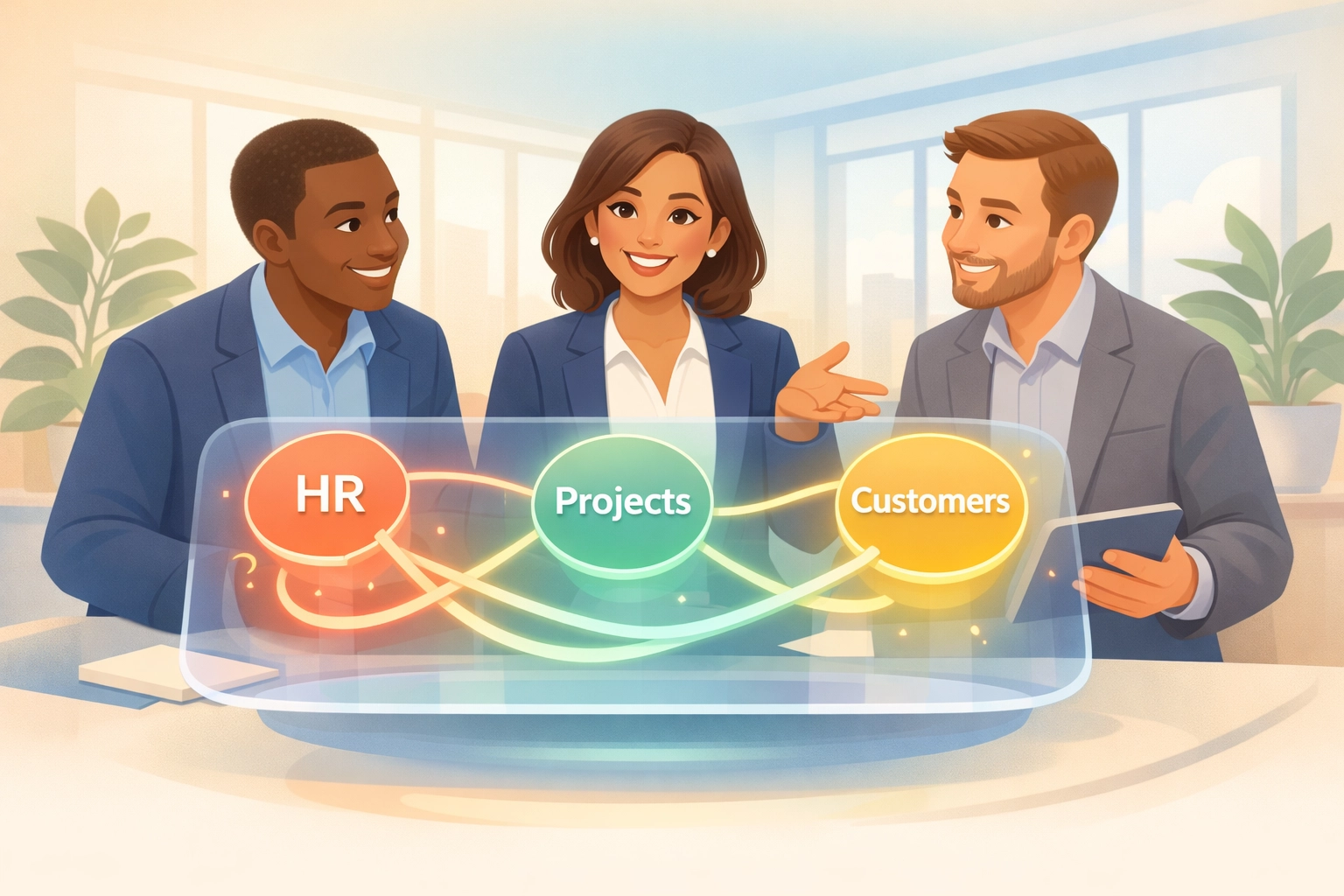
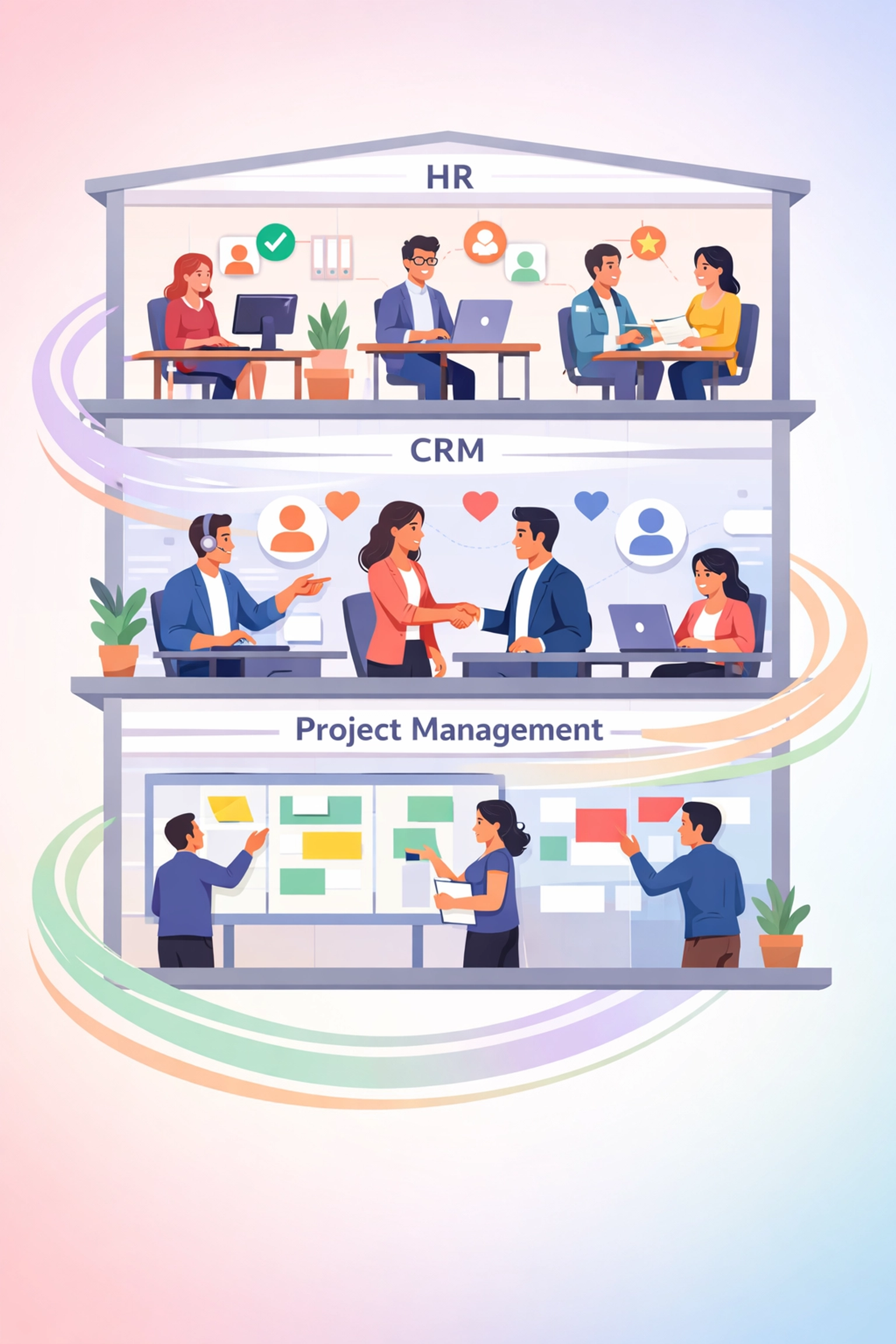
Every strong unified system rests on three foundational pillars: HR, CRM, and Project Management. Get these right, and everything else falls into place.
HR: Your People, Simplified
Your employees are your greatest asset. Managing them shouldn't be your greatest headache.
A unified HR system handles everything in one place:
- Onboarding new hires with automated workflows
- Tracking time off and attendance
- Managing payroll and benefits
- Storing documents securely
- Monitoring performance and growth
When HR data connects with your other systems, magic happens. You can see who's working on what projects. You know which team members have capacity for new work. You spot burnout before it becomes a problem.
CRM: Know Your Customers Inside Out
Your customers are the heartbeat of your business. A unified CRM gives you a 360-degree view of every relationship.
Track every interaction:
- Initial contact and lead source
- Sales conversations and proposals
- Customer service tickets
- Purchase history and preferences
- Follow-up tasks and opportunities
When your CRM connects with project management, your delivery team knows exactly what was promised. When it connects with HR, you know which team members have the best customer relationships. Everything flows.
Project Management: Execute With Precision
Great ideas mean nothing without flawless execution. Unified project management keeps everyone aligned and accountable.
Manage your work seamlessly:
- Assign tasks and set deadlines
- Track progress in real-time
- Allocate resources efficiently
- Identify bottlenecks before they stall projects
- Share updates across teams instantly
When project management connects with your CRM, you deliver what customers actually want. When it connects with HR, you optimize team workloads. The synergy is powerful.
The Unified Advantage: Benefits That Matter
Let's cut through the hype and talk about what unified business management actually delivers for SMBs like yours.
Operational Efficiency That Scales
Consolidating your systems eliminates duplicate workflows and manual busywork. Your team stops wasting time on administrative tasks and starts focusing on revenue-generating activities.
One platform means one login. One place to train new employees. One system to maintain and update.
The efficiency gains compound as you grow. What works for 10 employees works for 50.
Decision-Making at Lightning Speed
With all your data centralized, you get real-time insights into every aspect of your business.
See what's working:
- Which marketing channels drive the best leads
- Which projects are most profitable
- Which team members need support
- Which customers are at risk of churning
No more waiting for reports. No more gut-feel decisions. Just clear data that tells you exactly where to focus your energy.
Data Accuracy You Can Trust
Storing everything in one integrated database eliminates the errors that plague disconnected systems. No more data entry mistakes during transfers. No more wondering which version is current.
Your team accesses the same information instantly. Everyone works from the same playbook. Confusion evaporates.
Cost Reduction That Adds Up
Yes, unified platforms save money. But not just on software licenses.
The real savings come from:
- Reduced IT maintenance and support
- Fewer integration headaches
- Less time spent training on multiple systems
- Lower error rates and rework
- More efficient use of your team's time
For most SMBs, unified management pays for itself within months.
Customer Experience That Wins Loyalty
When your systems talk to each other, your customers notice.
They get:
- Consistent service across all touchpoints
- Personalized recommendations based on complete data
- Faster response times from your team
- Seamless hand-offs between departments
- Proactive outreach before problems arise
Happy customers become loyal customers. Loyal customers become advocates who bring you more business.

Collaboration That Breaks Down Silos
Disconnected systems create disconnected teams. Unified platforms bring everyone together.
Your sales team sees what the delivery team is working on. Your project managers understand customer commitments. Your HR team knows who's available for the next big opportunity.
When everyone has access to the same information, collaboration becomes natural. Teams stop working in isolation and start working as one.
Getting Started With Unified Management
Ready to make the switch? Here's how to set yourself up for success.
Start with clear goals: What problems are you trying to solve? Define success metrics before you begin.
Get leadership buy-in: Unified management requires commitment from the top. Make sure your entire leadership team understands the vision.
Plan for change: Your team will need time to adapt. Build a change management strategy that includes training, support, and patience.
Focus on your people: Technology is just a tool. The real transformation happens when your team embraces new ways of working.
Choose the right partner: Look for a platform that's built specifically for SMBs. You need simplicity, not enterprise complexity.
The TeamsMaster Difference
TeamsMaster brings HR, CRM, and Project Management together in one intuitive platform designed for growing businesses.
No complexity. No endless configuration. Just simple, powerful tools that help your team do their best work.
Get started with unified business management today and discover what your business can achieve when everything works together.
Your Next Move
The question isn't whether unified business management is right for your SMB. The question is how much longer you can afford to operate with disconnected systems.
Every day you wait is another day of inefficiency, confusion, and missed opportunities.
Your team deserves better. Your customers deserve better. Your business deserves better.
It's time to unify your operations and unlock your full potential.