You know the drill. Monday morning. You're juggling five different browser tabs before your coffee even kicks in.
Slack for team chat. Asana for projects. HubSpot for leads. BambooHR for employee stuff. Google Sheets for… well, everything else that doesn't fit anywhere.
Each tool costs money. Each one needs a login. Each platform holds a piece of your business puzzle.
And somewhere between Tab 3 and Tab 5, you're losing time, money, and maybe a little bit of your sanity.
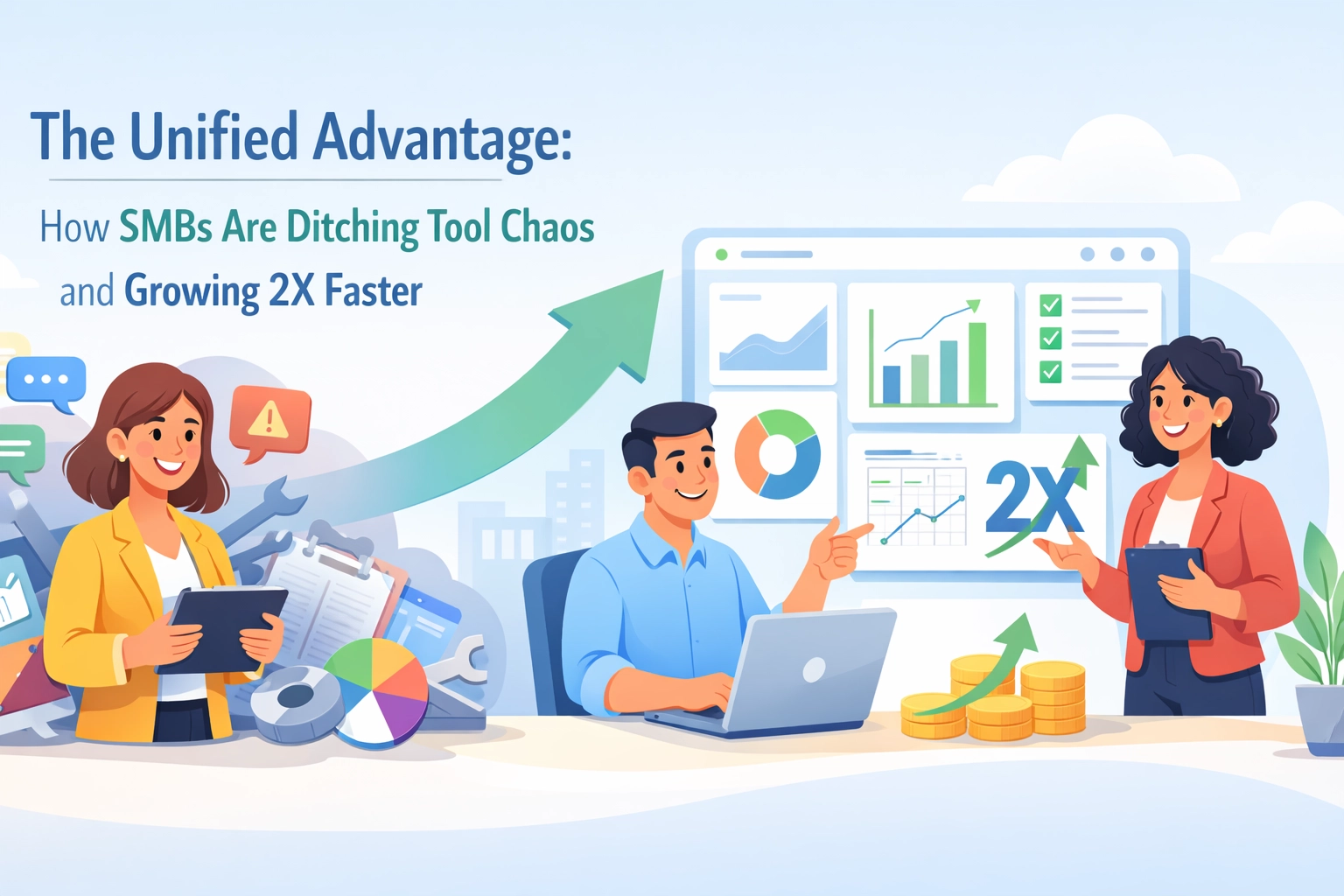
Here's the thing: tool chaos isn't just annoying. It's expensive. And SMBs that figure this out are growing twice as fast as those still stuck in the multi-app maze.
The Hidden Tax of Tool Sprawl
Let's talk numbers for a second.
That project management tool? $15 per user monthly. CRM? Another $50. HR system? Add $8 more. Communication platform? $12.50.
Suddenly you're paying $85+ per employee every month. For a 20-person team, that's $20,400 annually just in subscription costs.
But here's what really stings: the cost you don't see on invoices.
Every time your sales rep switches from the CRM to check project status, that's 2 minutes lost. When your HR manager manually updates employee data across three platforms, that's 30 minutes gone. When your project lead can't see client communication history because it lives in a different app, deals slip through the cracks.

Research shows businesses consolidating fragmented tools are cutting communication costs by 25%. Jackson Insurance Agency did exactly that and watched their expenses drop while performance climbed.
Your team isn't lazy. Your tools are making them work harder than necessary.
What "Unified" Actually Means (Without the Jargon)
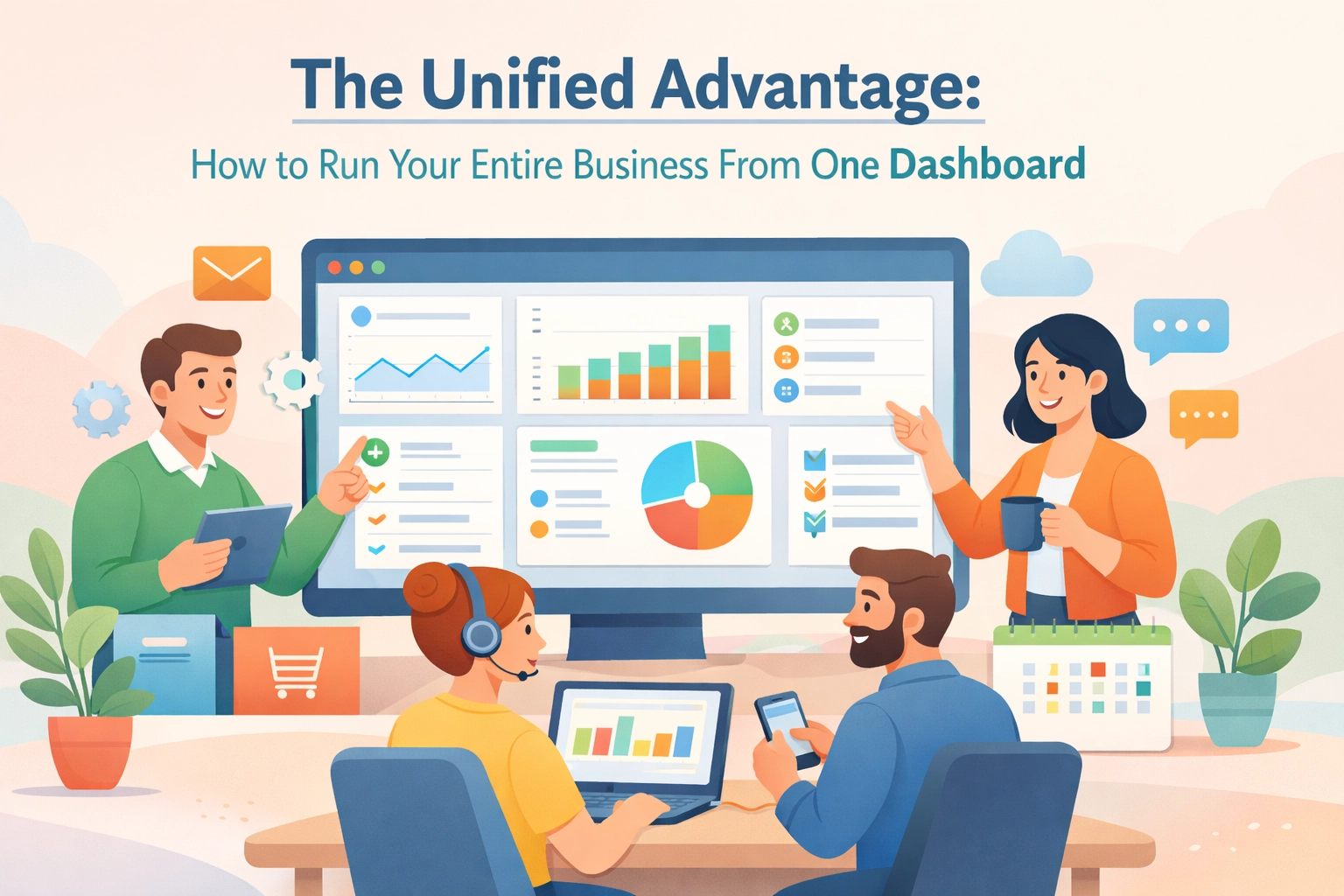
Strip away the tech buzzwords. Unified simply means everything in one place.
One login. One dashboard. One source of truth.
When your CRM talks to your project management system, and both connect to your HR platform, magic happens. Not the fairy-tale kind. The profitable kind.
You assign a project to Sarah. The system automatically knows Sarah's current workload, her skill set, and whether she's on vacation next week. No more assigning tasks to people who aren't even in the office.
A client emails your support team. Your sales rep sees the conversation history instantly. Your project manager spots the delay before it becomes a problem. Everyone stays in sync without a single status meeting.
That's the unified advantage. Less switching. More doing.
Real Growth, Real Numbers
Let's get concrete about what "growing 2X faster" actually looks like.
Bella's Boutique, an online retailer, made the switch to a unified platform. Within 12 months:
- Customer service feedback improved by 40%
- Sales jumped 20%
- Team productivity shot up enough to handle growth without new hires
Jackson Insurance Agency saw a 30% increase in client engagement in just six months. Not from working longer hours. From working smarter with connected systems.

These aren't unicorn startups with unlimited budgets. They're SMBs like yours. The difference? They stopped treating business software like a collection of separate puzzle pieces.
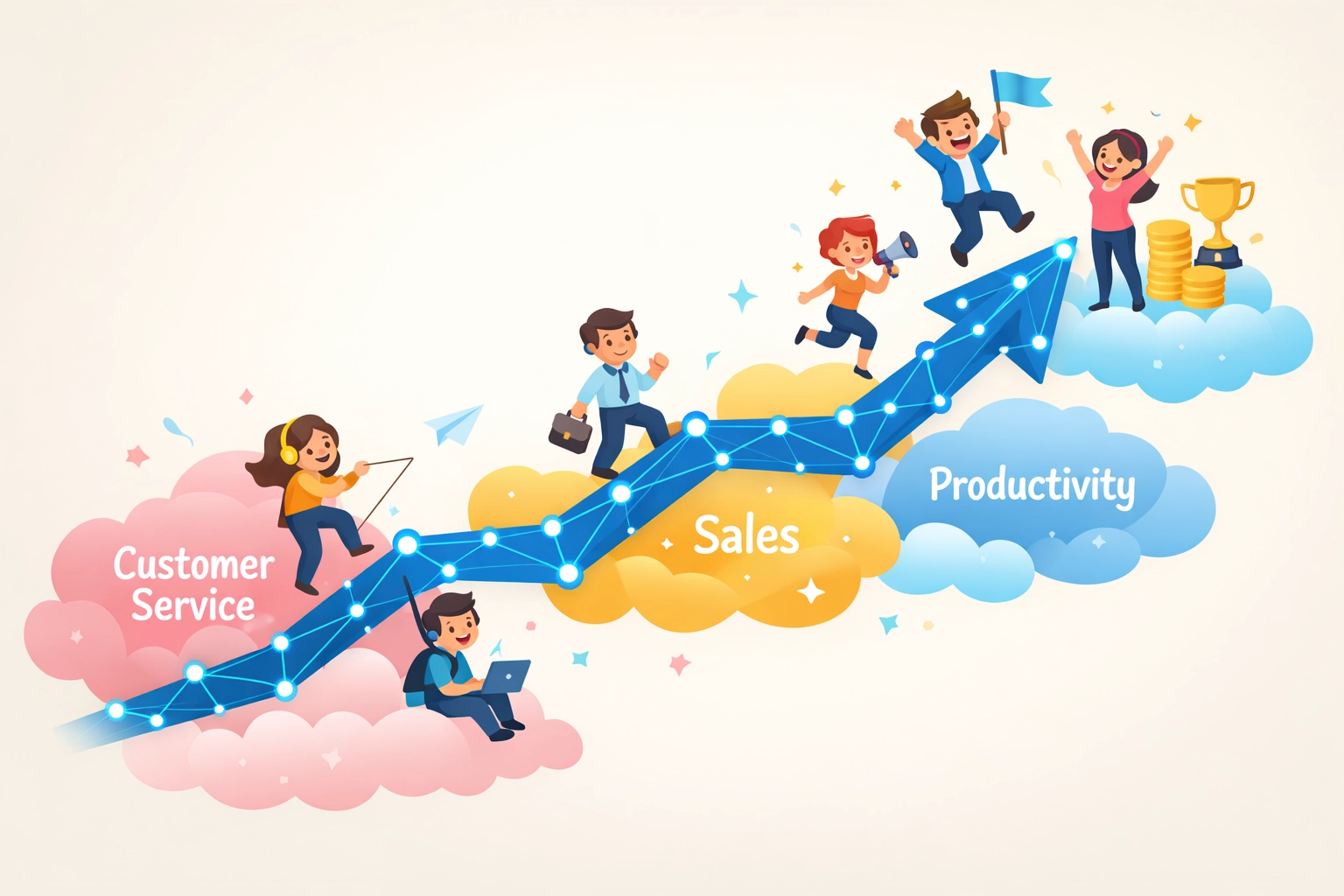
The Three Pillars of Unified Growth
Here's where unified platforms actually move the needle for your business.
1. Customer Experience That Doesn't Suck
Right now, only 14% of organizations have a complete view of their customers across all channels. That means 86% are flying blind.
When your support team can't see sales history, customers repeat themselves. When your project manager doesn't know about client complaints, small issues become big problems. When marketing doesn't know what services clients actually use, campaigns miss the mark.
A unified platform creates that 360-degree customer view everyone talks about but few actually achieve.
Your customer calls about an invoice. Your team instantly sees their project timeline, communication history, payment records, and open tasks. The conversation goes from "let me check and call you back" to "I can help you right now."
That's not just good service. That's the kind of experience that turns customers into advocates.
2. Productivity Without the Productivity Theater
You don't need another Zoom meeting to figure out who's doing what.
Real-time collaboration means your team sees updates as they happen. Task assignments, status changes, resource allocation: all visible without asking.

Presence technology shows who's available now. No more playing phone tag or waiting hours for email responses.
Your designer needs feedback on a client mockup. They tag the account manager. The notification appears. The decision gets made. The project moves forward. All in under 10 minutes instead of two days.
Multiply those time savings across every project, every week. That's how small teams punch above their weight class.
3. Future-Ready Without Future Shock
Business needs change. Your tools should change with you.
Modern unified platforms come with built-in capabilities you can activate when ready. Machine learning for smarter task assignments. Real-time analytics for better decisions. Advanced automation for repetitive workflows.
You're not buying features you'll never use. You're buying a platform that grows with your business.
Start with basic CRM and project tracking. Add HR management when you hire your 15th employee. Turn on advanced analytics when you need deeper insights. The platform scales without forcing you to migrate to something new every 18 months.
Making the Switch (It's Easier Than You Think)
The biggest reason SMBs stick with tool chaos? Fear of migration headaches.
Valid concern. Nobody wants to spend three months transferring data and retraining staff.
Here's the reality: modern unified platforms are built for smooth transitions. Most offer:
- Automated data imports from common tools
- Step-by-step migration guides
- Phone and chat support during setup
- Flexible pricing that lets you start small
You don't need to switch everything overnight. Start with one department. Move your project management first. Add CRM next month. Bring in HR when you're comfortable.
Consumption-based pricing means you only pay for what you actually use. No massive upfront investment. No locked-in contracts forcing you to use features you don't need.
The Bottom Line on the Unified Advantage
Your competitors are making this switch right now.
They're cutting costs by 25%. They're closing deals 20% faster. They're delivering customer service that earns them 40% better feedback scores.
Not because they work longer hours or hire expensive consultants. Because they stopped forcing their teams to work with fragmented, disconnected tools.
Tool chaos isn't a badge of honor. It's a growth ceiling.
Every minute your team spends switching between apps is a minute they're not serving customers or moving projects forward. Every dollar you spend on redundant subscriptions is a dollar that could fund growth initiatives.
The unified advantage isn't about having the fanciest software. It's about having connected systems that let your team focus on what actually matters: growing your business.

Ready to see what unified actually feels like? Check out TeamsMaster and discover how HR, CRM, and project management work better together than apart.
Your team will thank you. Your customers will notice. Your bottom line will prove it.