Let's be honest. Running a business today feels like juggling flaming torches while riding a unicycle.
You've got your HR software over here. Your CRM lives somewhere else. Project management? That's a third platform entirely. And somehow, you're supposed to keep everything running smoothly.
Spoiler alert: it doesn't work that way.
If you're a small or medium-sized business owner, you know this pain. The constant switching between apps. The data that never quite matches up. The feeling that your tools are working against you instead of for you.
There's a better way. It's called unified business management. And it's about to change everything.
The Hidden Cost of Disconnected Systems
Here's what nobody tells you about running multiple business tools.
Every time you switch between platforms, you lose momentum. Your team wastes precious minutes hunting for information. Data gets entered twice: or worse, not at all. Mistakes happen because the left hand doesn't know what the right hand is doing.

Think about your typical day. You check your project management tool for updates. Then hop over to your CRM to see customer activity. Next, you log into HR software to approve time-off requests. Before you know it, an hour has disappeared.
Now multiply that across your entire team.
The average employee switches between 10 different apps daily. That's not productivity. That's chaos with a subscription fee.
And the real kicker? These disconnected systems create blind spots. You can't see the full picture of your business. You're making decisions based on fragments of information scattered across a dozen dashboards.
What Unified Business Management Actually Means
Unified business management brings everything under one roof.
Your HR functions. Your customer relationships. Your project workflows. All living together in a single platform. Talking to each other. Sharing data automatically.
No more copy-pasting between systems. No more "let me check the other tool and get back to you." No more reconciling conflicting numbers from different sources.
Instead, you get a single source of truth.
One login. One dashboard. One place where everything makes sense.
This isn't just about convenience. It's about fundamentally transforming how your business operates.
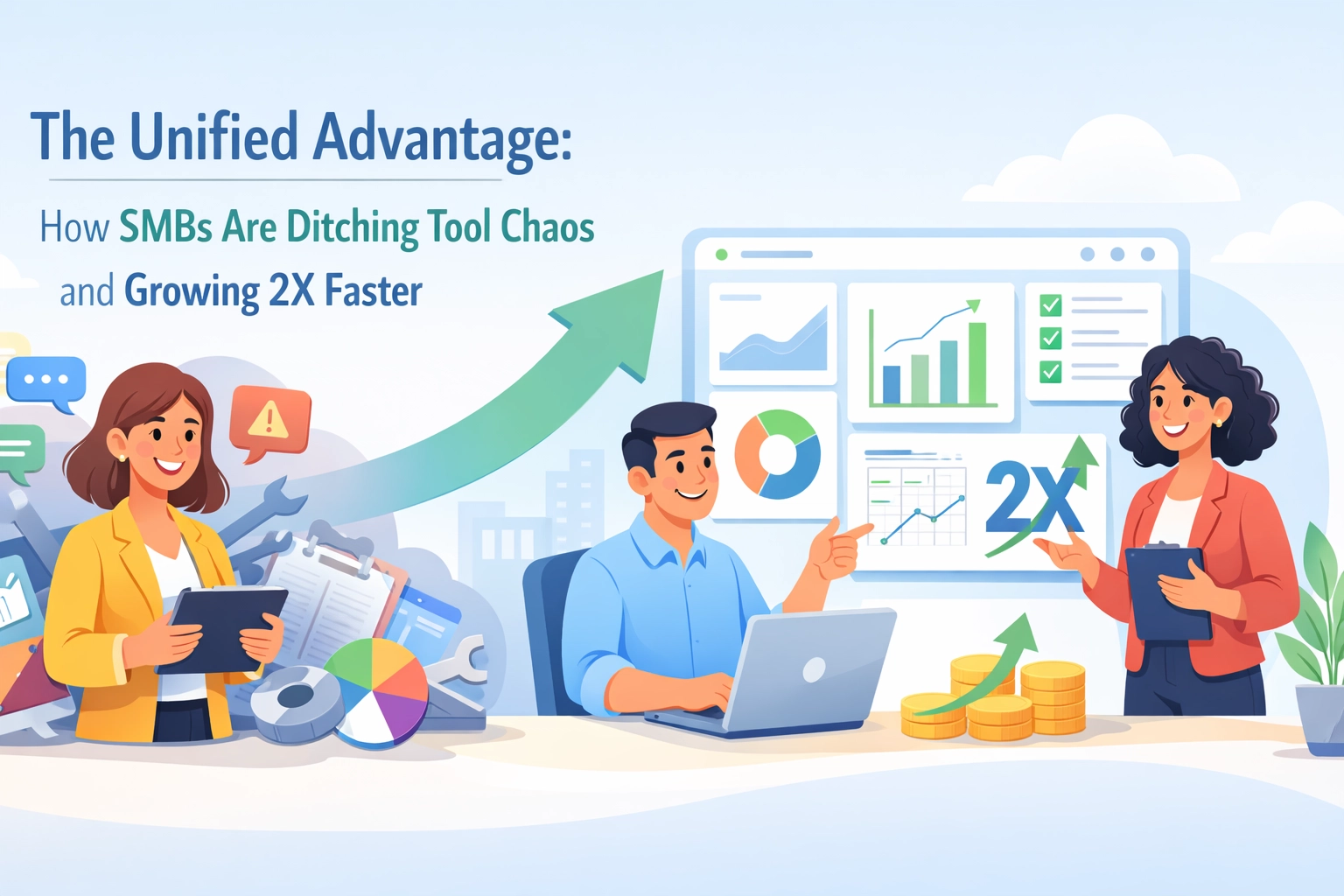
The Unified Advantage for Growing Businesses
Here's where things get exciting for SMBs.
When your HR, CRM, and project management work together, magic happens. Let's break down what this actually looks like in practice.
HR That Connects to Everything
Your people are your biggest asset. But traditional HR software treats them like isolated data points.
Unified systems change that. When an employee finishes onboarding in HR, their profile automatically populates in your project management tool. Assign them to teams instantly. Track their workload alongside their performance reviews.

Need to see who's available for a new client project? Check capacity across your entire team in seconds. No more emailing managers for updates. No more spreadsheets tracking who's doing what.
Your HR data becomes actionable intelligence.
CRM That Tells the Whole Story
Customer relationships don't exist in a vacuum.
Your sales team closes a deal. But then what? In disconnected systems, that handoff to delivery is messy. Details get lost. Expectations misalign. Customers feel the friction.
With unified management, the customer journey flows seamlessly. Sales notes feed directly into project kickoffs. Support tickets connect back to original conversations. Everyone on your team sees the complete customer picture.
This creates experiences that feel effortless to your customers. They don't have to repeat themselves. They don't fall through cracks. They feel known and valued.
And that drives loyalty, referrals, and revenue growth.
Project Management With Context
Projects don't happen in isolation either.
Every project involves people (HR) and serves customers (CRM). When these systems talk to each other, project management becomes incredibly powerful.
Start a new project and instantly see which team members have bandwidth. Pull in customer requirements without re-entering data. Track profitability by connecting project hours to customer contracts.
You're not just managing tasks. You're managing outcomes with full visibility into resources and relationships.
Real Results for Real Businesses
Let's talk numbers.
Businesses using unified platforms report spending 30% less time on administrative tasks. That's time back for actual work. For strategy. For growth.
Error rates drop dramatically when data only needs to be entered once. No more "which system has the correct number?" debates.
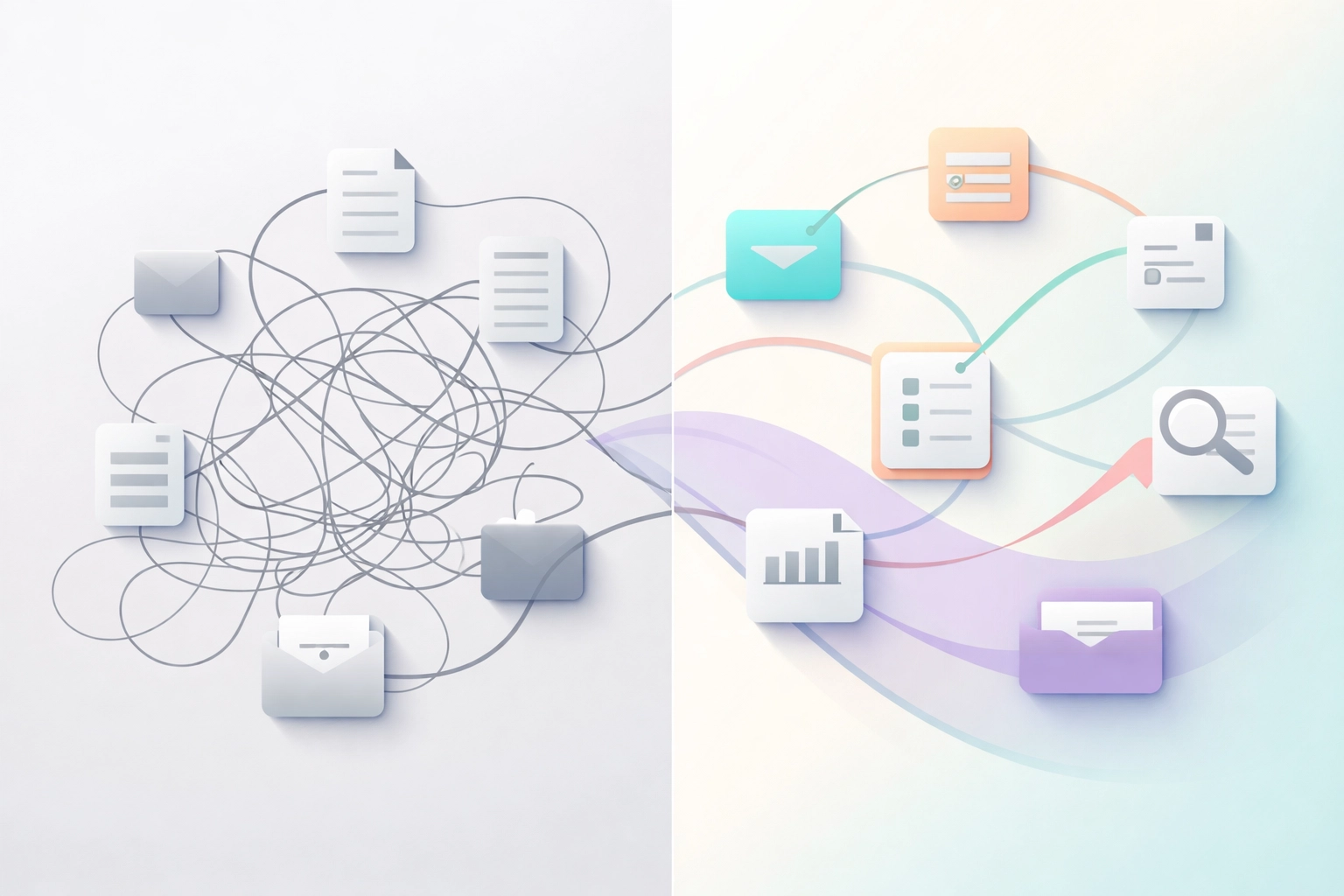
Decision-making speeds up because leaders have complete information at their fingertips. No waiting for reports from different departments. No reconciling conflicting data sets.
And here's the bottom line: unified systems typically cost less than running multiple disconnected tools. You're paying for one platform instead of five. One vendor relationship. One support team to call.
Your Team Will Thank You
This isn't just about efficiency metrics.
Your employees are drowning in tool fatigue. They didn't sign up to become software administrators. They want to do meaningful work.
Unified business management gives them that gift. One system to learn. One place to work. Less friction, more focus.
New hires onboard faster because there's only one platform to master. Collaboration improves because everyone sees the same information. Frustration decreases because workflows actually flow.
Happy teams build better businesses. It's that simple.
Making Better Decisions, Faster
When all your data lives in one place, patterns emerge.
You can finally see how customer satisfaction connects to project delivery times. How employee workload affects quality. How sales cycles impact resource planning.
These insights were always there. They were just trapped in separate systems, invisible to decision-makers.
Unified platforms surface this intelligence automatically. Dashboards show real-time performance across your entire operation. Forecasting becomes accurate because it draws from complete data.
You stop guessing. You start knowing.
The Path Forward
Transitioning to unified business management might feel daunting. Change always does.
But the alternative is staying stuck. Watching competitors move faster with better tools. Losing talented employees to frustration. Missing growth opportunities because you can't see them clearly.

SMBs have a unique advantage here. You're agile. You can make decisions quickly. You don't have decades of legacy systems to untangle.
The businesses that thrive in the coming years will be the ones that operate as unified organizations. Where information flows freely. Where teams collaborate effortlessly. Where customers feel the difference.
That could be your company.
Ready to Experience the Unified Advantage?
Running a business is hard enough. Your tools should make it easier, not harder.
Unified business management isn't a nice-to-have anymore. It's becoming essential for SMBs that want to compete, grow, and thrive.
One platform for HR, CRM, and project management. One source of truth for your entire operation. One smarter way to work.
The question isn't whether unified business management will change how you run your company.
It's whether you'll be leading that change or chasing it.