You've probably noticed something lately.
Every business podcast, LinkedIn post, and industry report keeps mentioning the same thing: unified business management.
It's not just a buzzword. It's a shift in how growing businesses operate.
And if you're running a small or medium-sized business, this trend matters more to you than anyone else.
Let's break down why unified business management is dominating the conversation: and why ignoring it could cost you.
The Problem With Your Current Setup
Here's a familiar story.
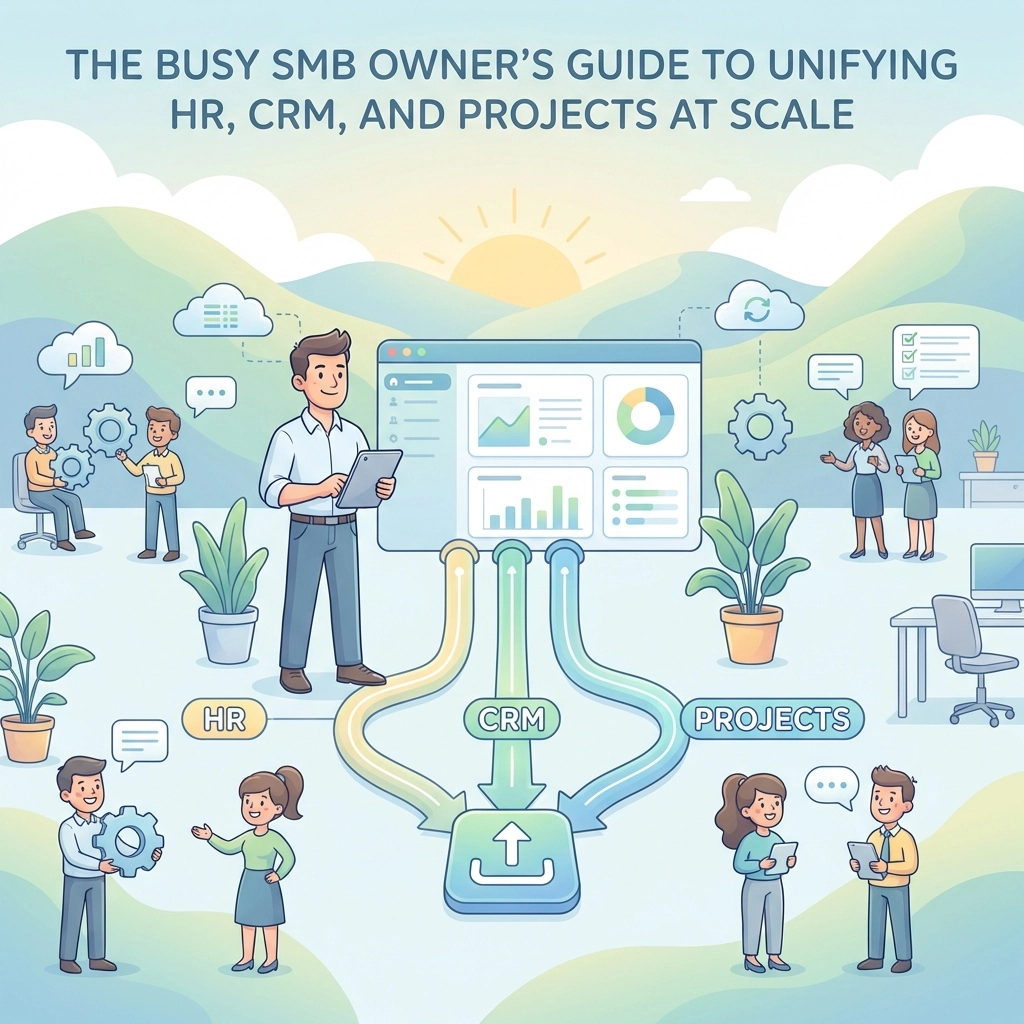
Your HR team uses one platform. Your sales team swears by a different CRM. Project managers live in yet another tool.
Everyone's busy. Everyone's productive. But nobody's connected.
Sound about right?
This fragmented approach creates invisible problems:
- Data lives in silos nobody can access
- Teams duplicate work without realizing it
- Customer information gets lost between departments
- You spend hours chasing updates instead of making decisions
The worst part? You're paying for multiple subscriptions that don't talk to each other.
It's expensive. It's exhausting. And it's holding your business back.

What Unified Business Management Actually Means
Unified business management brings your core operations under one roof.
We're talking about:
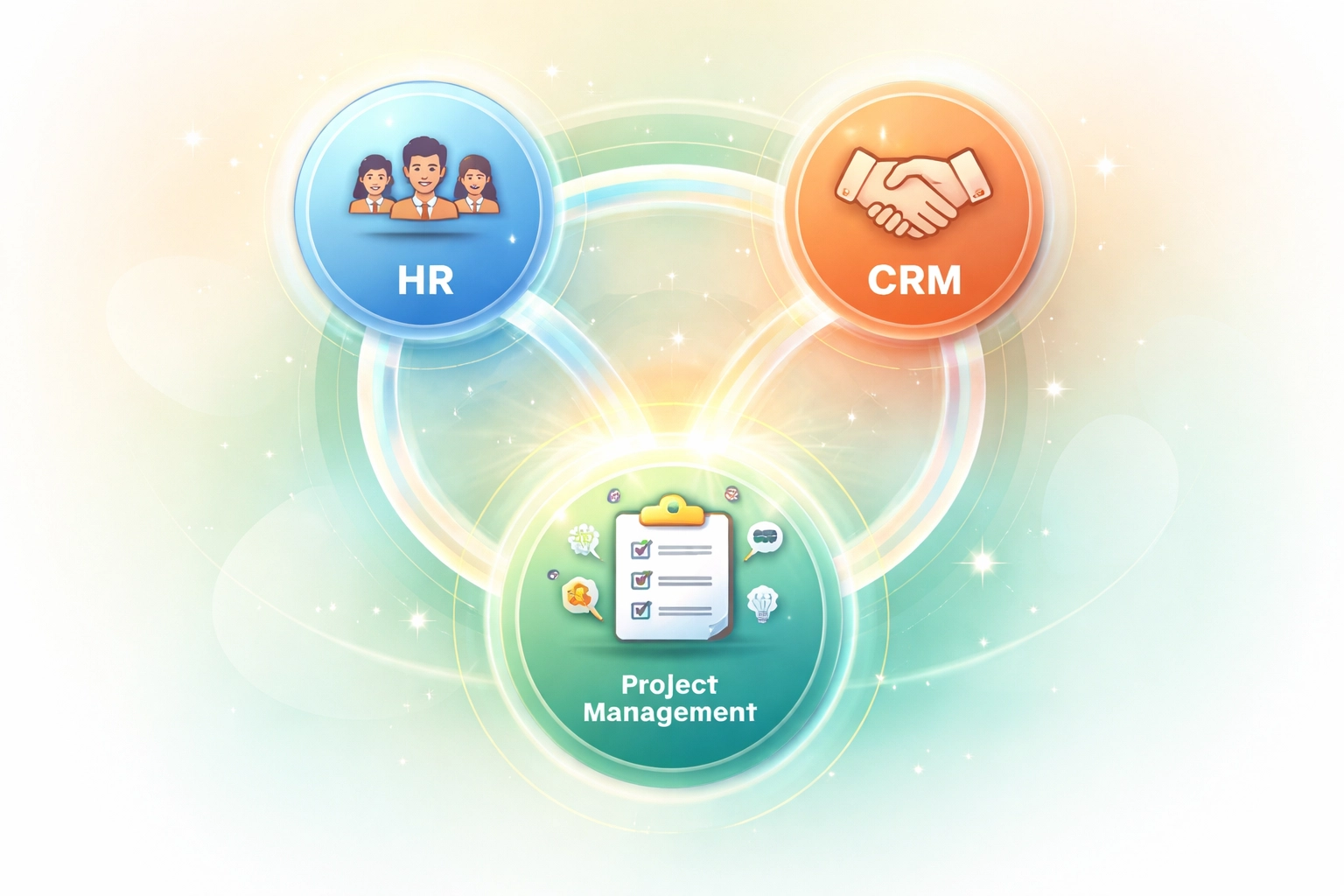
- HR and people management – hiring, onboarding, time tracking, performance
- CRM and customer relationships – leads, contacts, deals, communication history
- Project management – tasks, deadlines, team collaboration, deliverables
Instead of three separate systems, you get one integrated platform.
Everything connects. Everything syncs. Everyone sees the same information.
It's simple in concept but transformative in practice.
Why 87% of Brands Say This Is Essential
The numbers don't lie.
Research shows that 87% of brands now recognize unification as essential for cost savings and gaining a complete customer view.
That's not a small majority. That's near-universal agreement.
Why the consensus? Because unified systems solve problems that fragmented tools simply can't address:
One source of truth. No more conflicting reports. No more wondering which spreadsheet has the latest numbers.
Faster decisions. When data flows freely, you spot trends quickly. You respond to problems before they escalate.
Better customer experience. Your sales team knows what your project team promised. Your support staff sees the full customer history. Nothing falls through the cracks.
Real cost savings. Fewer subscriptions. Less manual data entry. Reduced training time for new hires.
The Unified Advantage for SMBs
Here's where it gets interesting for small and medium-sized businesses.
Enterprise companies have had integrated systems for years. They built custom solutions with massive IT budgets.
But now? The playing field is leveling.
Modern unified platforms give SMBs the same advantages: without the enterprise price tag.
This is what we call the Unified Advantage.
You get to:
- Compete with bigger players by moving faster and smarter
- Scale without chaos as your team grows
- Control your own technology roadmap instead of depending on disconnected vendors
- Pivot quickly when market conditions change
For growing businesses, this isn't just convenient. It's a competitive necessity.
How Unification Drives Real Growth
Let's talk about what this looks like in practice.
Scenario 1: Hiring that actually connects to projects
You hire a new team member. Their information automatically populates in your project management system. They're assigned to relevant tasks on day one. No manual data transfer. No waiting for IT to grant access.
Scenario 2: Sales insights that improve delivery
Your sales team closes a deal. The project team immediately sees the client's requirements, preferences, and communication history. They start work with full context: not a blank slate.
Scenario 3: Performance data that tells the whole story
You want to evaluate team productivity. Instead of pulling reports from three different systems, you see everything in one dashboard. Hours worked. Projects completed. Customer satisfaction scores. All connected.
This is how unified business management turns everyday operations into growth opportunities.

The Hidden Cost of Staying Fragmented
Maybe you're thinking: "Our current setup works fine."
But does it?
Consider the hidden costs you might be absorbing:
- Time spent on manual data entry between systems
- Errors and duplications that require cleanup
- Delayed responses because information isn't accessible
- Training costs for multiple platforms
- Integration fees for tools that barely connect
One study found that businesses waste significant resources on duplicated systems and redundant processes. Staff time alone represents a massive drain.
The money you're "saving" by avoiding change? You're probably spending it anyway: just invisibly.
What to Look For in a Unified Platform
Not all unified systems are created equal.
When evaluating options for your business, prioritize these factors:
True integration, not just bundling. Some platforms claim to be unified but just package separate tools together. Look for platforms where HR, CRM, and project management actually share data seamlessly.
Ease of use. If it takes months to implement and weeks to train, you've traded one problem for another. The best platforms feel intuitive from day one.
Flexibility. Your business is unique. Your platform should adapt to your workflows: not force you into rigid templates.
Scalability. Today you have 15 employees. Next year, maybe 50. Your platform should grow with you without painful migrations.
Support that actually helps. When questions arise, you need answers fast. Not ticket numbers and three-day wait times.

Making the Switch: Easier Than You Think
Change can feel daunting. Especially when you've invested time in your current tools.
But here's the reality: staying fragmented gets harder every year. Switching gets easier.
Modern unified platforms are designed for migration. They import your existing data. They offer onboarding support. They minimize disruption.
The businesses that thrive in the next decade won't be the ones with the most tools. They'll be the ones with the smartest systems.
Start by auditing your current setup:
- How many platforms does your team use daily?
- Where does data get stuck or duplicated?
- What decisions get delayed because information isn't accessible?
- How much are you spending on subscriptions that overlap?
The answers will tell you whether unification makes sense for your business.
Why This Conversation Isn't Going Away
Unified business management isn't a trend that fades.
It's a response to real problems that every growing business faces.
As remote work expands, teams need shared visibility. As customer expectations rise, departments need to collaborate seamlessly. As markets move faster, businesses need data they can act on immediately.
The companies investing in unification today are building foundations for tomorrow's growth.
The companies ignoring it are building technical debt that compounds over time.
Your Next Step
You don't need to overhaul everything overnight.
Start with awareness. Recognize where fragmentation costs you time, money, and opportunities.
Then explore what's possible. See how a unified platform could simplify your operations and empower your team.
The conversation about unified business management is happening everywhere for a reason.
It's time to join it.
Ready to see what unified HR, CRM, and project management looks like in action? Explore TeamsMaster and discover how the Unified Advantage can power your business growth.