Let's be honest. Your tech stack is probably a mess right now.
You've got one tool for tracking leads. Another for managing projects. A third for HR tasks. Maybe a fourth for team communication. And somehow, they're all supposed to "integrate" seamlessly.
Spoiler alert: they don't.
If you're running a small or medium-sized business in 2026, you've likely felt the pain. The constant tab-switching. The duplicate data entry. The surprise subscription charges that keep creeping up.
Here's the good news. SMB owners everywhere are waking up to a better way. They're consolidating. Simplifying. And embracing what we call the Unified Advantage.
Let's break down exactly what that means: and why it might be the smartest business move you make this year.
The Hidden Cost of Tool Sprawl
Picture this. Your sales team closes a deal in your CRM. Your project manager needs that info to kick off work. Your HR lead needs to assign team members.
Three different platforms. Three different logins. And somewhere in between, critical details get lost.
This isn't just inconvenient. It's expensive.

When you're paying for multiple fragmented tools, costs add up fast. Each platform wants its monthly fee. Many charge extra for integrations. Some require credits or upgrades as your usage grows.
The result? Unpredictable expenses that eat into your margins.
But the financial hit is only part of the story.
The real damage happens to your team's productivity.
Every time someone switches between systems, they lose focus. Data sits in silos. Customer information isn't accessible across departments. Your team spends more time managing tools than actually doing their work.
Sound familiar?
What Is the Unified Advantage?
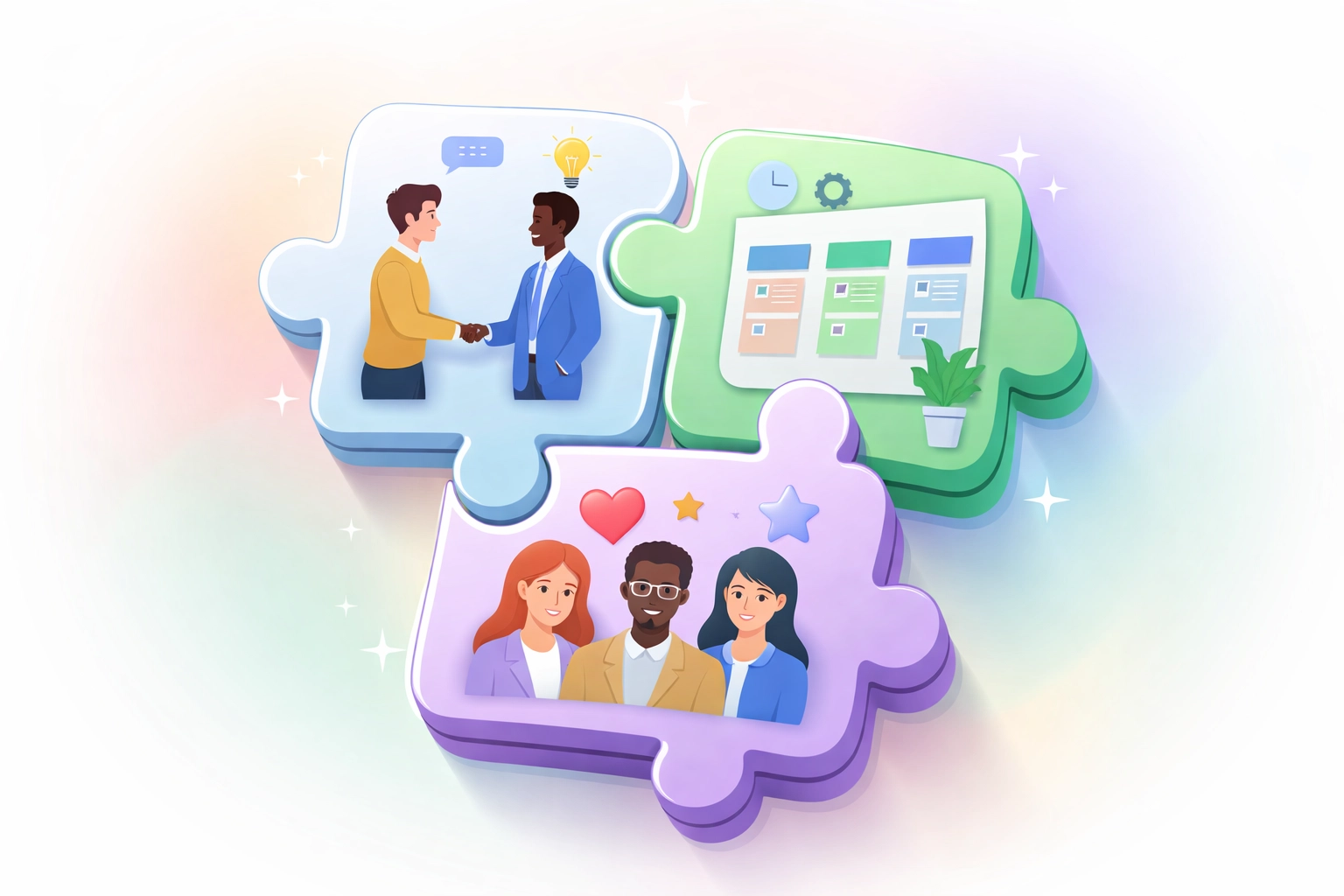
The Unified Advantage is simple. It's the competitive edge you gain when HR, CRM, and project management live under one roof.
No more juggling. No more silos. No more crossed wires.
When everything connects in a single platform, magic happens:
- Customer data becomes accessible to everyone who needs it
- Projects flow naturally from sales wins to delivery
- Team assignments and workloads stay visible across departments
- Automation actually works because it has complete data to act on
Think of it as your business operating system. One login. One source of truth. One place where your entire team stays aligned.
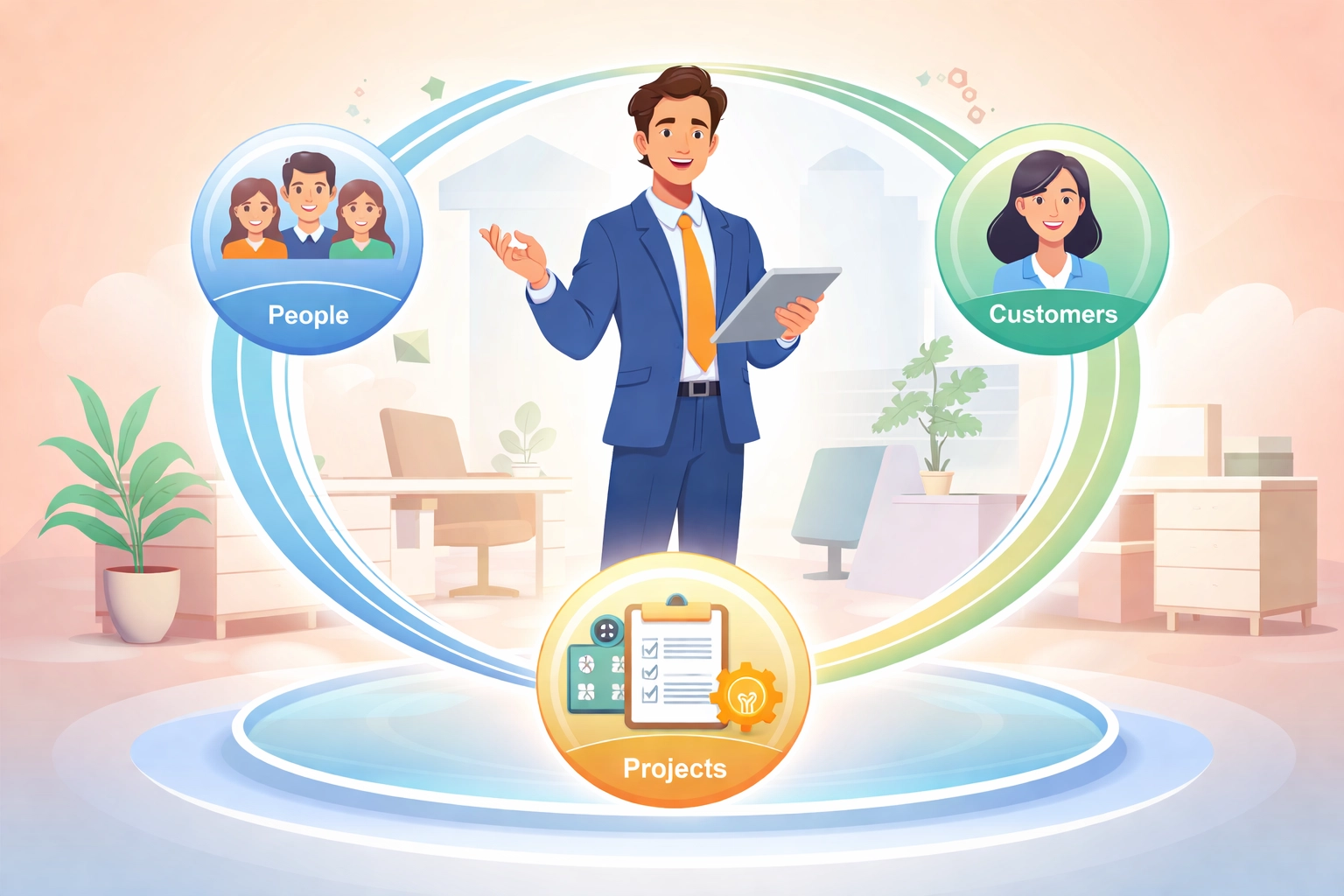
This isn't about adding more features to your toolkit. It's about removing friction from how your business actually runs.
Why SMBs Are Making the Switch in 2026
The shift toward unified platforms isn't random. It's driven by three major trends hitting SMBs right now.
1. The Integration Tax Is Too High
Remember when "best-of-breed" was the hot strategy? Pick the best CRM. The best project tool. The best HR system. Then connect them all.
In theory, brilliant. In practice, a nightmare.
Those integrations break. They require maintenance. They create data inconsistencies. And every time one tool updates, the whole chain can collapse.
SMB owners are tired of playing IT support for their own software stack.
2. Teams Demand Simplicity
Your employees don't want to learn five different platforms. They want to do great work.
When onboarding a new hire means training them on a dozen tools, you're wasting time and money. Unified platforms cut that learning curve dramatically.
One interface. One workflow. One set of habits to build.
Your team gets productive faster. They stay productive longer. And they're not constantly frustrated by tech headaches.
3. Growth Requires Scalability
Here's where it gets interesting for ambitious SMBs.
When you're small, a patchwork of tools might feel manageable. But as you grow? That complexity explodes.
More team members means more licenses. More data means more sync issues. More customers means more places where balls get dropped.
Unified platforms handle growth differently. You scale within one system. Pricing stays predictable. Complexity doesn't multiply with every new hire.
The Three Pillars: HR, CRM, and Project Management United
So what does unification actually look like in practice? Let's break it down.
CRM That Feeds Your Whole Business
Your customer relationships shouldn't live in isolation.
When CRM connects to project management, closed deals automatically trigger project kickoffs. Your delivery team sees the context. The customer gets a seamless handoff.
When CRM connects to HR, you can match the right team members to the right accounts. Workload balancing becomes visible. Capacity planning gets realistic.
Project Management That Tracks Reality
Projects don't exist in a vacuum. They're connected to customers, budgets, and team availability.
Unified project management means you see the full picture. Which deals are driving which projects? Who's overloaded? Where are the bottlenecks?
You stop managing tasks in the dark. You start making decisions with complete information.
HR That Powers Your People
Your team is your greatest asset. Managing them shouldn't require a separate universe of tools.
When HR lives alongside CRM and projects, you get clarity on:
- Who's available for new assignments
- How workloads balance across teams
- Where skills gaps might slow you down
- When it's time to hire before you're desperate
This isn't just efficiency. It's strategic advantage.
Real Results for Growing Businesses
The benefits of the Unified Advantage aren't theoretical. SMBs embracing this approach are seeing tangible outcomes.
Faster decision-making. When all your data lives in one place, you don't wait for reports from three departments. Insights are immediate and actionable.
Better customer experiences. Your team can access complete customer history instantly. No more "let me check with another department." Just personalized, informed interactions.
Predictable costs. One subscription. One pricing model. No surprise charges when you need more email credits or API calls.
Smarter automation. AI and automation tools work best with complete data. When your systems are unified, lead scoring, follow-up sequences, and task assignments become genuinely intelligent.

Aligned teams. When everyone works from the same platform, miscommunication drops. Handoffs happen smoothly. Your business moves as one unit.
Making the Shift Without the Chaos
Switching platforms can feel daunting. But it doesn't have to be painful.
The key is choosing a unified solution designed for SMBs from the start. Not an enterprise tool awkwardly scaled down. Not a basic tool with features bolted on.
Look for:
- Intuitive interfaces that don't require weeks of training
- Flexible workflows that adapt to how you actually work
- Transparent pricing that scales predictably with your team
- Genuine unification where HR, CRM, and projects truly connect
The migration might take some effort upfront. But the payoff: in time saved, stress reduced, and growth enabled: is worth it.
Your Business Deserves Better Than Tool Chaos
Here's the bottom line.
Running an SMB is hard enough. You shouldn't spend your energy wrestling with disconnected software.
The Unified Advantage isn't just a buzzword. It's a fundamental shift in how smart businesses operate in 2026.
One platform. One team. One clear path to growth.
If you're ready to ditch the tool sprawl and embrace simplicity, TeamsMaster brings HR, CRM, and project management together in one clean, powerful system.
Your future self will thank you.